
Aqueduc de Valens
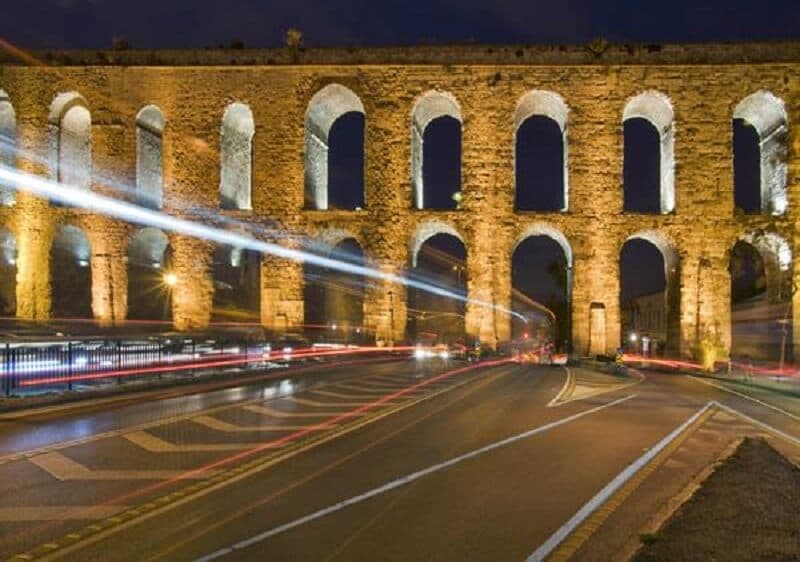 valens aqueduct istanbul
ISTANBUL VALENS AQUEDUCT
Valens Aqueduct: A Majestic Engineering Marvel in Istanbul
Valens Aqueduct Istanbul - When visiting Istanbul, one of the city’s most awe-inspiring sights is the Valens Aqueduct. Built nearly 1600 years ago during the reign of the Roman Emperor Valens, the aqueduct is a testament to the ancient Romans’ engineering prowess and remains one of the most impressive architectural achievements of the ancient world.
The Valens Aqueduct was constructed in the 4th century AD as a means to bring water to the city of Constantinople (modern-day Istanbul) from the springs located in Belgrade Forest, some 20 km away. The aqueduct consisted of a series of arches spanning over the streets and valleys of Istanbul, carrying water in a channel made of brick and stone. The channel was elevated and covered to protect the water from contamination and theft, and the aqueduct was capable of supplying the city with up to 100,000 cubic meters of water per day.
Despite its age, much of the Valens Aqueduct still stands today, making it one of the best-preserved ancient aqueducts in the world. When people go to Istanbul, they can look at the aqueduct's tall arches that stretch across the city. These arches show how grand Roman engineering was back then.
Valens' Aqueduct Architecture
In addition to its impressive engineering, the Valens Aqueduct is also known for its architectural beauty. The arches are adorned with intricate carvings, sculptures, and reliefs, giving the aqueduct a sense of grandeur and sophistication. Visitors can also admire the elegant stone carvings, featuring intricate geometric patterns, as well as the monumental inscriptions that commemorate the aqueduct’s construction and the emperor who commissioned it.
The Valens Aqueduct is located in the historic district of Fatih in Istanbul and can be easily accessed by public transportation or on foot. Visitors can walk along the aqueduct’s arches, taking in its grandeur and beauty, and admire the surrounding views of the city’s historic neighborhoods.
In conclusion, the Valens Aqueduct is a must-visit for anyone traveling to Istanbul. Its impressive engineering and architectural beauty make it one of the city’s most awe-inspiring sights, and its historical significance provides a glimpse into the ancient Roman world and the skill of its engineers. Whether you’re a history buff, an architecture enthusiast, or simply looking for an unforgettable experience, the Valens Aqueduct is a sight not to be missed.
What to See Around Valens' Aqueduct
If you are visiting the Valens Aqueduct in Istanbul, there are several other notable sights and attractions that you can see nearby. Here are some suggestions:
- Mosquée de Fatih: The Fatih Mosque is located just a few minutes walk from the Valens Aqueduct and is one of the largest and most important mosques in Istanbul. The mosque complex also includes several other structures, including a madrasa, a library, and a bathhouse.
- Citerne Basilique (Basilica Cistern): The Basilica Cistern is one of Istanbul's most fascinating underground structures. It is a huge underground cistern that was built by the Romans. It used to hold water for the city and is now open to tourists.
- L'Hippodrome de Constantinople: The Hippodrome was once the center of athletic and political life in Constantinople and is located just a few minutes walk from the Valens Aqueduct. Visitors can see the remains of the ancient stadium, including the Obelisk of Theodosius, the Serpentine Column, and the Column of Constantine.
- Place de Sultanahmet: Sultanahmet Square is home to some of Istanbul's most famous landmarks, including the Hagia Sophia, the Blue Mosque, and the Topkapi Palace. It is just a short walk from the Valens Aqueduct and is a great place to explore the city's rich history and cultural heritage.
- Le Grand Bazar: The Grand Bazaar is one of the largest and oldest covered markets in the world, offering a unique shopping experience in the heart of Istanbul. People can look through the many stalls that sell everything from spices and fabrics to jewelry and ceramics.
- Mosquée de SüleymaniyeLa plus grande mosquée ottomane située à Istanbul, elle a été commandée par le sultan Suleyman le Magnifique et conçue par l'architecte Sinan au XVIe siècle.
- Mosquée de Şehzade: commandé par le Suleyman le Magnifique et conçu par l'architecte Sinan et dédié au fils de Suleyman, Sehzade (principe) Mehmed, qui est mort à un très jeune âge.
Whether you are interested in history, architecture, shopping, or just soaking up the sights and sounds of Istanbul, there is something to see and do near the Valens Aqueduct. Be sure to plan and allocate enough time to explore all the attractions that interest you.
Questions fréquemment posées sur l’aqueduc Valens
Q: What is Valens' Aqueduct?
A :: The Roman Emperor Valens constructed the Valens' Aqueduct, a Roman aqueduct, in Istanbul, Turkey, in the fourth century AD.
Q: Where is Valens' Aqueduct located?
A :: The Valens' Aqueduct is near the Basilica Cistern in the Fatih neighborhood of Istanbul.
Q: What is the history of Valens' Aqueduct?
A :: Valens' Aqueduct was built to supply the city of Constantinople (now Istanbul) with fresh water from a spring located in the nearby hills. It was one of the oldest world's biggest and most complex water systems.
QComment fonctionne l’aqueduc ?
A :L'aqueduc est composé de ponts en pierre arcés qui transportent l'eau à travers les vallées et des tuyaux souterrains qui transportent l'eau sous les rues de la ville.
Q: What is the architectural style of Valens' Aqueduct?
A :: Valens' Aqueduct is an example of Roman engineering and architecture, with its use of arches, columns, and stone masonry.
Q: What is the significance of Valens' Aqueduct?
A :: The Valens' Aqueduct is thought to be one of the best examples of ancient engineering and water management. It is also a sign of the Roman Empire's wealth and technological progress.
Q: What is the current condition of Valens' Aqueduct?
A :Aujourd’hui, des parties de l’aqueduc sont bien conservées et ouvertes aux visiteurs, tandis que d’autres sections ont été endommagées ou détruites au fil du temps.
Q: What is the length of Valens' Aqueduct?
A :: Valens' Aqueduct is estimated to have been over 9 kilometers (5.5 miles) in length.
QQuels autres aqueducs ont été construits à Istanbul ?
A :: In addition to Valens' Aqueduct, several other aqueducts were built in Istanbul, including the Aqueduct of Justinian and the Binbirdirek Cistern.
QY a-t-il des aqueducs similaires dans le monde ?
A :Il existe de nombreux autres aqueducs anciens dans le monde, y compris le Pont du Gard en France et l'Acquedotto Claudia à Rome.
Vous pouvez réserver une visite de la ville d'Istanbul avec nos guides touristiques agréés.
Hôtels près de Valens Aquaduct Istanbul