
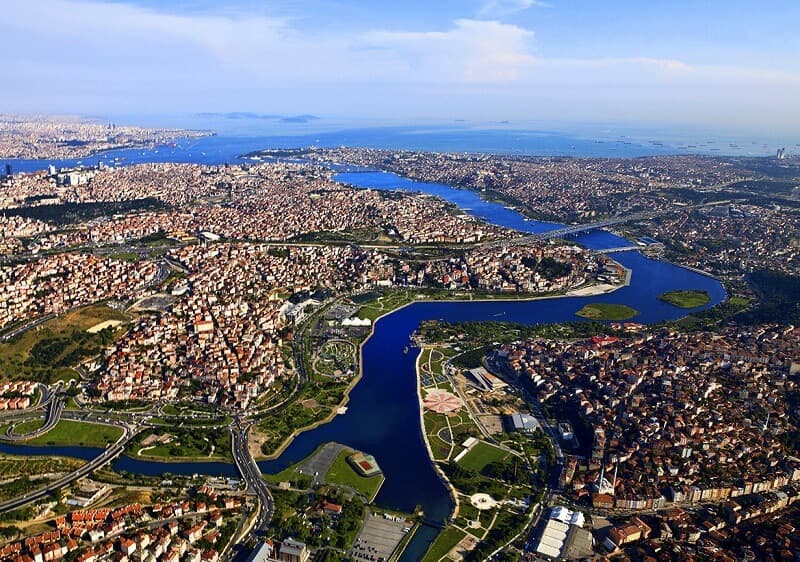
 istanbul golden horn
Стамбул Золотой Рог
История Золотой Рог
For those unfamiliar with Istanbul, Turkey, the Golden Horn is a major urban waterway and the main inlet of the Bosphorus. The waters of the Golden Horn, an estuary that flows into the Bosphorus Strait at its meeting with the Sea of Marmara, mark the northern edge of the peninsula that makes up "Old Istanbul" (ancient Byzantium and Constantinople), the northernmost point of which is the promontory of Sarayburnu, also known as Seraglio Point.
Этот вход в остуар физически отделяет старый город Стамбула от остального современного метрополии.Он также образует роговой порт, который защищал корабли от древней Греции, Рима, Византии, Османской империи и других мест на протяжении тысяч лет.
Золотой Рог является важной частью истории, которая была показана во многих произведениях искусства и была местом проведения многих важных событий.
Golden Horn ferries run hourly, connecting Üsküdar and Karaköy to the rest of the estuary's suburbs. The T5 tramline began service in 2021 along the western edge of the Golden Horn. It begins at the Alibeyköy bus station and travels to Cibali, close to the Atatürk Bridge, with plans for an extension taking it to Eminönü, where it will connect with the T1 tramline and some ferry routes.
Where is the Golden Horn
The confluence of the Alibey and Kagithane rivers forms the Golden Horn. It stretches for a total of 7.5 kilometers (4.66 miles) and has a maximum width of 750 meters (2,460 feet). When it empties into the Bosphorus, it is about 35 meters (115 feet) deep. The "horn" in Golden Horn Inlet refers to the inlet's shape when viewed from above, but the meaning of the "golden" part of the name is less clear.
Historians have speculated that it may refer to the wealth brought into the city by the historic harbor situated on its shores, or it may refer to the romantic artistic interpretations of the rich yellow light blazing upon the waters of the estuary as the sun sets over the city. Its Arabic name, khaleej, means "gulf," and its Greek and English names mean the same thing. The Turkish word for it, Halic, means "estuary" in the bare sense.
Cibali, Fener, Balat, Ayvansaray, Eyüp, Silahtaraga, Sakarya, and Alibeyköy are the neighborhoods that run south to north along the western shore of the Golden Horn. In order from south to north, the neighborhoods of Kasimpasa, Hasköy, and Sütlüce form the eastern shore of the Golden Horn.
The Golden Horn's History
Во время строительства станции метро «Еникапи» и туннеля «Мармарей» были найдены древние порты, хранилища и флоты торговых судов, что подтверждает археологические доказательства того, что Золотой Рог был крупным городским центром в 7 веке до нашей эры.
Indeed, the Golden Horn's deep natural harbor has long been a major economic draw and strategic military advantage for the area's residents. Emperor Constantine, I built New Rome (later called Constantinople) on top of the older city of Byzantium to get the same benefits as the first people who lived there and the people who live there now.
To prevent invasion from the sea, the city of Constantinople had walls constructed along its coastline and served as the naval headquarters for the Eastern Roman Empire. To stop unwelcome ships from entering the Golden Horn from the north, a massive chain was stretched from Constantinople to the ancient Tower of Galata. During the Fourth Crusade in 1204, Latin Crusaders largely destroyed the tower known as the Megàlos Pyrgos (Greek for "Great Tower"). The Genoese built the nearby Galata Tower in 1348. It was first called Christea Turris, which means "Tower of Christ."
On three separate occasions, the chain spanning the Golden Horn was either broken or avoided. The Byzantines defeated the Kievan Rus' with Greek fire after they dragged their longships out of the Bosphorus, around Galata, and relaunched them in the Golden Horn in the 10th century. The chain was finally broken in 1204 during the Fourth Crusade by ramming ships from the Venetian fleet. After the brute force plan to break the chain failed in 1453, the Ottoman Sultan Mehmed II used the same plan as the Russians, which was to pull his ships across Galata on greased logs and into the estuary.
Mehmed II relocated ethnic Greeks along the Golden Horn to the Phanar (modern-day Fener) after the Ottoman conquest of Constantinople in 1453. Jews kept living in Balat just as they had during the Byzantine era, though many of them left after the city was conquered. Jews who had been kicked out of Spain moved to Balat after Bayezid II invited them to do so.
For Sultan Bayezid II, who had an interest in civil engineering, Leonardo da Vinci drew a 240-meter (790 ft) bridge spanning the Golden Horn in 1502. The Museo della Scienza e della Tecnologia in Milan, Italy, currently has on display Leonardo's sketches and notes relating to this bridge. Although Leonardo's Golden Horn Bridge was never built as planned, the concept was given new life in 2001 when Vebjrn Sand built a small footbridge based on Leonardo's design near a lake in Norway.
The factories, warehouses, and shipyards that lined the Golden Horn's shores until the 1980s caused significant pollution. The local fish, wildlife, and flora have recovered since the area was cleaned up. In the 1980s, it was Mayor Bedrettin Dalan, and in the 1990s, it was Mayor Recep Tayyip Erdogan, who oversaw the two major phases of the cleanup.
Parks line both sides of the Golden Horn, which is now populated on both sides. Along the waterfront, you can also find the Istanbul Chamber of Commerce as well as numerous cemeteries belonging to the city's various religious communities. Along the shores of the Golden Horn, you can also find museums, congress, and cultural halls, Turkish Navy support facilities, and the campuses of different universities.
Благодаря своей богатой истории и красивым пейзажам, Золотой Рог посещают 10 миллионов туристов каждый год.
Frequently Asked Questions About the Golden Horn
Вопрос: What is the Golden Horn?
АЗолотой Рог - это естественная гавань в Стамбуле, Турция, которая отделяет исторический полуостров города от его современных районов.
ВопросГде находится Золотой Рог?
АЗолотой Рог расположен на европейской стороне Стамбула, Турция.
Вопрос: Why is it called the Golden Horn?
А: The Golden Horn is so named because of its golden color at sunset.
Вопрос: How long is the Golden Horn?
АЗолотой Рог длиной около 8,7 км.
Вопрос: What is the history of the Golden Horn?
АЗолотой Рог был важной гаванью с древних времен и сыграл значительную роль в истории Константинополя и Стамбула.
Вопрос: Какие основные достопримечательности расположены вокруг Золотой Рог?
А: The main attractions located around the Golden Horn include the Eyüp Sultan Mosque, Pierre Loti Hill, and the Fener and Balat neighborhoods.
Вопрос: What kinds of activities can be done in the Golden Horn?
А: Activities that can be done in the Golden Horn include visiting historic sites, enjoying scenic views, and taking a boat tour.
Вопрос: What is the best way to get to the Golden Horn?
А: The best way to get to the Golden Horn is by taking a ferry from the Eminönü or Karaköy docks.
ВопросБезопасен ли «Золотой Рог» для туристов?
А: The Golden Horn is generally considered safe for tourists, but as with any large city, it's always advisable to take precautions and be aware of your surroundings.
ВопросКогда лучше всего посетить Золотой Рог?
А: The best time to visit the Golden Horn is in the spring or fall when the weather is mild and the views are clear.
Вы можете забронировать тур по Стамбулу с нашими лицензированными турами.
Карта Золотой Рог