
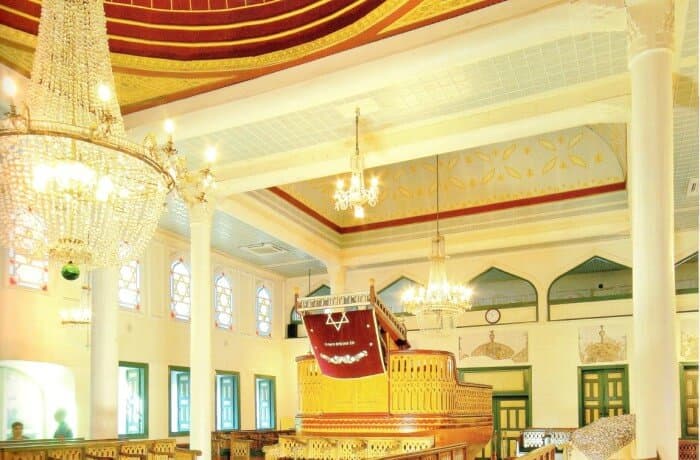
 ahrida synagogue istanbul
ISTANBUL AHRIDA SYNAGOGUE
AHRIDA SYNAGOGUE: Where is Ahrida Synagogue
Located in the Balat neighborhood, the Ahrida Synagogue is both a historic and substantial Istanbul Jewish place of worship. In 1427, just before Constantinople fell, a group of Jews from Ohrid, Macedonia, who were known as Romaniotes, established a new Jewish community in the region and gave it the name Ahrida.
The synagogue was already there in 1693, when the Ottomans took Istanbul, according to records kept by the Ottomans. The Ohri city in Macedonia inspired the name Ahrida Synagogue (Uhr, Toh, Balat). Among the Istanbul neighborhoods of Balat, this synagogue is the largest. During the Great Fire of 1690 in Istanbul, the Ahrida Synagogue was severely damaged and was later rebuilt. The synagogue was renovated in 1992 by the architect Hüsrev Tayla and the 500-Year Foundation, as stated on a plaque on the building's exterior. A galley-like lectern serves as the synagogue's pulpit. Folklore has it that this shape calls to mind Noah's ark. The other entry, the Ark, represents the galleys that carried the Safarids from Spain to the Ottoman Empire.
Les dirigeants religieux de la Turquie ont tenu une cérémonie en l'honneur des soldats ottomans qui ont combattu contre l'Empire russe en Crimée.
In the late 15th century, when Sephardic Jews were being persecuted and forced to leave the Iberian Peninsula, Sultan Bayezid II dispatched ships to Spain and Portugal to bring the Jews to the Ottoman Empire. Many of them were first located in Eminönü, near the Golden Horn, and then spread out to the Balat and Hasköy neighborhoods. Balat, with its eleven or more synagogues, was a heavily Jewish neighborhood from the 17th century until the establishment of the state of Israel. Though there are only a handful of Jewish residents in Balat at present, the city's 500-person capacity synagogue is packed on Saturdays and holidays by non-Jewish residents and visitors alike.
Numerous earthquakes and fires over the centuries caused damage to the synagogue, which was repeatedly repaired. In 1992, in honor of the 500th anniversary of Sephardic culture in Istanbul, the building underwent its most recent renovation. The main building is a great example of Tulip Period Istanbul Baroque architecture and dates back to the 18th century. The magnificent pulpit (Teva) is fashioned after the prow of a ship and is used to read the Torah. According to legend, the ship's design was inspired by the galleys that transported Jews from Spain to Istanbul. Some people think it represents Noah's ark as well. Ships are a common symbol for Sephardic Jews in Istanbul. The ship symbols that once graced the doorways of Balat's dilapidated homes are all but gone.
Ahrida Synagogue History
In the late 15th century, when Sephardic Jews were being persecuted and forced to leave the Iberian Peninsula, Sultan Bayezid II dispatched ships to Spain and Portugal to bring the Jews to the Ottoman Empire. Many of them were first located in Eminönü, near the Golden Horn, and then spread out to the Balat and Hasköy neighborhoods. Balat, with its eleven or more synagogues, was a heavily Jewish neighborhood from the 17th century until the establishment of the state of Israel. Though there are only a handful of Jewish residents in Balat at present, the city's 500-person capacity synagogue is packed on Saturdays and holidays by non-Jewish residents and visitors alike.
Multiple earthquakes and fires over the centuries caused damage to the synagogue, which was repeatedly repaired. In 1992, in honor of the 500th anniversary of Sephardic culture in Istanbul, the building underwent its most recent renovation. The main building is a great example of Tulip Period Istanbul Baroque architecture and dates back to the 18th century. Of particular note is the magnificent pulpit (Teva) in the shape of a ship's prow, from which the Torah is read. According to legend, the ship's design was inspired by the galleys that transported Jews from Spain to Istanbul. Some people think it represents Noah's ark as well. Ships are a common symbol for Sephardic Jews in Istanbul. Walking through Balat today, you'll notice that a few of the once prominent ship motifs adorn the doorways of the city's dilapidated dwellings.
Frequently Asked Questions About Ahrida Synagogue
Q: What is Ahrida Synagogue?
A :: The Ahrida Synagogue is an old synagogue in Istanbul, Turkey. It is in the Balat neighborhood.
Q: When was Ahrida Synagogue built?
A :La date exacte de sa construction n'est pas connue, mais on estime qu'elle a été construite à la fin du 15ème ou au début du 16ème siècle.
Q: Who built Ahrida Synagogue?
A :Il est censé avoir été construit par des Juifs séphardiques qui ont fui l'Espagne pendant l'Inquisition espagnole.
Q: What is the significance of Ahrida Synagogue?
A :: Ahrida Synagogue is one of the oldest and most historic synagogues in Istanbul. It is a cultural and historical landmark for both the Jewish community and the city of Istanbul as a whole.
Q: Is Ahrida Synagogue still in use today?
A :: Yes, the Ahrida Synagogue is still in use today and continues to serve the Jewish community in Istanbul.
Q: Are there any guided tours available at Ahrida Synagogue?
A :: Yes, guided tours of Ahrida Synagogue are available for visitors. It is recommended to contact the local Jewish community or a travel agency to arrange a tour.
Vous pouvez réserver une visite de la ville d'Istanbul avec nos guides touristiques agréés.
Map of Ahrida Synagogue