 ortakoy mosque Istanbul
ISTANBUL ORTAKOY MOSQUE
ORTAKOY MOSQUE History
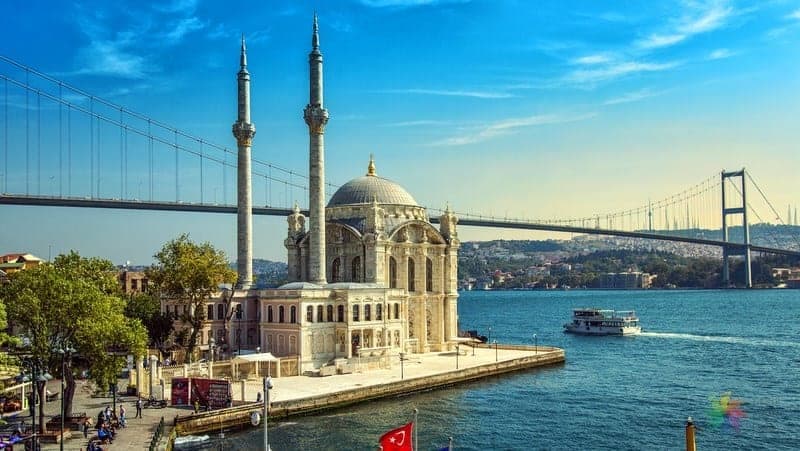
Located in Besiktas, Istanbul, Turkey, the Ortaköy Mosque (Turkish: Ortaköy Camii) or Büyük Mecidiye Camii (Turkish: Büyük Mecidiye Camii, "Great Mosque of Sultan Abdulmejid") is a mosque on the waterfront of the Ortaköy pier square, one of the busiest spots on the Bosphorus. It was built in the 1850s and commissioned by Sultan Abdülmecid I of the Ottoman Empire.
This building represents Ortaköy because of the unique perspective it provides of the Bosphorus Strait and the Bosphorus Bridge in Istanbul. From Bosphorus cruises and ferries, the mosque can be seen.
History of the Ortakoy Mosque
Ortaköy Mosque stands on the site of an earlier, smaller mosque that was destroyed in 1720, during the Patrona Halil Uprising. The current mosque dates back to 1854 or 1856 when construction was commissioned by Ottoman sultan Abdülmecid I (the exact dates of construction vary between scholarly sources). It was designed by the Armenian father-and-son team of Garabet Balyan and Nikogos Balyan in 1853–1855. The pair also created the adjacent Dolmabahce Palace and Dolmabahce Mosque.
the original brick dome of the mosque. The original concrete dome, however, had developed cracks over the years and was on the verge of collapse, necessitating a replacement. The mosque was first damaged in an earthquake in 1894 and then again in a fire in 1984. As a result, the building has had numerous restoration and repair projects carried out on it over the years. It's in reasonable condition right now.
Ortakoy Mosque's Stunning Design
I Balyans, che hanno progettato anche altri monumenti di Istanbul, hanno creato un aspetto eclettico per la moschea, fondendo elementi di stili di rinascita europei come il neoclassicismo con l'ornamentazione barocca ottomana e la disposizione generale.
There is a U-shaped imperial apartment on the upper floors for the sultan and a square main prayer hall for the mosque below. Each of these rooms is topped by a single dome. Its "dynamic appearance" is due in large part to the carved stone reliefs that adorn the mosque's facades, which feature engaged columns. It is lit by two rows of windows. While stone was used to construct the two tall, thin minarets, concrete was used to rebuild the dome. The minarets are capped with balconies that are reminiscent of Corinthian columns.
The mosque is relatively small when compared to other mosques on the other side of the Golden Horn. Even though it is relatively small on the outside, the interior is quite roomy thanks to the high ceilings and large windows that both reflect the surrounding landscape and let in plenty of natural light. The minbar and mihrab were crafted from marble and porphyry, among other precious stones. Abdülmecid I is credited with introducing trompe l'oeil frescoes to Ottoman architecture, which can be seen inside the dome. The niche-like windows with curtains and mihrab rows depicted in these trompe l'oeil paintings are reminiscent of traditional Islamic architecture and decoration, while the paintings themselves are executed in a Neo-Renaissance style. Abdülmecid I, who was also a calligrapher in addition to being a sultan, executed several panels of calligraphy for the mosque's interior.
Ortakoy Mosque's Exterior
In comparison to other well-known mosques in Istanbul, the mosque's courtyard is relatively small. There is a single dome atop the mosque and two minarets, each of which has a single balcony (serife in Turkish).
Ci sono quattro colonne principali negli angoli del terreno quadrato. Progettato come residenza estiva per il sultano, questo pavimento si trova adiacente alla moschea. L'architettura a stile pavilione, piuttosto che il tradizionale hunkar mahfili (una zona speciale posizionata da parte per il sultano all'interno della moschea), riflette il passaggio del tempo.
Dalla base, l'esterno della moschea ha tre sezioni distinte: la prima ha due finestre, la seconda ha tre, la terza ha torri di peso, e poi c'è la cupola (controllare anche i diversi motivi sulle colonne).
The tughra (the sultan's signature) can be seen above the doorway.
Ortakoy Mosque's Interior
The mosque has an entrance hall called a narthex. You've probably seen these chandeliers before in Dolmabahce Palace's main hall, which features one large and eight smaller versions. Magnificent calligraphy adorns large panels (including the names of Allah, the prophet Muhammed, and the first four caliphs), which was a collaborative effort between Sultan Abdulmecid and other artists.
Assuming it's okay with the Sultan, you can ascend to the second floor and admire the view from the women's and Sultan's balconies (unfortunately, sometimes they are closed). For the upper floors, there is an elliptical staircase. As seen from the balcony below, the dome's opening features a motif of the sky. The walls are painted in a rainbow of hues, including pink, blue, orange, green, and many more.
Non sorprende che ci sia un Mihrab che indica la strada per la Mecca e un Minbar per gli imami da usare quando predicano.
Ci sono molte finestre rotonde per la luce naturale per entrare. Le viste disponibili attraverso questi pannelli di vetro sono mozzafiato. Ricordate di dare un ultimo sguardo all'esterno della moschea prima di partire.
Inoltre, la pulizia dell'interno dà l'impressione che sia pulito regolarmente.
Location and Visiting Times for the Ortakoy Mosque
During times of prayer, it is not possible to search the interior. Furthermore, anyone is welcome to visit the mosque at any time to pray. Most large mosques adhere to a standard procedure for greeting visitors (e.g., from 9 a.m. to 5 p.m.). But you can't shut down a mosque, and people will always be able to pray there.
Ogni settimana il venerdì a mezzogiorno, c'è un sermone speciale e un tempo di preghiera comunitaria. Così, vi consigliamo di visitare la moschea il venerdì dopo le 2 del pomeriggio o presto la mattina.
The views, especially at sunset and sunrise, are fascinating. It's important to keep this in mind for a more satisfying journey. In addition, taking good photographs when the sun is overhead can be challenging.
What's Around the Ortakoy Mosque
The Turkish baked potato, or kumpir, and the Belgian waffle both have a strong following in Ortakoy. In theory, you could give it a shot. The area around the mosque has some excellent cafes where you can enjoy a cup of coffee, Turkish coffee, or Turkish tea. Don't just choose a cafe because you might be disappointed with the service. If you're interested, there are also a few cafes where you can smoke hookah (nargile in Turkish).
Puoi andare a fare shopping per finestre sulle pittoresche piccole strade. Puoi anche vedere le carrozze che puoi controllare per la modestia in piccoli pezzi.
Frequently Asked Questions About the Ortakoy Mosque
Q diChe cos’è la Moschea di Ortaköy?
aLa Moschea di Ortaköy è una moschea storica situata nel quartiere di Ortaköy di Istanbul, in Turchia.
Q diDove si trova la Moschea di Ortaköy?
aLa Moschea di Ortaköy si trova nel quartiere di Ortaköy di Istanbul, in Turchia.
Q diQuanto è vecchia la Moschea di Ortaköy?
aLa Moschea di Ortaköy fu costruita nel XIX secolo, durante l'epoca dell'Impero Ottomano.
Q diQual è la storia della Moschea di Ortaköy?
aLa Moschea di Ortaköy è stata costruita come simbolo del potere ottomano e della prodezza architettonica ed è stato un importante luogo di culto per la comunità musulmana di Istanbul per secoli.
Q diQual è il significato della Moschea di Ortaköy?
aLa Moschea di Ortaköy è un importante punto di riferimento religioso e culturale di Istanbul e è conosciuta per il suo complesso lavoro di piastrelle, la sua calligrafia e lo stile architettonico unico.
Q diCosa si può vedere alla Moschea di Ortaköy?
a: Visitors to the Ortaköy Mosque can see the mosque itself as well as the surrounding grounds, including a courtyard and a small park.
Q diCome si arriva alla Moschea di Ortaköy?
aLa Moschea di Ortaköy è raggiungibile con i mezzi pubblici o in auto ed è situata vicino alla riva dello Stretto del Bosforo.
Q diC'è un costo di ingresso per visitare la Moschea di Ortaköy?
aNon c'è alcun costo per visitare la Moschea di Ortaköy.
Q diCi sono delle restrizioni per visitare la Moschea di Ortaköy?
aI visitatori sono tenuti a vestirsi modestamente e a togliere le scarpe prima di entrare nella moschea.
Q diCi sono strutture presso la Moschea di Ortaköy?
a: There are limited facilities at the Ortaköy Mosque, including restrooms and a small café, but visitors are encouraged to bring their food and drinks.
Puoi prenotare un tour della città di Istanbul con le nostre guide turistiche autorizzate.I link sono qui sotto:
Map of Ortakoy Mosque