
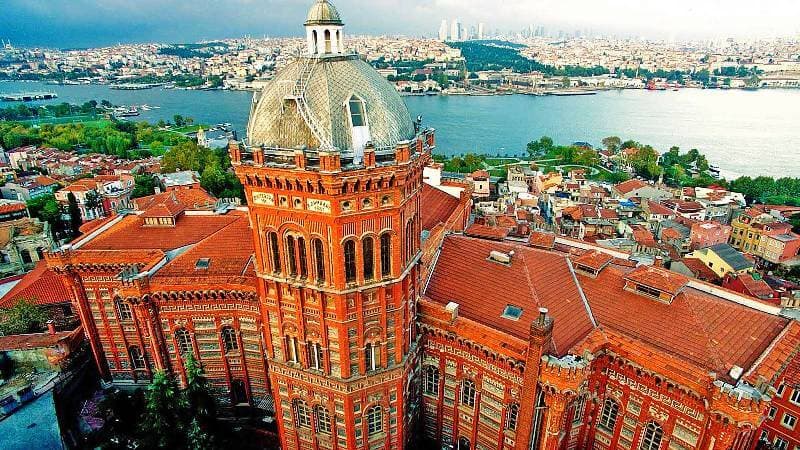
 Istanbul balat and fener area
İstanbul Balat ve Fener Bölgesi
Balat ve Fener Tarihi
Balat
Located between Fener and Ayvansaray, Balat is part of the historic district on the European side of Istanbul, on the western shore of the Golden Horn. It once served as the hub of Istanbul's Jewish community.
Yakın Blachernae Sarayı, Latin kelimesinin “palatium” üzerinden Yunanca kelimesinden “palation” (palat) kaynaklanan “Balat” adı için ilham kaynağı olarak kabul edilir.
The back streets of Balat, like those of neighboring Fener, are lined with small stone terraced houses on two or three levels, as well as a few grander mansions. Many of the homes in Balat have been converted into hotels, restaurants, and cafes, making it one of the city's most popular tourist destinations in the 2010s and beyond. A lot of the houses have been painted bright colors to give the area its own identity.
Balat is on the T5 tramline, which travels to Cibali and the Alibeyköy bus terminal (which serves routes to Anatolia). To get from Balat to the other neighborhoods around the Golden Horn like Üsküdar, Karaköy, Kasimpasa, Fener, Ayvansaray, Hasköy, Sütlüce, and Eyüp, you can take a ferry.
Balat's History
15. yüzyılın sonunda, İspanya ve Afrika'da İnkizisyon yayıldıktan ve 1492'de Alhambra Dekretinin tüm Yahudilerin İspanya'da yaşamalarını yasakladığından sonra, birçok Yahudi Balat'ta sığınak aradı.
Balat’ta bir zamanlar 18 sinagog vardı, bugün ise sadece Ahrida Sinagogu ve Yanbol Sinagogu kullanılmaktadır.1899’da açılan ve Gabriel Tedesci tarafından tasarlanan Or-Ahayim Hastanesi, Balat’ın Yahudi nüfusuna hizmet etmek için kuruldu, ancak şimdi genel halk için hizmet vermektedir.
Eskiden bir Hıristiyan kilisesidir, Fethiye Camii şimdi Pammakaristos adını taşıyor.
People of many different races, cultures, and faiths made their homes in Balat. There has always been a sizable Armenian population in the area, and it is also home to the world-famous Bulgarian Iron Church. There was a sizable Greek Orthodox (Rûm) community because of its proximity to St. George's Church and the Ecumenical Patriarchate of Constantinople in neighboring Fener. As a result of 20th-century events like the Armenian genocide, the Greek genocide, anti-Greek riots, and expulsions, the population of Balat is now overwhelmingly Muslim.
17. yüzyıldan itibaren Avrupa gezginleri Balat'ı özellikle fakir ve hijyenik olmayan bir yer olarak yazdı.Ancak, Marie-Christine Bornes-Varol, bu hesapların Balat'ın en fakir kısmı olan Karabas'a yapılan ziyaretlere dayanarak, Balat'ın bütününü temsil etmediğini savundu.
1810'da Balat Yahudileri patrolleri saldırdığında yerel Janissary biriminin kötü muameleye karşı kendilerini savunuyorlardı.
Balat was included on the UNESCO World Heritage List as one of Istanbul's Historic Areas back in 1985, and it has since been the site of many contentious revitalization and restoration efforts dating back to the late 1990s and early 2000s.
Balat Hareketleri
Built entirely from prefabricated iron shipped down the Danube from Vienna and then reassembled in Balat, the Church of St. Stephen of the Bulgars (also known as The Iron Church) stands on the shore of the Golden Horn where Fener runs into neighboring Balat. Having separated from the Orthodox Patriarchate in 1872, it now serves as the seat of the Bulgarian Exarchate. Complete renovations were completed in 2018, and the church reopened to the public.
15. yüzyılda Ochrid Yahudi topluluğunu hizmet etmek için inşa edilen Ahrida Sinagogu, muhteşem bir ahşap bema (pulpit) ev sahipliği ve eretik Sabbetai Tsvi ilk olarak 1666'da kederli inançlarını halka duyurduğu yer olarak dikkat çekiyor. 15. yüzyıldan beri ve Bulgar Yahudileri bir grup için inşa edilmiş Yanbol Sinagogu, muhteşem boyalı tavanından bilinir.
Merdivenli Mektep Sokak’ı oluşturan merdivenlerin sağında tarihi Dimitri Cantemir’in (1673–1723) evidir.
Usually only accessible on St. George's Day, the Church of Hagios Georgios Metochi can be found within a large compound just off Vodina Caddesi. A chapel for one of Wallachia's governors may have stood on the site originally, but by the 17th century, it had been transformed into a metochion with ties to Jerusalem's Church of the Holy Sepulchre. In the early 20th century, a scholar unearthed the so-called Archimedes Palimpsest, which consisted of seven books written by the Greek mathematician Archimedes that had been recycled to create a prayer book in the Middle Ages. There are only three that haven't been found in any other copies.
The 16th-century Surp Hresdagabed (Church of the Archangels) Armenian Church was rebuilt in the 18th century on top of the original ayazma (sacred spring) it was constructed over. The city's garbage collectors have moved into the former school building from the 19th century. Tim Kelsey, a travel writer, wrote about a once-annual event in which Muslims and Christians came together to sacrifice sheep and cockerels in the hopes that the animal's blood would heal a disabled member of the community.
Mimar Sinan'ın küçük bir çalışması olan Ferruh Kethüda Camii (1562), mihrab etrafında Tekfur Sarayi kalıpları sergiliyordu.
Balat is now cut off from the Golden Horn because of the collapsed Sea Walls of Constantinople. A plaque on the seaward side of the walls commemorates the spot where Sultan Mehmet II's troops broke through them on April 23, 1453, during the battle that led to the Conquest of Istanbul.
In addition to the Church of Hagios Ioannis Prodromos (St. John the Baptist), which has strong ties to the St. Catherine's Monastery in the Sinai Desert in Egypt, there are a few other rarely visited Greek Orthodox churches in Balat.
Fener
Istanbul, Turkey; Golden Horn, Fatih neighborhood. Because a column topped with a lantern stood here in the Byzantine period and was used as a street light or lighthouse, the area was given the name "phanarion," which is a Turkish transliteration of the word "phanarion" (Medieval Greek: v), meaning lantern, streetlight, or lamppost.
Fener was a predominantly Greek neighborhood during the Ottoman period, and its streets are lined with historic buildings from the Byzantine and Ottoman eras. One of the grand mansions that once stored wood brought in from the Black Sea (Pontos) area is now home to the Istanbul Women's Library. From the 1930s onward, street-widening projects harmed their picturesque facades.
Fener, on the southern shore of the Golden Horn, is located between Cibali and Balat. Back behind it is some very steep hills that lead up to the Fatih district.
Fener is connected to Cibali and the small bus terminal (for buses to Anatolia) at Alibeyköy via the T5 tram line. Fener is connected to the neighborhoods of Üsküdar, Karaköy, Kasimpasa, Balat, Ayvansaray, Hasköy, Sütlüce, and Eyüp via the Golden Horn ferry.
Fener Tarihi
As a result of the 1453 destruction of Constantinople, many of the city's Greeks relocated to the Fener neighborhood. In addition, the seat of the Patriarchate of Constantinople was relocated here and now operates from its new location. So, like "Vatican" is sometimes used to refer to the Holy See of the Roman Catholic Church, "Phanar" can be used to refer to the Ecumenical Patriarchate as a shorthand reference.
In Fener, the Greeks were known as Phanariotes during the Ottoman era, and many of them held high positions in Sultan's court. In the Balkans and Greece, wealthy Phanariotes often held positions as dragomans (translators) or as governors of provinces. Between 1711 and 1821, several people held the position of hospodar of Wallachia and Moldavia.
Fener Çekici
The Ecumenical Patriarchate of Constantinople is one of fifteen to seventeen autonomous jurisdictions within the Eastern Orthodox Church. Its seat is in Fener, within the walled compound that encloses the Patriarchal Church of St. George. Batholomew I is the current Patriarch. In 1602, the patriarchate relocated here, but in 1720, a fire destroyed the basilican church that had stood there since its inception. Another fire in 1941 further damaged the older buildings in the compound, so today most of what a visitor sees is relatively new. The only original structures are the church and the brick-and-stone library at the end of the garden. Since 1821, when Greece rebelled against Ottoman suzerainty, the compound's Middle Gate (Orta Kapi) has been locked because it was there that the then-Patriarch was hanged. Thousands of people, some of whom have traveled from Athens, have come to celebrate Greek Orthodox Easter in this city.
Aside from the Patriarchate, the most interesting church in Constantinople is the Church of St. Mary of the Mongols (Panagia Muhliotissa, Theotokos Panagiotussa), located inland and uphill. It is said that the architect Atik Sinan (not to be confused with the more famous Mimar Sinan) convinced Sultan Mehmet II to let it keep serving the Greek community, and a copy of the ferman (edict) still hangs in the church today.
Located close to the Mongols' St. Mary's Church, this colossal red-brick University of the Phanar Greek Orthodox Church Historian Dimitri Cantemir studied at this institution in the 17th century. There are now only a few pupils left. The Marasli Greek Orthodox Primary School, the second Greek school in Fener, is another grand structure that is currently empty of its intended occupants.
The Sea Walls, which once separated Constantinople from the Golden Horn, still form a tattered periphery along Fener. It is believed that Mimar Sinan, in 1562, designed the Ayakapi gate in the walls.
Fener'deki arka sokaklar, çeşitli yüksekliklerde terasta evlerle kaplıdır, bunların çoğunda cumbas (bay pencereleri) ve çok daha büyük olan birkaç seçilmiştir.
Kutlu Su
The Orthodox Church celebrates the Feast of the Epiphany on January 6 with a ceremony known as the Blessing of the Waters, during which a priest throws a cross into the water and swimmers compete to be the first to bring it back to shore. In Istanbul, the Patriarch performs the ceremony by throwing a cross into the Golden Horn, where swimmers then retrieve it.
Ahrida Sinagogu Hakkında Sıkça Sorulan Sorular
Q ileBalat ve Fener Nedir?
A ABalat ve Fener, Türkiye’nin İstanbul kentinde bulunan iki tarihi mahalledir.
Q ileBalat ve Fener’in Tarihi Nedir?
A ABalat ve Fener, bir zamanlar Bizans ve Osmanlı İmparatorluğu'nun önemli merkezleriydi. zengin bir tarih ve kültürel mirasları var ve birçok önemli dini ve kültürel kurumlara ev sahipliği yapmışlardır.
Q ileBalat ve Fener’in anlamı nedir?
A ABalat ve Fener, zengin tarih ve kültürel mirası, mimarisi ve dini yerler için de önemlidir.
Q ile: Ziyaretçiler Balat ve Fener'de ne görmeyi bekliyor?
A ABalat ve Fener'e gelen ziyaretçiler, tarihi ve modern mimarinin bir karışımı, sinagoglar, kiliseler ve camiler gibi sayısız dini ve kültürel yerleşim yeri görmeyi bekleyebilirler.
Q ile: Balat ve Fener ziyaret etmek güvenli midir?
A A: Evet, Balat ve Fener genellikle ziyaret etmek için güvenli olarak kabul edilir. Ancak, herhangi bir kentsel alanda olduğu gibi, standart güvenlik önlemlerini almanız ve çevreniz hakkında bilinçli olmanız tavsiye edilir.
Q ile: Balat ve Fener'de herhangi bir rehberlik turları var mı?
A A: Evet, Balat ve Fener'in rehberlik turları ziyaretçiler için mevcuttur. tur düzenlemek için yerel bir tur şirketi veya seyahat ajansı ile iletişime geçmenizi öneririz.
Q ileBalat ve Fener’e İstanbul’un merkezinden nasıl gidilir?
A A: Balat ve Fener, merkez İstanbul'dan feribotla ulaşılabilir. Bu mahallelere otobüs, taksi veya yürüyerek ulaşmak da mümkündür.
Q Hakkında: Balat ve Fener bölgesinde restoran veya kafe var mı?
A AEvet, Balat ve Fener'de yerel ve uluslararası mutfakları servis eden birkaç restoran ve kafe bulunmaktadır.
Q ile: Balat ve Fener'de toplu taşıma hizmeti var mı?
A A: Evet, Balat ve Fener'de toplu taşıma var. Otobüs ve feribotlar seçeneklerden bazılarıdır.
Q ile: Balat ve Fener bölgesinde herhangi bir konaklama seçeneği var mı?
A AEvet, Balat ve Fener, oteller, pansiyonlar ve daireler gibi kalacak çeşitli yerlere sahiptir.
İstanbul şehrinde gezilecek yerleri lisanslı rehberimizle rezervasyon yapabilirsiniz.Aşağıdaki bağlantılar:
Balat ve Fener Haritası