
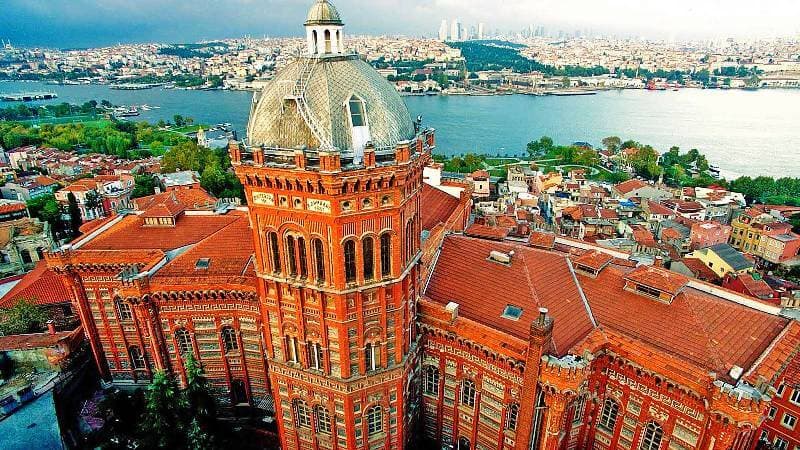
 Istanbul balat and fener area
Balat e Fener Area di Istanbul
Balat e Fener Storia
balli
Located between Fener and Ayvansaray, Balat is part of the historic district on the European side of Istanbul, on the western shore of the Golden Horn. It once served as the hub of Istanbul's Jewish community.
Il vicino Palazzo di Blachernae è pensato per essere l'ispirazione per il nome Balat, che deriva dalla parola greca palation (palazzo), attraverso la parola latina palatium.
The back streets of Balat, like those of neighboring Fener, are lined with small stone terraced houses on two or three levels, as well as a few grander mansions. Many of the homes in Balat have been converted into hotels, restaurants, and cafes, making it one of the city's most popular tourist destinations in the 2010s and beyond. A lot of the houses have been painted bright colors to give the area its own identity.
Balat is on the T5 tramline, which travels to Cibali and the Alibeyköy bus terminal (which serves routes to Anatolia). To get from Balat to the other neighborhoods around the Golden Horn like Üsküdar, Karaköy, Kasimpasa, Fener, Ayvansaray, Hasköy, Sütlüce, and Eyüp, you can take a ferry.
Balat's History
Alla fine del XV secolo, dopo che l'Inquisizione si era diffusa in tutta la Spagna e in Africa e il decreto di Alhambra del 1492 aveva vietato a tutti gli ebrei di vivere in Spagna, un gran numero di ebrei cercò rifugio a Balat.
[3] Balat once had 18 synagogues, but today only the Ahrida Synagogue and the Yanbol Synagogue are in use. Or-Ahayim Hospital, which was opened in 1899 and designed by Gabriel Tedesci, was originally established to serve the Jewish population of Balat, but now serves the general public.
Ancora chiesa cristiana, la moschea di Fethiye ora porta il nome di Pammakaristos.
People of many different races, cultures, and faiths made their homes in Balat. There has always been a sizable Armenian population in the area, and it is also home to the world-famous Bulgarian Iron Church. There was a sizable Greek Orthodox (Rûm) community because of its proximity to St. George's Church and the Ecumenical Patriarchate of Constantinople in neighboring Fener. As a result of 20th-century events like the Armenian genocide, the Greek genocide, anti-Greek riots, and expulsions, the population of Balat is now overwhelmingly Muslim.
Dal XVII secolo in poi, i viaggiatori europei hanno scritto di Balat come un luogo particolarmente povero e insignificante.Tuttavia, Marie-Christine Bornes-Varol ha sostenuto che questi conti potrebbero non essere rappresentativi di Balat nel suo complesso, dato che erano basati su visite a Karabas, la parte più povera di Balat.
I giudici di Balat sostenevano di aver difeso se stessi dal maltrattamento da parte dell’unità locale di Janissary quando gli ebrei di Balat attaccavano le loro pattuglie nel 1810.
Balat was included on the UNESCO World Heritage List as one of Istanbul's Historic Areas back in 1985, and it has since been the site of many contentious revitalization and restoration efforts dating back to the late 1990s and early 2000s.
Attrazioni Balat
Built entirely from prefabricated iron shipped down the Danube from Vienna and then reassembled in Balat, the Church of St. Stephen of the Bulgars (also known as The Iron Church) stands on the shore of the Golden Horn where Fener runs into neighboring Balat. Having separated from the Orthodox Patriarchate in 1872, it now serves as the seat of the Bulgarian Exarchate. Complete renovations were completed in 2018, and the church reopened to the public.
The Ahrida Synagogue, built in the 15th century to serve the Jewish community of Ochrid, is notable for housing a stunning wooden bema (pulpit) and being the site where the heretic Sabbetai Tsvi first publicly proclaimed his heretical beliefs in 1666. The Yanbol Synagogue, which dates back to the 15th century and was constructed for a group of Bulgarian Jews, is known for its stunning painted ceiling.
A destra delle scale che compongono Merdivenli Mektep Sokak è la casa dello storico Dimitri Cantemir (1673-1723).
Usually only accessible on St. George's Day, the Church of Hagios Georgios Metochi can be found within a large compound just off Vodina Caddesi. A chapel for one of Wallachia's governors may have stood on the site originally, but by the 17th century, it had been transformed into a metochion with ties to Jerusalem's Church of the Holy Sepulchre. In the early 20th century, a scholar unearthed the so-called Archimedes Palimpsest, which consisted of seven books written by the Greek mathematician Archimedes that had been recycled to create a prayer book in the Middle Ages. There are only three that haven't been found in any other copies.
The 16th-century Surp Hresdagabed (Church of the Archangels) Armenian Church was rebuilt in the 18th century on top of the original ayazma (sacred spring) it was constructed over. The city's garbage collectors have moved into the former school building from the 19th century. Tim Kelsey, a travel writer, wrote about a once-annual event in which Muslims and Christians came together to sacrifice sheep and cockerels in the hopes that the animal's blood would heal a disabled member of the community.
La Moschea di Ferruh Kethüda (1562), una piccola opera di Mimar Sinan, presenta piastrelle Tekfur Sarayi intorno al mihrab.
Balat is now cut off from the Golden Horn because of the collapsed Sea Walls of Constantinople. A plaque on the seaward side of the walls commemorates the spot where Sultan Mehmet II's troops broke through them on April 23, 1453, during the battle that led to the Conquest of Istanbul.
In addition to the Church of Hagios Ioannis Prodromos (St. John the Baptist), which has strong ties to the St. Catherine's Monastery in the Sinai Desert in Egypt, there are a few other rarely visited Greek Orthodox churches in Balat.
Fener
Istanbul, Turkey; Golden Horn, Fatih neighborhood. Because a column topped with a lantern stood here in the Byzantine period and was used as a street light or lighthouse, the area was given the name "phanarion," which is a Turkish transliteration of the word "phanarion" (Medieval Greek: v), meaning lantern, streetlight, or lamppost.
Fener was a predominantly Greek neighborhood during the Ottoman period, and its streets are lined with historic buildings from the Byzantine and Ottoman eras. One of the grand mansions that once stored wood brought in from the Black Sea (Pontos) area is now home to the Istanbul Women's Library. From the 1930s onward, street-widening projects harmed their picturesque facades.
Fener, on the southern shore of the Golden Horn, is located between Cibali and Balat. Back behind it is some very steep hills that lead up to the Fatih district.
Fener is connected to Cibali and the small bus terminal (for buses to Anatolia) at Alibeyköy via the T5 tram line. Fener is connected to the neighborhoods of Üsküdar, Karaköy, Kasimpasa, Balat, Ayvansaray, Hasköy, Sütlüce, and Eyüp via the Golden Horn ferry.
Fener Storia
As a result of the 1453 destruction of Constantinople, many of the city's Greeks relocated to the Fener neighborhood. In addition, the seat of the Patriarchate of Constantinople was relocated here and now operates from its new location. So, like "Vatican" is sometimes used to refer to the Holy See of the Roman Catholic Church, "Phanar" can be used to refer to the Ecumenical Patriarchate as a shorthand reference.
In Fener, the Greeks were known as Phanariotes during the Ottoman era, and many of them held high positions in Sultan's court. In the Balkans and Greece, wealthy Phanariotes often held positions as dragomans (translators) or as governors of provinces. Between 1711 and 1821, several people held the position of hospodar of Wallachia and Moldavia.
Attrazioni Fener
The Ecumenical Patriarchate of Constantinople is one of fifteen to seventeen autonomous jurisdictions within the Eastern Orthodox Church. Its seat is in Fener, within the walled compound that encloses the Patriarchal Church of St. George. Batholomew I is the current Patriarch. In 1602, the patriarchate relocated here, but in 1720, a fire destroyed the basilican church that had stood there since its inception. Another fire in 1941 further damaged the older buildings in the compound, so today most of what a visitor sees is relatively new. The only original structures are the church and the brick-and-stone library at the end of the garden. Since 1821, when Greece rebelled against Ottoman suzerainty, the compound's Middle Gate (Orta Kapi) has been locked because it was there that the then-Patriarch was hanged. Thousands of people, some of whom have traveled from Athens, have come to celebrate Greek Orthodox Easter in this city.
Oltre al Patriarcato, la chiesa più interessante a Costantinopoli è la Chiesa di Santa Maria dei Mongoli (Panagia Muhliotissa, Theotokos Panagiotussa), situata all'interno e in alto. Si dice che l'architetto Atik Sinan (da non confondere con il più famoso Mimar Sinan) convinse il sultano Mehmet II a lasciarlo continuare a servire la comunità greca, e una copia del ferman (editto) ancora oggi si appende nella chiesa.
Located close to the Mongols' St. Mary's Church, this colossal red-brick University of the Phanar Greek Orthodox Church Historian Dimitri Cantemir studied at this institution in the 17th century. There are now only a few pupils left. The Marasli Greek Orthodox Primary School, the second Greek school in Fener, is another grand structure that is currently empty of its intended occupants.
The Sea Walls, which once separated Constantinople from the Golden Horn, still form a tattered periphery along Fener. It is believed that Mimar Sinan, in 1562, designed the Ayakapi gate in the walls.
Le vicinanze di Fener sono arredate con case in terrazza di diverse altezze, molte delle quali hanno cumbas (finestre di baia), e alcune selezionate che sono molto più grandiose.
Le acque benedette
The Orthodox Church celebrates the Feast of the Epiphany on January 6 with a ceremony known as the Blessing of the Waters, during which a priest throws a cross into the water and swimmers compete to be the first to bring it back to shore. In Istanbul, the Patriarch performs the ceremony by throwing a cross into the Golden Horn, where swimmers then retrieve it.
Frequently Asked Questions About Ahrida Synagogue
Q diCosa sono Balat e Fener?
aBalat e Fener sono due quartieri storici situati a Istanbul, in Turchia.
Q diQual è la storia di Balat e Fener?
aBalat e Fener erano un tempo importanti centri dell'Impero Bizantino e Ottomano, rispettivamente. hanno una ricca storia e patrimonio culturale, e hanno ospitato molte importanti istituzioni religiose e culturali.
Q diQual è il significato di Balat e Fener?
aBalat e Fener sono importanti per la loro ricca storia e patrimonio culturale, così come per la loro architettura e punti di riferimento religiosi.
Q diCosa si può aspettare dai visitatori a Balat e Fener?
aI visitatori di Balat e Fener possono aspettarsi di vedere un mix di architettura storica e moderna, nonché numerosi monumenti religiosi e culturali, come sinagoghe, chiese e moschee.
Q di: È sicuro visitare Balat e Fener?
a: Sì, Balat e Fener sono generalmente considerati sicuri da visitare. Tuttavia, come con qualsiasi area urbana, si consiglia di prendere precauzioni di sicurezza standard e essere consapevoli del vostro ambiente.
Q diCi sono tour guidati disponibili a Balat e Fener?
a: Sì, sono disponibili visite guidate a Balat e Fener. Si consiglia di contattare un'agenzia di viaggio locale o un'agenzia di viaggio per organizzare un tour.
Q diCome arrivare a Balat e Fener dal centro di Istanbul?
aBalat e Fener possono essere raggiunti prendendo un traghetto dal centro di Istanbul. È anche possibile raggiungere questi quartieri in autobus, taxi o a piedi.
Q di: Ci sono ristoranti o caffè a Balat e Fener?
aSì, ci sono diversi ristoranti e caffè a Balat e Fener, che servono cucina locale e internazionale.
Q di: Ci sono mezzi pubblici disponibili a Balat e Fener?
a: Sì, ci sono trasporti pubblici a Balat e Fener. Autobus e traghetti sono alcune delle opzioni.
Q di: Ci sono opzioni di alloggio a Balat e Fener?
aSì, Balat e Fener hanno una varietà di luoghi dove soggiornare, come alberghi, pensioni e appartamenti.
Puoi prenotare un tour della città di Istanbul con le nostre guide turistiche autorizzate.I link sono qui sotto:
Mappa di Balat e Fener