
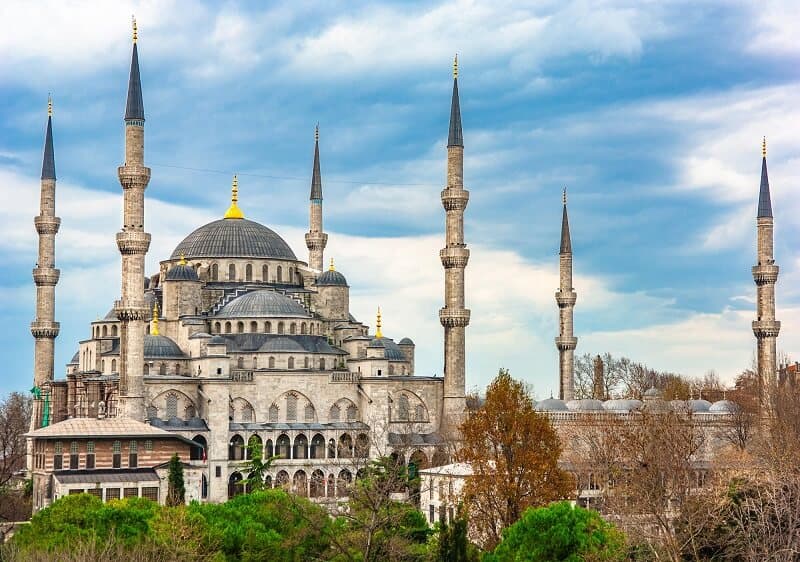
 Το Μπλε Τζαμί της Κωνσταντινούπολης
BLUE MOSQUE ISTANBUL
BLUE MOSQUE (Sultanahmet Mosque)
The Sultan Ahmed Mosque (Turkish: Sultan Ahmet Camii), or the Blue Mosque, is a historical imperial mosque from the Ottoman era that can be found in Istanbul, Turkey. It is both a working mosque and a major tourist destination. During Ahmed I's reign (1609–1616), its construction began. The Külliye is home to a madrasah, a hospice, and the tomb of Ahmed. Inside, the walls are covered in hand-painted blue tiles, and at night, the mosque's five main domes, six minarets, and eight secondary domes are illuminated, bathing the entire structure in a calming blue glow. Until the construction of the Blue Mosque, the Hagia Sophia was the most important mosque in Istanbul. In 1985, UNESCO designated the "Historic Areas of Istanbul," which included the Blue Mosque, as a World Heritage Site.
History of the Blue Mosque
Σουλτάνος Αχμέντ, αποφάσισα να χτίσω ένα τεράστιο τζαμί στην Κωνσταντινούπολη για να επαναβεβαιώσω την οθωμανική εξουσία μετά την ειρήνη του Ζιταβάτοροκ και την συντριπτική απώλεια στον πόλεμο του 1603-18 με την Περσία. Μετά από περισσότερα από σαράντα χρόνια, αυτό θα ήταν το πρώτο αυτοκρατορικό τζαμί που θα χτιστεί. Ενώ οι πρόγονοί του είχαν χρησιμοποιήσει πολεμικές μπότες για να χρηματοδοτήσουν την κατασκευή του τζαμιού, ο Αχμέντ Αχμέντ πήρε αντί του χρήματα από το Υπουργείο Οικονομικών λόγω της έλλειψης αξιοσημείωτων στρατιωτικών νικών του.
Infuriating the Muslim scholars known as ulama was the fact that the sultan's army had been paid for out of the general budget rather than the spoils of war. The mosque was constructed on the site of the former palace of the Byzantine emperors and faces the Hagia Sophia, the city's primary imperial mosque at the time, and the hippodrome, a prominent symbolic location in the city's southern skyline. The south side of the mosque is built on the foundations and vaults of the previous Grand Palace.
The Blue Mosque's Architecture
Το Μπλε Τζαμί αντιπροσωπεύει δύο αιώνες ανάπτυξης στην οθωμανική αρχιτεκτονική τζαμιού και την αρχιτεκτονική της βυζαντινής εκκλησίας. Είναι το τελευταίο μεγάλο τζαμί από την κλασική περίοδο της Οθωμανικής Αυτοκρατορίας και συνδυάζει την παραδοσιακή ισλαμική αρχιτεκτονική με μερικά βυζαντινά χαρακτηριστικά από την κοντινή Αγία Σοφία.
Blue Mosque's Minarets
Μόνο δύο τζαμιά σε όλη την Τουρκία έχουν όσο έξι μιναρέδες, και ένα από αυτά είναι το Μπλε Τζαμί.
The Sabanci Mosque in Adana is the second. The Sultan took some heat for his arrogance after the number of minarets was made public, as they matched the number at the Ka'aba Mosque in Mecca. To solve this issue, he had a seventh minaret added to the Mecca mosque.
The Blue Mosque has four minarets, one at each of its four corners. These minarets, called Serefe, are fluted and pencil-shaped; they each have three balconies supported by stalactite corbels, whereas the other two minarets at the end of the forecourt have only two. Once upon a time, the muezzin, or prayer caller, had to make the ascent of a steep, narrow spiral staircase five times each day to make the call to prayer.
Η κλήση μεταδίδεται τώρα μέσω ενός συστήματος δημόσιας αναγγελίας και μπορεί να ακουστεί σε όλη την ιστορική περιοχή της πόλης και να αναπαραχθεί από άλλα τζαμιά στην περιοχή.Καθώς ο ήλιος δύει και το τζαμί φωτίζεται λαμπερά από πολύχρωμα φώτα πλημμύρας, τεράστια πλήθη Τούρκων και τουριστών συγκεντρώνονται στο πάρκο μπροστά του για να ακούσουν την κλήση για βραδινές προσευχές.
The Blue Mosque's Interior
More than 20,000 hand-made ceramic tiles, made in Iznik (Nicaea), in more than fifty different tulip designs, line the lower levels and piers of the Blue Mosque's interior. Even though the tiles on the ground floor have a classic look, the ones in the upper galleries are more ornate and feature bright colors and elaborate patterns of flowers, fruit, and cypresses. Iznik master potters Kasap Haci and Avanos and Cappadocia native Baris Efendi oversaw the production of over 20,000 tiles. Since the cost of tiles in general went up over time, the sultan issued a decree setting a standard price for them. The building's tiles gradually became of lower quality as time went on. The glazes have dulled, and the colors have faded. The tiles on the rear wall of the balcony are originals that were salvaged from the harem of the Topkapi Palace after it burned down in 1574.
Blue is the predominant color used on the upper levels of the mosque's interior. The building has over two hundred stained-glass windows, many of which feature elaborate designs. Ostrich eggs were hung from the chandeliers to keep spiders out of the mosque and prevent the buildup of cobwebs. Many of the Qur'anic verses adorning the walls were written by Seyyid Kasim Gubari, widely considered the greatest calligrapher of his era.
Τα χαλιά, που παρέχονται από πιστούς και αντικαθίστανται καθώς φθείρονται, καλύπτουν τα δάπεδα. Η αφθονία των ψηλών, ευρύχωρων παραθύρων δημιουργεί την ψευδαίσθηση ενός ευρύχωρου εσωτερικού. Υπάρχουν πέντε παράθυρα σε κάθε exedra του τζαμιού, και μερικά από αυτά καλύπτονται από τυφλούς.
Υπάρχουν συνολικά 28 παράθυρα στον κεντρικό θόλο, με 14 σε κάθε έναν από τους δύο εξωτερικούς θόλους (από τους οποίους τέσσερις είναι τυφλοί).Οι αρχές της Βενετίας προσέφεραν στον σουλτάνο με γυάλινα παράθυρα με χρώματα ως δώρο.
The mihrab is the most important part of the mosque's interior. It is made of marble and has intricate carvings, a stalactite niche, and two panels with writing on them.
Τα κεραμικά πλακάκια καλύπτουν τους παρακείμενους τοίχους. Ωστόσο, η αφθονία των παραθύρων στην περιοχή μειώνει το αποτέλεσμα. Ο ιμάμης παραδίδει το κήρυγμά του το μεσημέρι τις Παρασκευές και άλλες ιερές ημέρες από ένα πύργο που ονομάζεται minber, το οποίο βρίσκεται στα δεξιά του mihrab και είναι εκλεπτυσμένο. Ακόμα και όταν το τζαμί είναι σε θέση, όλοι θα μπορούν να δουν και να ακούσουν τον ιμάμη χάρη στη στοχαστική διάταξη.
The southeast corner is home to the royal kiosk, which features a platform, loggia, and two small private rooms for the king and queen. You can use it to enter the Blue Mosque's royal loge, which is located in the southeast corner of the mosque's upper gallery. During the 1826 crackdown on the defiant Janissary Corps, the Grand Vizier set up headquarters in these private quarters. In Turkey, this section of the palace is known as the hünkâr mahfil, and it is surrounded by ten marble columns.
Once adorned with gold and precious stones, the Blue Mosque's many lamps are now plain white. Ostrich eggs and crystal balls were hidden in the various glass jars. All of these ornaments were stolen or removed to be displayed in Istanbul museums.
Αρχικά γραμμένο από τον μεγάλο καλλιγράφο του 17ου αιώνα Αμέτλι Κασίμ Γκουμπαρίμ, τα ονόματα των χαλιφάδων και οι στίχοι από το Κοράνι διακοσμούν τις μεγάλες ταμπλέτες που ευθυγραμμίζουν τους τοίχους.
The Blue Mosque's Exterior
The large forecourt's facade was inspired by Istanbul's Süleymaniye Mosque but features turrets instead of minarets on the four corner domes. The court, which is enclosed by a continuous vaulted arcade, is roughly the same size as the mosque. The courtyard is quite large for its diminutive central hexagonal fountain. The architectural highlight of the courtyard is the monumental but narrow gateway that leads to it through the arcade. The small ribbed dome atop the tall lobate is topped by a fine stalactite structure.
When entering the Mosque's western court, you'll notice a heavy iron chain hanging from the ceiling. The sultan was the only person permitted to ride a horse into the Blue Mosque's courtyard. To avoid being struck by the chain, the sultan must bend over slightly whenever he enters the court. Symbolically, it served to show the ruler's respect for the divine.
Frequently Asked Questions About the Blue Mosque
Ερώτηση: What is the Blue Mosque?
Α: The Blue Mosque is an old mosque in Istanbul, Turkey. It is also called the Sultan Ahmed Mosque.
ΕρώτησηΠότε χτίστηκε το Μπλε Τζαμί;
ΑΤο τζαμί χτίστηκε μεταξύ 1609 και 1616.
Ερώτηση: Who built the Blue Mosque?
ΑΟ Αχμέτ Α ́, ο Οθωμανός σουλτάνος, ήταν αυτός που έχτισε το Μπλε Τζαμί.
ΕρώτησηΓιατί ονομάζεται το «Μπλε Τζαμί»;
ΑΤο τζαμί ονομάζεται το Μπλε Τζαμί λόγω των μπλε πλακιδίων που χρησιμοποιούνται στην εσωτερική διακόσμηση.
ΕρώτησηΠοια είναι τα κύρια χαρακτηριστικά του Μπλε Τζαμί;
ΑΤο Μπλε Τζαμί έχει έξι μιναρέδες, έναν μεγάλο κεντρικό θόλο και μικρότερους θόλους που το περιβάλλουν, καθώς και περίπλοκες εργασίες καλλιγραφίας και κεραμιδιών.
ΕρώτησηΠόσοι κύμβοι έχει το Μπλε Τζαμί;
ΑΤο Μπλε Τζαμί έχει έναν κεντρικό θόλο και οκτώ μικρότερους θόλους.
Ερώτηση: What is the capacity of the Blue Mosque?
ΑΤο Μπλε Τζαμί μπορεί να φιλοξενήσει μέχρι 10.000 λατρευτές ταυτόχρονα.
ΕρώτησηΕίναι το Μπλε Τζαμί ανοιχτό για τους επισκέπτες;
ΑΝαι, το Μπλε Τζαμί είναι ανοιχτό σε επισκέπτες και τουρίστες, εκτός από τις ώρες προσευχής.
ΕρώτησηΠοια είναι η ώρα επίσκεψης για το Μπλε Τζαμί;
ΑΟι ώρες επίσκεψης για το Μπλε Τζαμί είναι συνήθως από τις 9:00 π.μ. έως τις 12:00 μ.μ. και από τις 2:00 μ.μ. έως τις 4:00 μ.μ.
ΕρώτησηΠόσο κοστίζει η είσοδος στο Μπλε Τζαμί;
ΑΔεν υπάρχει χρέωση εισόδου για να εισέλθετε στο Μπλε Τζαμί, αλλά οι δωρεές είναι ευπρόσδεκτες.
Μπορείτε να κάνετε κράτηση για μια περιοδεία στην πόλη της Κωνσταντινούπολης με τους άδειους ταξιδιωτικούς οδηγούς μας.
Μπορείτε να κάνετε κράτηση για μια περιοδεία στην πόλη της Κωνσταντινούπολης με τους άδειους ταξιδιωτικούς οδηγούς μας.
Χάρτης του Μπλε Τζαμί