 Blue Mosque Istanbul
BLUE MOSQUE ISTANBUL
BLUE MOSQUE (Sultanahmet Mosque)
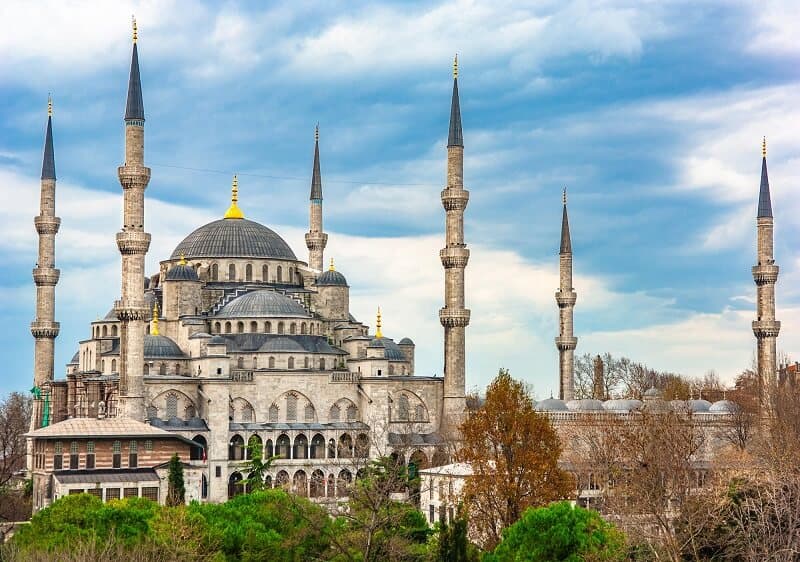
The Sultan Ahmed Mosque (Turkish: Sultan Ahmet Camii), or the Blue Mosque, is a historical imperial mosque from the Ottoman era that can be found in Istanbul, Turkey. It is both a working mosque and a major tourist destination. During Ahmed I's reign (1609–1616), its construction began. The Külliye is home to a madrasah, a hospice, and the tomb of Ahmed. Inside, the walls are covered in hand-painted blue tiles, and at night, the mosque's five main domes, six minarets, and eight secondary domes are illuminated, bathing the entire structure in a calming blue glow. Until the construction of the Blue Mosque, the Hagia Sophia was the most important mosque in Istanbul. In 1985, UNESCO designated the "Historic Areas of Istanbul," which included the Blue Mosque, as a World Heritage Site.
History of the Blue Mosque
सुल्तान अहाम, मैंने इस्तांबुल में एक बड़े मस्जिद का निर्माण करने का फैसला किया, जिसे जिटवाटोक शांति और पेरिस के साथ 1603-18 युद्ध में विनाशकारी नुकसान के बाद ओटोमन शक्ति को फिर से पुष्टि करने के लिए। चालीस से अधिक वर्षों के बाद, यह पहली सम्राट मस्जिद बनने वाली होगी. जबकि उसके पूर्वजों ने मस्जिद निर्माण के लिए युद्ध बूट का उपयोग किया था, अहाम मैं ने इसके बजाय अपने उल्लेखनीय सैन्य जीतों की कमी के कारण क़ीमत से पैसे उधार दिए. 1609 में शुरू होने से, इस संरचना पर निर्माण 1616 तक चला।
Infuriating the Muslim scholars known as ulama was the fact that the sultan's army had been paid for out of the general budget rather than the spoils of war. The mosque was constructed on the site of the former palace of the Byzantine emperors and faces the Hagia Sophia, the city's primary imperial mosque at the time, and the hippodrome, a prominent symbolic location in the city's southern skyline. The south side of the mosque is built on the foundations and vaults of the previous Grand Palace.
The Blue Mosque's Architecture
The Blue Mosque represents two centuries of development in Ottoman mosque architecture and Byzantine church architecture. It is the last great mosque from the classical period of the Ottoman Empire and combines traditional Islamic architecture with some Byzantine features from the nearby Hagia Sophia. By remembering what his teacher, Sinan, had taught him, the architect made a building of the epic size and opulent beauty.
Blue Mosque's Minarets
Only two mosques in all of Turkey have as many as six minarets, and one of them is the Blue Mosque.
The Sabanci Mosque in Adana is the second. The Sultan took some heat for his arrogance after the number of minarets was made public, as they matched the number at the Ka'aba Mosque in Mecca. To solve this issue, he had a seventh minaret added to the Mecca mosque.
The Blue Mosque has four minarets, one at each of its four corners. These minarets, called Serefe, are fluted and pencil-shaped; they each have three balconies supported by stalactite corbels, whereas the other two minarets at the end of the forecourt have only two. Once upon a time, the muezzin, or prayer caller, had to make the ascent of a steep, narrow spiral staircase five times each day to make the call to prayer.
कॉल अब एक सार्वजनिक घोषणा प्रणाली के माध्यम से प्रसारित किया जाता है और शहर के ऐतिहासिक क्षेत्र में सुना जा सकता है और क्षेत्र में अन्य मस्जिदों द्वारा इशारा किया जाता है. जब सूर्य नीचे जाता है और मस्जिद रंगीन बाढ़ लाइट्स से चमकदार रूप से रोशनी में है, तो तुर्कों और पर्यटकों की बड़ी भीड़ें शाम की प्रार्थनाओं के लिए कॉल सुनने के लिए इसके सामने पार्क में इकट्ठा होती हैं.
The Blue Mosque's Interior
More than 20,000 hand-made ceramic tiles, made in Iznik (Nicaea), in more than fifty different tulip designs, line the lower levels and piers of the Blue Mosque's interior. Even though the tiles on the ground floor have a classic look, the ones in the upper galleries are more ornate and feature bright colors and elaborate patterns of flowers, fruit, and cypresses. Iznik master potters Kasap Haci and Avanos and Cappadocia native Baris Efendi oversaw the production of over 20,000 tiles. Since the cost of tiles in general went up over time, the sultan issued a decree setting a standard price for them. The building's tiles gradually became of lower quality as time went on. The glazes have dulled, and the colors have faded. The tiles on the rear wall of the balcony are originals that were salvaged from the harem of the Topkapi Palace after it burned down in 1574.
Blue is the predominant color used on the upper levels of the mosque's interior. The building has over two hundred stained-glass windows, many of which feature elaborate designs. Ostrich eggs were hung from the chandeliers to keep spiders out of the mosque and prevent the buildup of cobwebs. Many of the Qur'anic verses adorning the walls were written by Seyyid Kasim Gubari, widely considered the greatest calligrapher of his era.
वफादार व्यक्तियों द्वारा प्रदान किए गए कालीन और उनका बदलाव जब वे खराब हो जाते हैं, फर्श को कवर करते हैं. उच्च, चौड़े खिड़कियों की बहुतायत एक विशाल इंटीरियर की भ्रम पैदा करती है. मस्जिद के प्रत्येक एक्सएड्रा में पांच खिड़कियां हैं, और उनमें से कुछ को अंधाओं द्वारा कवर किया जाता है.
केंद्रीय कूपन में कुल 28 खिड़कियां हैं, जिनमें से दो बाहरी कूपन में से प्रत्येक में 14 हैं (जिन्हें चार अंधा हैं)। वेनिस की अधिकारियों ने सुल्तान को रंगीन-ग्लास खिड़कियों के साथ उपहार दिया है. इन रंगीन ग्लास पैनलों में से अधिकांश को कम रचनात्मक नए संस्करणों के साथ बदल दिया गया है.
The mihrab is the most important part of the mosque's interior. It is made of marble and has intricate carvings, a stalactite niche, and two panels with writing on them.
सिरेमिक टाइलों से आसपास की दीवारों को कवर किया जाता है. हालांकि, क्षेत्र में खिड़कियों की बहुतायत प्रभाव को कम करती है. इमाम शुक्रवार और अन्य पवित्र दिनों में दोपहर में अपने वचन को एक मैनबेर नामक एक पल्पिट से देता है, जो मिजब के दाहिने ओर स्थित है और विस्तृत रूप से सजाया गया है. यहां तक कि जब मस्जिद क्षमता में है, तो भी हर कोई विचारशील लेआउट के लिए धन्यवाद इमाम को देख और सुन सकता है.
The southeast corner is home to the royal kiosk, which features a platform, loggia, and two small private rooms for the king and queen. You can use it to enter the Blue Mosque's royal loge, which is located in the southeast corner of the mosque's upper gallery. During the 1826 crackdown on the defiant Janissary Corps, the Grand Vizier set up headquarters in these private quarters. In Turkey, this section of the palace is known as the hünkâr mahfil, and it is surrounded by ten marble columns.
Once adorned with gold and precious stones, the Blue Mosque's many lamps are now plain white. Ostrich eggs and crystal balls were hidden in the various glass jars. All of these ornaments were stolen or removed to be displayed in Istanbul museums.
मूल रूप से 17 वीं शताब्दी के महान कैलिग्राफ अमीटली कासिम गुबारिम द्वारा लिखा गया, कलीफों के नाम और कुरान से वचनों ने दीवारों को सीमित करने वाले बड़े तालिकाओं को सजाया।
The Blue Mosque's Exterior
The large forecourt's facade was inspired by Istanbul's Süleymaniye Mosque but features turrets instead of minarets on the four corner domes. The court, which is enclosed by a continuous vaulted arcade, is roughly the same size as the mosque. The courtyard is quite large for its diminutive central hexagonal fountain. The architectural highlight of the courtyard is the monumental but narrow gateway that leads to it through the arcade. The small ribbed dome atop the tall lobate is topped by a fine stalactite structure.
When entering the Mosque's western court, you'll notice a heavy iron chain hanging from the ceiling. The sultan was the only person permitted to ride a horse into the Blue Mosque's courtyard. To avoid being struck by the chain, the sultan must bend over slightly whenever he enters the court. Symbolically, it served to show the ruler's respect for the divine.
Frequently Asked Questions About the Blue Mosque
प्रश्न: What is the Blue Mosque?
ए: The Blue Mosque is an old mosque in Istanbul, Turkey. It is also called the Sultan Ahmed Mosque.
प्रश्न: When was the Blue Mosque built?
एमस्जिद 1609 और 1616 के बीच बनाई गई थी।
प्रश्न: Who built the Blue Mosque?
ए: Ahmed I, the Ottoman Sultan, was the one who built the Blue Mosque.
प्रश्न: Why is it called the Blue Mosque?
ए: The mosque is called the Blue Mosque because of the blue tiles used in its interior decoration.
प्रश्न: What are the main features of the Blue Mosque?
ए: The Blue Mosque has six minarets, a large central dome, and smaller domes surrounding it, as well as intricate calligraphy and tile work.
प्रश्न: How many domes does the Blue Mosque have?
ए: The Blue Mosque has one central dome and eight smaller domes.
प्रश्न: What is the capacity of the Blue Mosque?
ए: The Blue Mosque can accommodate up to 10,000 worshippers at a time.
प्रश्न: Is the Blue Mosque open to visitors?
ए: Yes, the Blue Mosque is open to visitors and tourists, except during prayer times.
प्रश्न: What are the visiting hours for the Blue Mosque?
ए: Visiting hours for the Blue Mosque are typically from 9:00 a.m. to 12:00 p.m. and from 2:00 p.m. to 4:00 p.m.
प्रश्न: How much does it cost to enter the Blue Mosque?
ए: There is no admission fee to enter the Blue Mosque, but donations are appreciated.
आप हमारे लाइसेंस प्राप्त टूर गाइड के साथ इस्तांबुल शहर टूर बुक कर सकते हैं. लिंक नीचे हैं:
आप हमारे लाइसेंस प्राप्त पर्यटन गाइड के साथ इस्तांबुल शहर दौरे बुक कर सकते हैं. लिंक नीचे हैं:
Map of Blue Mosque