
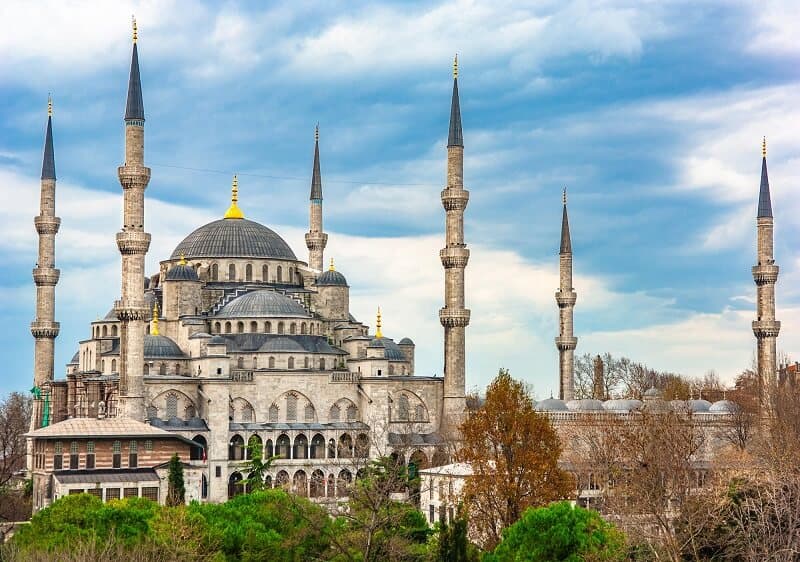
 Masjid Biru Istanbul
BLUE MOSQUE (Sultanahmet Mosque)
The Sultan Ahmed Mosque (Turkish: Sultan Ahmet Camii), or the Blue Mosque, is a historical imperial mosque from the Ottoman era that can be found in Istanbul, Turkey. It is both a working mosque and a major tourist destination. During Ahmed I's reign (1609–1616), its construction began. The Külliye is home to a madrasah, a hospice, and the tomb of Ahmed. Inside, the walls are covered in hand-painted blue tiles, and at night, the mosque's five main domes, six minarets, and eight secondary domes are illuminated, bathing the entire structure in a calming blue glow. Until the construction of the Blue Mosque, the Hagia Sophia was the most important mosque in Istanbul. In 1985, UNESCO designated the "Historic Areas of Istanbul," which included the Blue Mosque, as a World Heritage Site.
Sejarah Masjid Biru
Sultan Ahmed, saya memutuskan untuk membangun masjid besar di Istanbul untuk menegaskan kembali kekuasaan Ottoman setelah Perdamaian Zsitvatorok dan kerugian yang menghancurkan dalam perang 1603-18 dengan Persia. Setelah lebih dari empat puluh tahun, ini akan menjadi masjid kekaisaran pertama yang dibangun. Sementara nenek moyangnya telah menggunakan booty perang untuk mendanai pembangunan masjid, Ahmed I sebaliknya meminjam uang dari Keuangan karena kurangnya kemenangan militer yang luar biasa. Mulai dari 1609, konstruksi pada struktur ini berlangsung sampai 1616.
Infuriating the Muslim scholars known as ulama was the fact that the sultan's army had been paid for out of the general budget rather than the spoils of war. The mosque was constructed on the site of the former palace of the Byzantine emperors and faces the Hagia Sophia, the city's primary imperial mosque at the time, and the hippodrome, a prominent symbolic location in the city's southern skyline. The south side of the mosque is built on the foundations and vaults of the previous Grand Palace.
The Blue Mosque's Architecture
Masjid Biru mewakili dua abad perkembangan dalam arsitektur masjid Ottoman dan arsitektur gereja Byzantine.Ini adalah masjid besar terakhir dari periode klasik Kekaisaran Ottoman dan menggabungkan arsitektur Islam tradisional dengan beberapa fitur Bizantium dari Hagia Sophia yang berdekatan.
Blue Mosque's Minarets
Hanya dua masjid di seluruh Turki yang memiliki sebanyak enam minaret, dan salah satunya adalah Masjid Biru.
The Sabanci Mosque in Adana is the second. The Sultan took some heat for his arrogance after the number of minarets was made public, as they matched the number at the Ka'aba Mosque in Mecca. To solve this issue, he had a seventh minaret added to the Mecca mosque.
The Blue Mosque has four minarets, one at each of its four corners. These minarets, called Serefe, are fluted and pencil-shaped; they each have three balconies supported by stalactite corbels, whereas the other two minarets at the end of the forecourt have only two. Once upon a time, the muezzin, or prayer caller, had to make the ascent of a steep, narrow spiral staircase five times each day to make the call to prayer.
Panggilan itu sekarang disiarkan melalui sistem pengumuman publik dan dapat didengar di seluruh distrik bersejarah kota dan diiringi oleh masjid-masjid lain di daerah tersebut.Sementara matahari terbenam dan masjid itu diiluminasi dengan brilian oleh lampu banjir berwarna-warni, kerumunan besar orang Turki dan wisatawan berkumpul di taman di depannya untuk mendengar panggilan untuk doa malam.
The Blue Mosque's Interior
More than 20,000 hand-made ceramic tiles, made in Iznik (Nicaea), in more than fifty different tulip designs, line the lower levels and piers of the Blue Mosque's interior. Even though the tiles on the ground floor have a classic look, the ones in the upper galleries are more ornate and feature bright colors and elaborate patterns of flowers, fruit, and cypresses. Iznik master potters Kasap Haci and Avanos and Cappadocia native Baris Efendi oversaw the production of over 20,000 tiles. Since the cost of tiles in general went up over time, the sultan issued a decree setting a standard price for them. The building's tiles gradually became of lower quality as time went on. The glazes have dulled, and the colors have faded. The tiles on the rear wall of the balcony are originals that were salvaged from the harem of the Topkapi Palace after it burned down in 1574.
Blue is the predominant color used on the upper levels of the mosque's interior. The building has over two hundred stained-glass windows, many of which feature elaborate designs. Ostrich eggs were hung from the chandeliers to keep spiders out of the mosque and prevent the buildup of cobwebs. Many of the Qur'anic verses adorning the walls were written by Seyyid Kasim Gubari, widely considered the greatest calligrapher of his era.
Karpet, yang disediakan oleh orang-orang yang setia dan diganti saat mereka berpakaian, menutupi lantai. kelimpahan jendela yang tinggi dan lebar menciptakan ilusi interior yang luas. Ada lima jendela di setiap exedra masjid, dan beberapa di antaranya ditutupi dengan lonceng.
Ada total 28 jendela di kubah pusat, dengan 14 di masing-masing dari dua kubah luar (empat di antaranya buta). otoritas Venesia memperkenalkan Sultan dengan jendela kaca berwarna sebagai hadiah.
The mihrab is the most important part of the mosque's interior. It is made of marble and has intricate carvings, a stalactite niche, and two panels with writing on them.
Keramik menutupi dinding yang berdekatan. Namun, kelimpahan jendela di daerah ini mengurangi efeknya. Imam menyampaikan khotbahnya pada siang hari pada hari Jumat dan hari-hari suci lainnya dari sebuah pulpit yang disebut minber, yang terletak di sebelah kanan mihrab dan dihiasi dengan cermat. Bahkan ketika masjid berada di kapasitas, semua orang akan dapat melihat dan mendengar imam berkat tata letak yang bijaksana.
The southeast corner is home to the royal kiosk, which features a platform, loggia, and two small private rooms for the king and queen. You can use it to enter the Blue Mosque's royal loge, which is located in the southeast corner of the mosque's upper gallery. During the 1826 crackdown on the defiant Janissary Corps, the Grand Vizier set up headquarters in these private quarters. In Turkey, this section of the palace is known as the hünkâr mahfil, and it is surrounded by ten marble columns.
Once adorned with gold and precious stones, the Blue Mosque's many lamps are now plain white. Ostrich eggs and crystal balls were hidden in the various glass jars. All of these ornaments were stolen or removed to be displayed in Istanbul museums.
Awalnya ditulis oleh kaligrafi abad ke-17 Ametli Kasim Gubarim, nama-nama kalif dan ayat-ayat dari Al-Qur’an menghiasi papan-papan besar yang melipatgandakan dinding.
The Blue Mosque's Exterior
The large forecourt's facade was inspired by Istanbul's Süleymaniye Mosque but features turrets instead of minarets on the four corner domes. The court, which is enclosed by a continuous vaulted arcade, is roughly the same size as the mosque. The courtyard is quite large for its diminutive central hexagonal fountain. The architectural highlight of the courtyard is the monumental but narrow gateway that leads to it through the arcade. The small ribbed dome atop the tall lobate is topped by a fine stalactite structure.
When entering the Mosque's western court, you'll notice a heavy iron chain hanging from the ceiling. The sultan was the only person permitted to ride a horse into the Blue Mosque's courtyard. To avoid being struck by the chain, the sultan must bend over slightly whenever he enters the court. Symbolically, it served to show the ruler's respect for the divine.
Frequently Asked Questions About the Blue Mosque
QApa itu Masjid Biru?
a): The Blue Mosque is an old mosque in Istanbul, Turkey. It is also called the Sultan Ahmed Mosque.
QKapan Masjid Biru dibangun?
a)Masjid ini dibangun antara tahun 1609 dan 1616.
Q: Who built the Blue Mosque?
a)Ahmed I, Sultan Ottoman, adalah orang yang membangun Masjid Biru.
QMengapa disebut sebagai Masjid Biru?
a)Masjid ini disebut sebagai Masjid Biru karena ubin biru yang digunakan dalam dekorasi interiornya.
Q: What are the main features of the Blue Mosque?
a)Masjid Biru memiliki enam minaret, kubah pusat yang besar, dan kubah yang lebih kecil yang mengelilinginya, serta kaligrafi dan kerajinan batu bata yang rumit.
QBerapa banyak kubah yang ada di Masjid Biru?
a)Masjid Biru memiliki satu kubah pusat dan delapan kubah yang lebih kecil.
QApa kapasitas Masjid Biru?
a)Masjid Biru dapat menampung hingga 10.000 orang pada satu waktu.
QApakah Masjid Biru terbuka untuk pengunjung?
a)Ya, Masjid Biru terbuka untuk pengunjung dan wisatawan, kecuali selama waktu shalat.
Q: Berapa jam kunjungan untuk Masjid Biru?
a)Waktu kunjungan untuk Masjid Biru biasanya dari 9:00 pagi hingga 12:00 sore dan dari 2:00 sore hingga 4:00 sore.
QBerapa biaya masuk ke Masjid Biru?
a)Tidak ada biaya masuk untuk masuk ke Masjid Biru, tetapi donasi dihargai.
Anda dapat memesan Tur Kota Istanbul dengan panduan tur berlisensi kami. tautan di bawah ini:
Anda dapat memesan tur kota Istanbul dengan panduan wisata kami yang berlisensi. tautan di bawah ini:
Map of Blue Mosque