
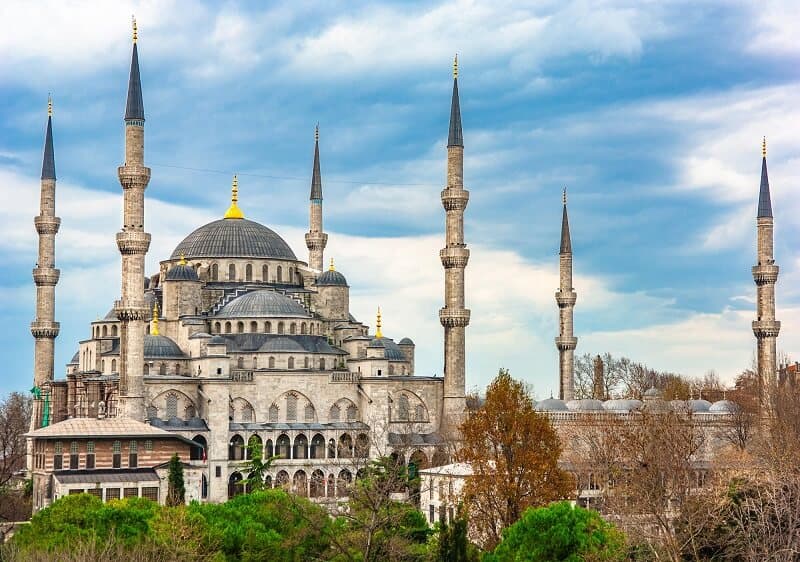
 Blue Mosque Istanbul
BLUE MOSQUE ISTANBUL
BLUE MOSQUE (Sultanahmet Mosque)
The Sultan Ahmed Mosque (Turkish: Sultan Ahmet Camii), or the Blue Mosque, is a historical imperial mosque from the Ottoman era that can be found in Istanbul, Turkey. It is both a working mosque and a major tourist destination. During Ahmed I's reign (1609–1616), its construction began. The Külliye is home to a madrasah, a hospice, and the tomb of Ahmed. Inside, the walls are covered in hand-painted blue tiles, and at night, the mosque's five main domes, six minarets, and eight secondary domes are illuminated, bathing the entire structure in a calming blue glow. Until the construction of the Blue Mosque, the Hagia Sophia was the most important mosque in Istanbul. In 1985, UNESCO designated the "Historic Areas of Istanbul," which included the Blue Mosque, as a World Heritage Site.
Storia della Moschea Blu
Sultan Ahmed, ho deciso di costruire una moschea massiccia a Istanbul per riaffermare il potere ottomano dopo la pace di Zsitvatorok e la sconfitta schiacciante nella guerra 1603-18 con la Persia. Dopo più di quarant'anni, questa sarebbe stata la prima moschea imperiale da costruire. Mentre i suoi antenati avevano usato il bottino di guerra per finanziare la costruzione della moschea, Ahmed I invece ha preso in prestito denaro dal Tesoro a causa della sua mancanza di notevoli vittorie militari. A partire dal 1609, la costruzione su questa struttura durò fino al 1616.
Infuriating the Muslim scholars known as ulama was the fact that the sultan's army had been paid for out of the general budget rather than the spoils of war. The mosque was constructed on the site of the former palace of the Byzantine emperors and faces the Hagia Sophia, the city's primary imperial mosque at the time, and the hippodrome, a prominent symbolic location in the city's southern skyline. The south side of the mosque is built on the foundations and vaults of the previous Grand Palace.
The Blue Mosque's Architecture
The Blue Mosque represents two centuries of development in Ottoman mosque architecture and Byzantine church architecture. It is the last great mosque from the classical period of the Ottoman Empire and combines traditional Islamic architecture with some Byzantine features from the nearby Hagia Sophia. By remembering what his teacher, Sinan, had taught him, the architect made a building of the epic size and opulent beauty.
Blue Mosque's Minarets
Solo due moschee in tutta la Turchia hanno fino a sei minareti, e uno di loro è la Moschea Blu.
The Sabanci Mosque in Adana is the second. The Sultan took some heat for his arrogance after the number of minarets was made public, as they matched the number at the Ka'aba Mosque in Mecca. To solve this issue, he had a seventh minaret added to the Mecca mosque.
The Blue Mosque has four minarets, one at each of its four corners. These minarets, called Serefe, are fluted and pencil-shaped; they each have three balconies supported by stalactite corbels, whereas the other two minarets at the end of the forecourt have only two. Once upon a time, the muezzin, or prayer caller, had to make the ascent of a steep, narrow spiral staircase five times each day to make the call to prayer.
La chiamata è ora trasmessa attraverso un sistema di annuncio pubblico e può essere sentita in tutto il quartiere storico della città e risolto da altre moschee nella zona. Mentre il sole si tramonta e la moschea è brillantemente illuminata da luci di alluvione colorate, enormi folle di turchi e turisti si radunano nel parco di fronte a esso per ascoltare la chiamata alle preghiere serali.
The Blue Mosque's Interior
More than 20,000 hand-made ceramic tiles, made in Iznik (Nicaea), in more than fifty different tulip designs, line the lower levels and piers of the Blue Mosque's interior. Even though the tiles on the ground floor have a classic look, the ones in the upper galleries are more ornate and feature bright colors and elaborate patterns of flowers, fruit, and cypresses. Iznik master potters Kasap Haci and Avanos and Cappadocia native Baris Efendi oversaw the production of over 20,000 tiles. Since the cost of tiles in general went up over time, the sultan issued a decree setting a standard price for them. The building's tiles gradually became of lower quality as time went on. The glazes have dulled, and the colors have faded. The tiles on the rear wall of the balcony are originals that were salvaged from the harem of the Topkapi Palace after it burned down in 1574.
Blue is the predominant color used on the upper levels of the mosque's interior. The building has over two hundred stained-glass windows, many of which feature elaborate designs. Ostrich eggs were hung from the chandeliers to keep spiders out of the mosque and prevent the buildup of cobwebs. Many of the Qur'anic verses adorning the walls were written by Seyyid Kasim Gubari, widely considered the greatest calligrapher of his era.
I tappeti, forniti da individui fedeli e sostituiti mentre si indossano, coprono i pavimenti. L'abbondanza di alte, ampie finestre crea l'illusione di un interno spazioso. Ci sono cinque finestre in ogni exedra della moschea, e alcune di esse sono coperte da ciechi.
Ci sono un totale di 28 finestre nella cupola centrale, con 14 in ciascuna delle due cupole esterne (quattro delle quali sono cieche). le autorità veneziane hanno presentato al sultano finestre in vetro colorato come regalo.
The mihrab is the most important part of the mosque's interior. It is made of marble and has intricate carvings, a stalactite niche, and two panels with writing on them.
Le piastrelle in ceramica coprono le pareti adiacenti. Tuttavia, l'abbondanza di finestre nella zona riduce l'effetto. L'imam consegna il suo sermone a mezzogiorno il venerdì e altri giorni sacri da un pulpito chiamato minber, che si trova a destra del mihrab e è elaboratamente decorato. Anche quando la moschea è in grado, tutti potranno vedere e sentire l'imamo grazie al layout pensato.
The southeast corner is home to the royal kiosk, which features a platform, loggia, and two small private rooms for the king and queen. You can use it to enter the Blue Mosque's royal loge, which is located in the southeast corner of the mosque's upper gallery. During the 1826 crackdown on the defiant Janissary Corps, the Grand Vizier set up headquarters in these private quarters. In Turkey, this section of the palace is known as the hünkâr mahfil, and it is surrounded by ten marble columns.
Once adorned with gold and precious stones, the Blue Mosque's many lamps are now plain white. Ostrich eggs and crystal balls were hidden in the various glass jars. All of these ornaments were stolen or removed to be displayed in Istanbul museums.
Originariamente scritta dal grande caligrafe del XVII secolo Ametli Kasim Gubarim, i nomi dei califfi e i versetti del Corano adornano le grandi tavole che lineano le pareti.
The Blue Mosque's Exterior
The large forecourt's facade was inspired by Istanbul's Süleymaniye Mosque but features turrets instead of minarets on the four corner domes. The court, which is enclosed by a continuous vaulted arcade, is roughly the same size as the mosque. The courtyard is quite large for its diminutive central hexagonal fountain. The architectural highlight of the courtyard is the monumental but narrow gateway that leads to it through the arcade. The small ribbed dome atop the tall lobate is topped by a fine stalactite structure.
When entering the Mosque's western court, you'll notice a heavy iron chain hanging from the ceiling. The sultan was the only person permitted to ride a horse into the Blue Mosque's courtyard. To avoid being struck by the chain, the sultan must bend over slightly whenever he enters the court. Symbolically, it served to show the ruler's respect for the divine.
Domande frequenti sulla Moschea Blu
Q diChe cos’è la Moschea Blu?
a: The Blue Mosque is an old mosque in Istanbul, Turkey. It is also called the Sultan Ahmed Mosque.
Q diQuando è stata costruita la Moschea Blu?
aLa moschea fu costruita tra il 1609 e il 1616.
Q diChi ha costruito la Moschea Blu?
aAhmed I, il sultano ottomano, fu colui che costruì la Moschea Blu.
Q diPerché è chiamata la Moschea Blu?
aLa moschea è chiamata Moschea Blu a causa delle piastrelle blu utilizzate nella sua decorazione interna.
Q diQuali sono le caratteristiche principali della Moschea Blu?
aLa Moschea Blu ha sei minareti, una grande cupola centrale e cupole più piccole che la circondano, così come complessi lavori di calligrafia e piastrelle.
Q diQuante cupole ha la Moschea Blu?
aLa Moschea Blu ha una cupola centrale e otto cupole più piccole.
Q diQual è la capacità della Moschea Blu?
aLa Moschea Blu può ospitare fino a 10.000 adoratori alla volta.
Q diLa Moschea Blu è aperta ai visitatori?
aLa Moschea Blu è aperta ai visitatori e ai turisti, tranne durante i tempi di preghiera.
Q diQuali sono gli orari di visita per la Moschea Blu?
aGli orari di visita per la Moschea Blu sono tipicamente dalle 9:00 alle 12:00 e dalle 2:00 alle 16:00.
Q diQuanto costa entrare nella Moschea Blu?
aNon c'è alcuna tassa di ingresso per entrare nella Moschea Blu, ma le donazioni sono apprezzate.
Puoi prenotare un tour della città di Istanbul con le nostre guide turistiche autorizzate.I link sono qui sotto:
Puoi prenotare un tour della città di Istanbul con le nostre guide turistiche autorizzate.I link sono qui sotto:
Mappa della Moschea Blu