
 Μεγάλη Βαζάρη - Κωνσταντινούπολη
ISTANBUL GRAND BAZAAR
GRAND BAZAAR’s History
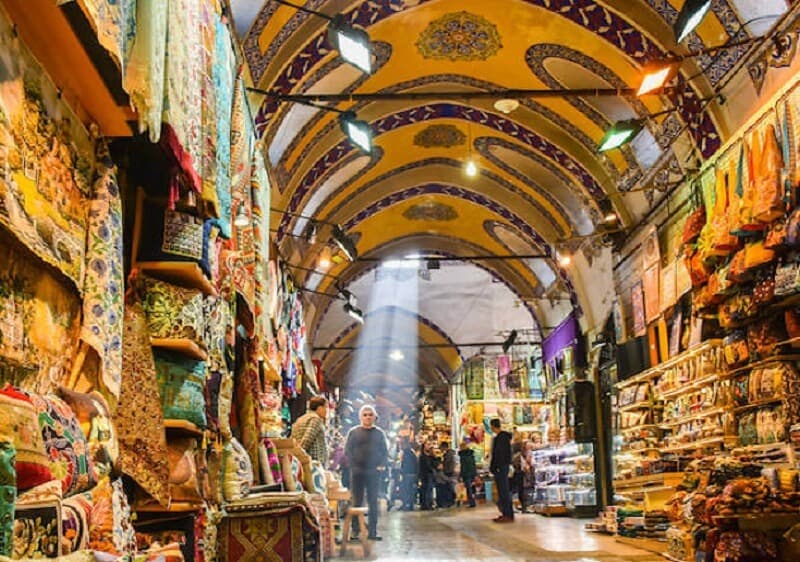
The Grand Bazaar is one of Istanbul's most recognizable landmarks and a bustling commercial center that currently employs 26,000 people and sees between 250,000 and 400,000 visitors every day.
It must compete with the modern shopping malls common in Istanbul, but its beauty and fascination represent a formidable advantage for it. On the 550th anniversary of the complex in 2011, the head of the Grand Bazaar Artisans Association said that it was the most visited landmark in the world.
The building's infrastructure, heating, and lighting will all be updated thanks to a restoration project set to begin in 2012. The stalls inside the market will be renovated, and any additions made later will be torn down. This plan will address the major issues plaguing the market, such as the lack of a restroom in the entire bazaar (now it is solved and there are many toilet facilities in the Grand Bazaar). Also, because there haven't been enough controls in the past few years, many dealers have taken out columns and walls from their stores. This, along with the fact that stolen lead was replaced with concrete on the roof of the market, has made it very dangerous for the earthquake that is expected to hit Istanbul in the next few years.
Except for Sundays and national holidays, the Grand Bazaar is open from 9:00 a.m. to 9:00 p.m. every day.
History of the Grand Bazaar
Shortly after the Ottoman conquest of Constantinople, in the winter of 1455–56, work began on what would become the Grand Bazaar's central market as part of a larger plan to boost the city's economy. A building specifically for the exchange of textiles was commissioned by Sultan Mehmet II. It was known in Ottoman Turkish as Bezzâzistan-Cedîd ("New Bedesten") and Cevâhir Bedestan ('Bedesten of Gems'). The Persian word bezestan, meaning "bazaar of the cloth sellers," was the inspiration for the English word bedesten. The structure, known variously as the "internal" (Ic), "ancient" (Atik), or "old" (Eski) Bedesten in Turkish, is located on the southwestern slope of Istanbul's third hill, between the ruins of the ancient Fora of Constantine and the Fora of Theodosius. It was also near the first sultan’s palace, the Old Palace (Eski Sarayi), which was also under construction in those same years, and not far from the Artopoleia (in Greek) (Άρτoπωλεία), the city’s bakers’ quarter in Byzantine times.
During the 1460s and 1461s, the Bedesten was completed and donated to the Aya Sofya Mosque's waqf. Even though most of the building is from the second half of the 15th century, academics have pointed to the Byzantine relief of a Comnenian eagle that is still on top of the East Gate (Kuyumcular Kapisi) of the Bedesten as proof that it was built in the Byzantine era.
A slave market, known in Turkish as Esir Pazari, operated not far from the Bedesten, a practice that had been maintained since Byzantine times. The old book market (Sahaflar Carsisi) was relocated from the bazaar to its present picturesque location near the Beyazid Mosque. Other important markets in the area were the "second-hand market" (Turkish: "Bit Pazari"), the "Long Market" (Uzun Carsi), which was the same as the Greek "Long Portico" (Makros Embolos), and the "Long Market."
Mehmet II had a second covered market built to the north of the first. It was called Kücük (which means "Little"), Cedit (which means "New"), or Yeni (both of which mean "New") Bedesten. The name comes from a type of thread that was woven in Bursa and had the color of sandalwood.
Μετά την κατασκευή του Sandal Bedesten, η κλωστοϋφαντουργική βιομηχανία μετακόμισε εκεί, ενώ το Cevahir Bedesten έγινε ο αποκλειστικός τομέας του τομέα λιανικής πώλησης υψηλής ποιότητας. Ήταν αρχικά δύο ξεχωριστές δομές. Υπήρχαν ερείπια εκκλησίας και μια μεγάλη δεξαμενή μεταξύ τους και το Τζαμί του Beyazid, όπως σημείωσε ένας Γάλλος ταξιδιώτης του 16ου αιώνα που ονομάστηκε Pierre Gilles. Ωστόσο, πολλοί έμποροι εγκατέστησαν γρήγορα καταστήματα στους χώρους μεταξύ τους και γύρω τους και σύντομα μια ολόκληρη περιοχή αφιερώθηκε στο εμπόριο.
Σύμφωνα με μια απογραφή που έγινε το 1890, το Μπάζαρ φιλοξενεί 4.399 ανοιχτά καταστήματα, 2 bedesten, 2.195 δωμάτια, 1 hamam, 1 τζαμί, 10 medrasas, 19 πηγάδια (2 sadirvan και 1 sebil), 1 μαυσωλείο, και 24 han. Υπάρχουν 3.000 καταστήματα που απλώνεται σε 61 δρόμους στην 30,7% οικοδομημένη περιοχή που προστατεύεται από 18 πύλες.
The last major disaster was an earthquake that struck Istanbul in 1894. Mahmud Celaleddin Paşa, the Minister of Public Works, oversaw the reconstruction of the damaged bazaar until 1898, during which time the size of the complex was reduced. While the Kütkculer Kapi and the old gate were demolished in the west, the Bit Pazari was left outside the new perimeter and turned into an open-air road known as Cadircilar Caddesi (the "Tentmaker Road"). Among all the hans that belonged to the market, many were left outside, and only nine remained enclosed in the structure.
Μετά την απομάκρυνση των εμπορικών επιχειρήσεων από τον ευρωπαϊκό ανταγωνισμό, η πόλη της Κωνσταντινούπολης αγόρασε το Sandal Bedesten το 1914 και άρχισε να το χρησιμοποιεί ως οίκος δημοπρασιών για χαλιά το επόμενο έτος.Το 1927, οι δρόμοι και τα τμήματα του μπαζάρ έλαβαν επίσημα τα σημερινά τους ονόματα.
The complex was last renovated in the 1980s. At the same time, the market's advertising posters were taken down.
The architecture of the Grand Bazaar
Από τη διάταξη, το Ic Bedesten είναι τετράγωνο (43,30 m x 29,50 m). Εικοσιτέσσερις πέτρινοι πυλώνες υποστηρίζουν τις τρεις σειρές των κόλπων. Κάθε ένας από τους πύργους έχει το κτίριο τούβλου με το τυφλό-βρόχο. 44 υπόγεια δωμάτια (τουρκικά: mahzen) χτίστηκαν στους εσωτερικούς και εξωτερικούς τοίχους. Το Bedesten λαμβάνει το φυσικό του φως από τα ορθογώνια παράθυρα που είναι εγκατεστημένα απευθείας κάτω από την οροφή, τα οποία μπορούν να προσεγγιστούν μέσω ενός εξωτερικού κατασκευασμένου από ξύλο. Λόγω του περιορισμένου φωτισμού, το κτίριο ήταν ανοιχτό μόνο για ένα μικρό αριθμό ωρών κάθε μέρα και ο μοναδικός του σκοπός ήταν η πώληση ακριβά αγαθά, κυρίως κλωστοϋφαντουργικά. Επιπλέον, το mahzen του Bedesten χρησιμεύει ως κουρτίνες. Τέσσερις ξεχωριστές εισότητες δίνουν στους ανθρώπους πρόσβαση στη δομή:
The northern gate is known as the "Second-hand Book Sellers' Gate" (Sahaflar Kapisi), the southern gate is known as the "Skullcap Sellers' Gate" (Takkeciler Kapisi), the eastern gate is known as the "Jewelers' Gate" (Kuyumcular Kapisi), and the western gate is known as "Women's Clothiers' Gate" (Zenneciler Kapisi).
Το Sandal Bedesten ακολουθεί τη διακόσμηση με ορθογώνια διάταξη (40,20 m με 42,20 m), 12 πέτρινα πυλώνες με 20 πηγές και τούβλα που καλύπτονται με τυφλό τύμπανο. Μόνο οι εξωτερικοί τοίχοι έχουν περιφράξεις που κόβονται σε αυτά. Η μασονία και στις δύο δομές είναι φτιαγμένη από συντρίμμια και οι πηγές συνδέονται με τούβλα που με τη σειρά τους συνδέονται με ράβδους juniper.
The buildings of the Grand Bazaar, except for the Bedesten, were originally erected out of wood; it wasn't until after the devastating fire of 1700 that they were reconstructed out of stone and brick and given roofs. Except for the fur dealers' market (Turkish: Kürkcüler Carsisi), a later addition, all of the buildings in the bazaar are single-story structures. Most of the roofs are tiled, while tarmac has been installed in the area that caught fire in 1954. Bazaar goers were warned not to bring any kind of flashlight or candle, as this would only serve to attract attention and start fights. It runs roughly parallel to the roads that surround the central district of Bedesten. Regardless, the market took on a picturesque appearance, especially in its western part, due to the damage caused by the numerous fires and earthquakes throughout the centuries and the repairs done without a general plan.
What to Buy at the Grand Bazaar in Istanbul
Κίλιμς και Ρούγκς
One of Turkey's best-known exports is its exquisite hand-woven carpets and kilims (flat-weaves), and the Grand Bazaar is a popular place to find these rugs.
Η Τουρκία έχει μια μακρά και ενδιαφέρουσα ιστορία κατασκευής χαλιών. διαφορετικές περιοχές, πόλεις και χωριά είναι γνωστά για τα μοναδικά τους μοτίβα και χρώματα.
Τα χαλιά και τα χαλιά από τις χώρες της Κεντρικής Ασίας θα είναι διαθέσιμα μαζί με εκείνα που κατασκευάζονται στην Τουρκία.
You can browse through a wide variety of carpets in the Grand Bazaar's carpet shops. The best carpet stores will give you a cup of tea and a tour of their showroom while talking about their stock and showing you different kinds of carpets.
When you go carpet shopping, don't forget to bring your sense of humor.
Sellers of carpets are well-known for being a little too enthusiastic with their tales, but you should take it in stride and consider it all in good fun. Keep in mind that, unless they were present during the carpet's production, no carpet dealer has any idea what the weaver was thinking as they created the carpet.
Carpet shopping can be confusing for the uninitiated; if you don't know what you're doing, it's best to just buy something you like. Older carpets and kilims from the village or the nomad's collection were made for the weaver's use, while newer carpets are manufactured with the tourist in mind.
Η αξία των αρχαίων χαλιών από την Τουρκία και την Κεντρική Ασία εξαρτάται από πολλούς παράγοντες, όπως η ηλικία τους, η τεχνική τους, η ποιότητα του μαλλιού και των χρωμάτων που χρησιμοποιούνται και η έλλειψή τους στην τρέχουσα αγορά.
Φώτα και λυχνίες
Υπάρχει μεγάλη αύξηση στον αριθμό των ανθρώπων που θέλουν λαμπτήρες και φανάρι ως δώρα από την Τουρκία.
In the Grand Bazaar, lampshades and chandeliers come in all kinds of modern styles, from metal filigree to colorful glass mosaics.
If you'd rather shop for vintage lighting than new, the Grand Bazaar's Ic Bedesten (Old Bazaar), located in the vicinity of the bazaar's geographic center, is where you'll find most of the specialized antique shops selling such items. The oldest and most iconic structure in the Grand Bazaar is the Ic Bedesten.
Κοιτάξτε στο Cebeci Han για μερικά αιχμηρά φωτιστικά φιλίγρης.
Μικρότερες επιλογές περιλαμβάνουν τα πολλά γυαλί και μέταλλο κεριά φανάρι που πωλούνται στο μπαζάρι.
Κεραμικά και Πότερ
Οι πόλεις της Iznik και Kütahya, που έχουν κατασκευάσει κεραμικά για μεγάλο χρονικό διάστημα, ήταν οι πρώτοι τόποι όπου κατασκευάστηκαν διάσημα τουρκικά κεραμικά.
Οι Τούρκοι καλλιτέχνες κεραμικής κάνουν επίσης πολλά σύγχρονα κομμάτια εκτός από τα παραδοσιακά οθωμανικά σχέδια που συχνά διαθέτουν κίνητρα τουλίπας και άλλα floral μοτίβα.
Οι χεττίτες και οι καραφές, με κυκλικό μεσαίο τμήμα, βασίζονται σε ανατολικά σχέδια από την Εποχή του Χαλκού και κάνουν εξαιρετικά δώρα.
Αν σχεδιάζετε ένα ταξίδι στην Καππαδοκία ενώ βρίσκεστε στην Τουρκία, ίσως θέλετε να κρατήσετε για να κάνετε οποιεσδήποτε αγορές μέχρι να έχετε την ευκαιρία να δείτε τι οι κεραμικοί καλλιτέχνες της Avanos είναι γνωστοί για την παραγωγή, καθώς το έργο τους θυμίζει την εποχή των Χετ.
In the Grand Bazaar, the main streets are lined with shops that sell cheap, mass-produced ceramics of low quality.
Visit one of the market's dedicated ceramics shops if you're in search of uniquely painted ceramics.
The Arasta Bazaar (behind the Blue Mosque) and the Grand Bazaar are both worth exploring if you're interested in purchasing ceramics in Istanbul.
Τουρκικά μεταλλικά
Οι πόλεις του Γκαζιάντεπ, του Σανλιούρφα και του Μάρντιν στη νοτιοανατολική Τουρκία είναι γνωστές για την παραγωγή μερικών από τα καλύτερα σύγχρονα μεταλλικά υλικά στην Τουρκία.
Κρατήστε τις αγορές σας μέχρι το ταξίδι σας στην Τουρκία, ειδικά σε αυτές τις πόλεις, καθώς οι τιμές θα είναι χαμηλότερες εκεί.
Μερικά από τα καλύτερα πωλούμενα αντικείμενα είναι τα σετ υπηρεσιών τσαγιού και καφέ και τα μεταλλικά πιάτα με περίπλοκες γραφές που βασίζονται σε παραδοσιακά οθωμανικά σχέδια.
Engraved Turkish coffee pots, used to brew the beverage over a stovetop, are a practical and attractive souvenir that won't take up too much space in your carry-on.
Ναρκίλ Χουκά
Το ναργίλ (υδρόλουτρο) είναι ένα παραδοσιακό τουρκικό αναμνηστικό που χρησιμοποιείται για το κάπνισμα καπνού με γεύση φρούτων.
Από την εποχή της Οθωμανικής Αυτοκρατορίας, οι άνθρωποι καπνίζουν ναργίλια σε τουρκικά καφέ.
Τα γυάλινα ή κεραμικά φλιτζάνια ναργίλ (που κρατούν το νερό που χρησιμοποιείται για να φιλτράρει τον καπνό) μπορούν να πάρουν εξελιγμένα σχέδια.
Keep in mind that nargile components are often purchased separately, and the bowls can be used as distinctive vases if you're not interested in buying a fully functional nargile but like the look of the bowls.
Go to Ic Bedesten's antique shops if you're in search of vintage Nargile. There are many shops in the bazaar selling contemporary nargile.
Κοσμήματα
The Grand Bazaar is the best place to go in Istanbul to buy jewelry.
There's something for everyone here, from glitzy gold to delicate silver filigree work and pieces set with semi-precious stones.
For gold work, head to the main street of Kalpakcilarbasi Caddesi first, which is lined with gold shops. This is the street that runs between the main Grand Bazaar entrances of Bayazit Gate, on the west side of the bazaar, and Nuruosmaniye Gate, at the eastern end.
Επειδή τόσο πολύ από την παραγωγή στοχεύει στην αγορά νυφικών, τα κομμάτια τείνουν να είναι κλασικά στο στυλ.
Μπορείτε να ξεκινήσετε την αναζήτηση για τα ασημένια κοσμήματα στο Ic Bedesten (Old Bazaar), το οποίο φιλοξενεί πολλά καταστήματα αφιερωμένα στο πολύτιμο μέταλλο.
Κρατήστε ένα μάτι για μπλε χαλκεδόνα και χουλτανίτη κοσμήματα, τα οποία και τα δύο εξορύσσονται στην Τουρκία και θεωρούνται ημιπολύτιμες πέτρες.
Κάλτσες και μαξιλάρια
The many smaller textile items available in Turkey are great purchases if you're looking for easy-to-pack items.
Αυτά σας επιτρέπουν να φέρετε πίσω μερικά γνήσια τουρκικά έπιπλα χωρίς την άσχημη τιμή και το υπερβολικό βάρος αποσκευών από την αγορά χαλιών.
Τα κλωστοϋφαντουργικά προϊόντα μπορούν να βρεθούν σε μια απίστευτη ποικιλία σχεδίων και στυλ. Τα καλύμματα μαξιλαριών και άλλα μικρά υφάσματα που τυπώνονται με παραδοσιακά οθωμανικά σχέδια είναι επίσης εύκολα προσβάσιμα και φθηνά χάρη στη μαζική παραγωγή.
Τα πρωτότυπα υφάσματα σουζάνι (κεντρικά ασιατικά υφάσματα με ξύδι) και τα vintage kilims χρησιμοποιούνται για τη δημιουργία μοναδικών υφασμάτων (επίπεδη χαλιά).
Εξοπλισμός Hammam
Although bath products might not be the first thing that comes to mind when you think of a traditional Turkish souvenir, they have a deep history thanks to the country's hammam (Turkish bath) culture.
Towels with traditional fringed striped designs, called pestemals, are still used in modern hammams. The stalls in the bazaar will sell a wide variety of mass-produced towels, but if you're looking for something truly unique, you should browse the selection of handwoven cotton pestemals, towels, and bathrobes available at stores that specialize in hammam supplies.
Τα χειροποίητα σαπούνια ελαιολάδου και οι απολεπιστικές βούρτσες που χρησιμοποιούνται στα χαμάμ είναι δύο από τα μικρότερα αντικείμενα που κάνουν μεγάλα δώρα για να πάρουν σπίτι.
Αξεσουάρ για μόδα
The Grand Bazaar is a fantastic place to shop for accessories, whether you're in the market for a new scarf, pair of slippers, hat, or bag.
Η Τουρκία είναι γνωστή από καιρό για τα προϊόντα της από μετάξι και δέρμα, και υπάρχει επίσης μια παραδοσιακή παράδοση φτιαγμένη από φούστα που σήμερα παράγει πολλά περίεργα και πολύ σύγχρονα είδη μόδας, ιδιαίτερα φούστες και καπέλα.
Να θυμάστε ότι πολλά από τα μαντήλια που πωλούνται είναι μαζικά κατασκευασμένα με τους τουρίστες στο μυαλό και δεν γίνονται ούτε καν στην Τουρκία.
Τα καταστήματα υφασμάτων που τρέχουν κατά μήκος του βόρειου άκρου του Yaglikcilar Caddesi είναι τα καλύτερα μέρη για να βρείτε υψηλής ποιότητας χειροποίητα μετάξι, κασμήριο και βαμβακερά σκουλαρίκια και σκουλαρίκια.
In the southwest corner of the bazaar, along Parcacilar Sokak and Fesciler Caddesi, you'll find a concentration of stores selling leather goods.
Τούρκικα γλυκά και επιδόρπια
Although the Spice Bazaar is where most tourists go to buy souvenirs and gifts involving spices and Turkish delight, the Grand Bazaar also has plenty of options for these kinds of purchases.
Σημειώστε ότι το sumac (ο αποξηραμένος καρπός του καμμένου του φυτό sumac) και το pul biber (ο αποξηραμένος κόκκινος πιπεριάς του Χαλέπι) είναι δύο από τα πιο εξέχοντα μπαχαρικά στην τουρκική κουζίνα.
Οι γλυκοκαρδιές και οι πατάτες είναι δύο καρυκεύματα που αξίζει να επιστρέψετε (τα συμπυκνωμένα σιρόπια φρούτων συνήθως γίνονται από σταφύλια ή μαργαριτάρια στην Τουρκία).
Προσέξτε τα πολλά ζαχαροπλαστεία helva που κατασκευάζονται από σμήνη σεσαμού, καθώς και τις αμέτρητες ποικιλίες τουρκικής ευχαρίστησης (που ονομάζεται lokum στην Τουρκία), οι οποίες είναι γεμάτες με καρύδια και αρωματισμένες με ροδόνερο ή φρούτα.
Advice on Shopping at the Grand Bazaar
The Grand Bazaar is open from 8.30 a.m. to 7 p.m., Monday through Saturday.
You cannot cover the breadth of the bazaar in one visit. Plan on spending at least an entire morning or afternoon here on your first visit if you want to explore or are serious about shopping, and don't expect to see everything.
Expect to get lost. Half the fun is getting lost in the Grand Bazaar and discovering one of the alley dead ends that lead to an arcaded han (old traveler inn).
Το τσάι και η συνομιλία με τους τοπικούς καταστηματάρχες και τους touts είναι βασικά στοιχεία της εμπειρίας. το Cay (τσάι) θα σας προσφερθεί από οποιονδήποτε και όλους όσους συναντάτε. η εμπειρία σας εδώ θα είναι πολύ πιο πλούσια και πιο διασκεδαστική αν αφιερώσετε χρόνο για να συμμετάσχετε σε αυτή την τουρκική φιλοξενία.
The initial price you are quoted depends as much on the country you are from as it does on the seller's mood at the time. For an idea of how much items cost, spend some time browsing a range of shops before purchasing.
Οι καταστηματάρχες και οι έμποροι εδώ μιλούν μια σειρά γλωσσών.
The Grand Bazaar's larger thoroughfares are lined with souvenir shops selling the same trinkets you'll find anywhere: fridge magnets, key chains, Turkey flags, and the ubiquitous nazar boncuk (glass evil-eye protector amulets). Get away from the hustle and bustle of the main drags to find unique and exciting stores.
Τα καταστήματα χαλιών βρίσκονται κοντά στο Halicilar Caddesi, ενώ τα καταστήματα χρυσού βρίσκονται κατά μήκος του Kalpakcilarbasi Caddesi και κοντά στο Cebeci Han και το Ic Bedesten.
Frequently Asked Questions About The Grand Bazaar
Ερώτηση: What is the Grand Bazaar?
Α: The Grand Bazaar is a historic covered market in Istanbul, Turkey, known for its maze-like alleys filled with shops selling everything from jewelry and spices to textiles and ceramics.
Ερώτηση: Where is the Grand Bazaar located?
Α: The Grand Bazaar is located in the Fatih district of Istanbul, Turkey.
Ερώτηση: How old is the Grand Bazaar?
Α: The Grand Bazaar was established in the 15th century and has been in continuous operation since then.
Ερώτηση: How big is the Grand Bazaar?
Α: The Grand Bazaar spans over 60 streets and contains over 4,000 shops.
Ερώτηση: What kinds of products can be found in the Grand Bazaar?
Α: The Grand Bazaar is known for its wide variety of products, including jewelry, textiles, ceramics, spices, and more.
Ερώτηση: What is the history of the Grand Bazaar?
Α: The Grand Bazaar has a long and rich history, having been an important center of commerce for centuries.
Ερώτηση: Is the Grand Bazaar only for tourists?
Α: The Grand Bazaar is both a tourist destination and a local shopping hub, attracting both locals and visitors alike.
Ερώτηση: What are the opening hours of the Grand Bazaar?
Α: The Grand Bazaar is typically open from 9:00 a.m. to 7:00 p.m., seven days a week.
Ερώτηση: What is the best time to visit the Grand Bazaar?
Α: The best time to visit the Grand Bazaar is in the morning or late afternoon when the crowds are smaller and you can enjoy a more leisurely shopping experience.
Ερώτηση: Is bargaining expected in the Grand Bazaar?
Α: Bargaining is expected and considered part of the shopping experience at the Grand Bazaar, so be prepared to negotiate prices with vendors.
Μπορείτε να κάνετε κράτηση για μια περιοδεία στην πόλη της Κωνσταντινούπολης με τους άδειους ταξιδιωτικούς οδηγούς μας.
Map of Grand Bazaar