
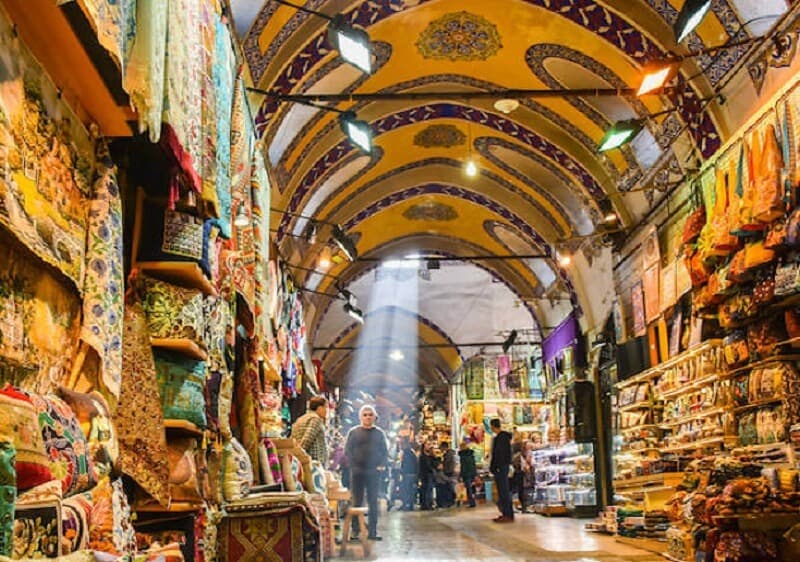
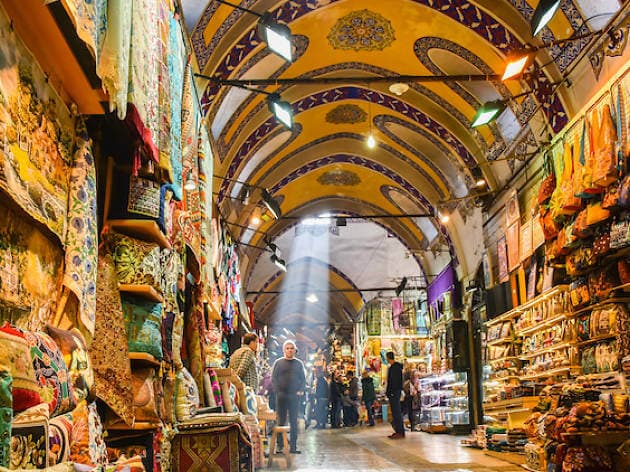
 Suuri-Bazaar Istanbul
ISTANBUL GRAND BAZAAR
GRAND BAZAAR’s History
The Grand Bazaar is one of Istanbul's most recognizable landmarks and a bustling commercial center that currently employs 26,000 people and sees between 250,000 and 400,000 visitors every day.
It must compete with the modern shopping malls common in Istanbul, but its beauty and fascination represent a formidable advantage for it. On the 550th anniversary of the complex in 2011, the head of the Grand Bazaar Artisans Association said that it was the most visited landmark in the world.
The building's infrastructure, heating, and lighting will all be updated thanks to a restoration project set to begin in 2012. The stalls inside the market will be renovated, and any additions made later will be torn down. This plan will address the major issues plaguing the market, such as the lack of a restroom in the entire bazaar (now it is solved and there are many toilet facilities in the Grand Bazaar). Also, because there haven't been enough controls in the past few years, many dealers have taken out columns and walls from their stores. This, along with the fact that stolen lead was replaced with concrete on the roof of the market, has made it very dangerous for the earthquake that is expected to hit Istanbul in the next few years.
Except for Sundays and national holidays, the Grand Bazaar is open from 9:00 a.m. to 9:00 p.m. every day.
History of the Grand Bazaar
Shortly after the Ottoman conquest of Constantinople, in the winter of 1455–56, work began on what would become the Grand Bazaar's central market as part of a larger plan to boost the city's economy. A building specifically for the exchange of textiles was commissioned by Sultan Mehmet II. It was known in Ottoman Turkish as Bezzâzistan-Cedîd ("New Bedesten") and Cevâhir Bedestan ('Bedesten of Gems'). The Persian word bezestan, meaning "bazaar of the cloth sellers," was the inspiration for the English word bedesten. The structure, known variously as the "internal" (Ic), "ancient" (Atik), or "old" (Eski) Bedesten in Turkish, is located on the southwestern slope of Istanbul's third hill, between the ruins of the ancient Fora of Constantine and the Fora of Theodosius. It was also near the first sultan’s palace, the Old Palace (Eski Sarayi), which was also under construction in those same years, and not far from the Artopoleia (in Greek) (Άρτoπωλεία), the city’s bakers’ quarter in Byzantine times.
During the 1460s and 1461s, the Bedesten was completed and donated to the Aya Sofya Mosque's waqf. Even though most of the building is from the second half of the 15th century, academics have pointed to the Byzantine relief of a Comnenian eagle that is still on top of the East Gate (Kuyumcular Kapisi) of the Bedesten as proof that it was built in the Byzantine era.
A slave market, known in Turkish as Esir Pazari, operated not far from the Bedesten, a practice that had been maintained since Byzantine times. The old book market (Sahaflar Carsisi) was relocated from the bazaar to its present picturesque location near the Beyazid Mosque. Other important markets in the area were the "second-hand market" (Turkish: "Bit Pazari"), the "Long Market" (Uzun Carsi), which was the same as the Greek "Long Portico" (Makros Embolos), and the "Long Market."
Mehmet II had a second covered market built to the north of the first. It was called Kücük (which means "Little"), Cedit (which means "New"), or Yeni (both of which mean "New") Bedesten. The name comes from a type of thread that was woven in Bursa and had the color of sandalwood.
Kun Sandal Bedesten rakennettiin, tekstiiliteollisuus muutti sinne, kun taas Cevahir Bedestenista tuli huippuluokan vähittäiskaupan yksinomainen toimiala. Ne olivat alun perin kaksi erillistä rakennetta. Niiden ja Beyazidin moskeijan välillä oli kirkon raunioita ja suuri säiliö, kuten 1600-luvulla ranskalainen matkailija nimeltä Pierre Gilles huomasi. Kuitenkin monet kauppiaat asensivat nopeasti kaupat niiden välille ja niiden ympärille, ja pian koko alue oli omistettu kauppaan.
Vuonna 1890 tehdyn väestönlaskennan mukaan Bazaarissa oli 4 399 avointa myymälää, 2 bedesten, 2195 huonetta, 1 hamam, 1 moskeija, 10 medrasaa, 19 suihkulähteä (2 sadirvan ja 1 sebil), 1 mausoleumi ja 24 han.
The last major disaster was an earthquake that struck Istanbul in 1894. Mahmud Celaleddin Paşa, the Minister of Public Works, oversaw the reconstruction of the damaged bazaar until 1898, during which time the size of the complex was reduced. While the Kütkculer Kapi and the old gate were demolished in the west, the Bit Pazari was left outside the new perimeter and turned into an open-air road known as Cadircilar Caddesi (the "Tentmaker Road"). Among all the hans that belonged to the market, many were left outside, and only nine remained enclosed in the structure.
Kun sen tekstiilikauppiaat olivat ajautuneet pois liiketoiminnasta eurooppalaisen kilpailun vuoksi, Istanbulin kaupunki osti Sandal Bedestenin vuonna 1914 ja alkoi käyttää sitä huutokauppakamariin mattoja varten seuraavana vuonna. Vuonna 1927 basarin kadut ja osat saivat virallisesti nykyiset nimensä.
The complex was last renovated in the 1980s. At the same time, the market's advertising posters were taken down.
The architecture of the Grand Bazaar
Asetuksella Ic Bedesten on neliö (43,30 m x 29,50 m). Kaksikymmentä neljä kivipylvästä tukevat kolmea riviä lahtia. Jokaisella tornilla on sen sokea-trummi-toppi tiilikuoppi. 44 maanalaista kotelotilaa (turkkilainen: mahzen) rakennettiin sisä- ja ulkoseiniin. Bedesten saa luonnollisen valonsa suorakulmaisista ikkunoista, jotka on asennettu suoraan katon alle, johon pääsee puusta valmistetun ambulatorisen kautta. Rajoitetun valaistuksen vuoksi rakennus oli avoinna vain muutaman tunnin päivässä, ja sen ainoa tarkoitus oli myydä kalliita tavaroita, erityisesti tekstiilejä. Lisäksi Bedestenin mahzen toimii kotelona. Neljä erillistä sisäänkäyntiä antavat ihmisille pääsyn rakenteeseen:
The northern gate is known as the "Second-hand Book Sellers' Gate" (Sahaflar Kapisi), the southern gate is known as the "Skullcap Sellers' Gate" (Takkeciler Kapisi), the eastern gate is known as the "Jewelers' Gate" (Kuyumcular Kapisi), and the western gate is known as "Women's Clothiers' Gate" (Zenneciler Kapisi).
Sandal Bedesten seuraa asettelu suorakulmainen (40,20 m 42,20 m), 12 kivipylväitä 20 lahtia, ja tiili kupoli ylös peitetty sokea rumpu. Vain ulkoseinät ovat kauppojen leikattu niihin. puutarha molemmissa rakenteissa on valmistettu roskaa, ja lahot ovat yhteydessä tiilikuituja, jotka puolestaan yhdistetään juniper säikeillä. rauta portit suojelivat sisäänkäyntejä molempiin rakenteisiin.
The buildings of the Grand Bazaar, except for the Bedesten, were originally erected out of wood; it wasn't until after the devastating fire of 1700 that they were reconstructed out of stone and brick and given roofs. Except for the fur dealers' market (Turkish: Kürkcüler Carsisi), a later addition, all of the buildings in the bazaar are single-story structures. Most of the roofs are tiled, while tarmac has been installed in the area that caught fire in 1954. Bazaar goers were warned not to bring any kind of flashlight or candle, as this would only serve to attract attention and start fights. It runs roughly parallel to the roads that surround the central district of Bedesten. Regardless, the market took on a picturesque appearance, especially in its western part, due to the damage caused by the numerous fires and earthquakes throughout the centuries and the repairs done without a general plan.
What to Buy at the Grand Bazaar in Istanbul
Kilimps ja Rugs
One of Turkey's best-known exports is its exquisite hand-woven carpets and kilims (flat-weaves), and the Grand Bazaar is a popular place to find these rugs.
Turkissa on pitkä ja mielenkiintoinen historia mattojen valmistuksessa. Eri alueet, kaupungit ja kylät tunnetaan ainutlaatuisista kuvioistaan ja väreistään.
Keskusasian maista tulevat matot ja kilit ovat saatavilla yhdessä Turkissa valmistettujen mattojen kanssa.
You can browse through a wide variety of carpets in the Grand Bazaar's carpet shops. The best carpet stores will give you a cup of tea and a tour of their showroom while talking about their stock and showing you different kinds of carpets.
When you go carpet shopping, don't forget to bring your sense of humor.
Sellers of carpets are well-known for being a little too enthusiastic with their tales, but you should take it in stride and consider it all in good fun. Keep in mind that, unless they were present during the carpet's production, no carpet dealer has any idea what the weaver was thinking as they created the carpet.
Carpet shopping can be confusing for the uninitiated; if you don't know what you're doing, it's best to just buy something you like. Older carpets and kilims from the village or the nomad's collection were made for the weaver's use, while newer carpets are manufactured with the tourist in mind.
Turkin ja Keski-Aasian antiikkikappaleiden arvo riippuu monista tekijöistä, kuten niiden iästä, käsityöstä, käytetyn villan ja väriaineiden laadusta sekä niiden niukkuudesta nykyisillä markkinoilla.
Lamput ja lanternit
On ollut suuri nousu ihmisten määrä, jotka haluavat lamppuja ja hehkulamppuja lahjoina Turkista.
In the Grand Bazaar, lampshades and chandeliers come in all kinds of modern styles, from metal filigree to colorful glass mosaics.
If you'd rather shop for vintage lighting than new, the Grand Bazaar's Ic Bedesten (Old Bazaar), located in the vicinity of the bazaar's geographic center, is where you'll find most of the specialized antique shops selling such items. The oldest and most iconic structure in the Grand Bazaar is the Ic Bedesten.
Katso Cebeci Hania uusimpien filigreenilamppujen löytämiseksi.
Pienempiä vaihtoehtoja ovat monet lasiset ja metalliset kynttilänvalot, joita myydään basaarissa.
Keramiikka ja potteri
Kaupunki Iznik ja Kütahya, jotka ovat tehneet keramiikkaa jo pitkään, olivat ensimmäisiä paikkoja, joissa kuuluisa turkkilainen keramiikka valmistettiin.
Turkkilaiset keraamiset taiteilijat tekevät nykyään myös paljon moderneja kappaleita perinteisten ottomaanien mallien lisäksi, joissa on usein tulppaanimikkeitä ja muita kukka-mustereita.
Hittiläistyyliset hiekkarannat ja karafit, joiden keskipiste on pyöreä, perustuvat pronssiaikaan liittyviin anatolialaisiin malleihin ja tekevät erinomaisia lahjoja.
If you are planning a trip to Cappadocia while in Turkey, you may want to hold off on making any purchases until you have a chance to see what the ceramic artists of Avanos are known for producing, as their work is reminiscent of the Hittite era.
In the Grand Bazaar, the main streets are lined with shops that sell cheap, mass-produced ceramics of low quality.
Visit one of the market's dedicated ceramics shops if you're in search of uniquely painted ceramics.
The Arasta Bazaar (behind the Blue Mosque) and the Grand Bazaar are both worth exploring if you're interested in purchasing ceramics in Istanbul.
Turkki metallit
Kaakkois-Turkin kaupungit Gaziantep, Sanliurfa ja Mardin ovat tunnettuja tuottamaan joitakin parhaista nykyaikaisista metallituotteista Turkissa.
Pidä ostoksia, kunnes matkustat Turkkiin, erityisesti näihin kaupunkeihin, koska hinnat ovat siellä alhaisemmat.
Jotkut myydyimmistä tuotteista ovat teetä ja kahvia sekä metallilaattoja, joissa on monimutkaisia kaiverruksia, jotka perustuvat perinteisiin ottomaanisiin malleihin.
Engraved Turkish coffee pots, used to brew the beverage over a stovetop, are a practical and attractive souvenir that won't take up too much space in your carry-on.
Narkomaani Hookah
Nargile (vedenputki) on perinteinen turkkilainen matkamuisto, jota käytetään hedelmätuoksuisen tupakkaan.
Ottomaanien valtakunnan ajoista lähtien ihmiset ovat tupakoineet nargileja turkkilaisissa kahviloissa.
Lasiset tai keraamiset nargile-astiat (jotka pitävät savun suodattamiseen käytettyä vettä) voivat ottaa hienostuneita malleja.
Keep in mind that nargile components are often purchased separately, and the bowls can be used as distinctive vases if you're not interested in buying a fully functional nargile but like the look of the bowls.
Go to Ic Bedesten's antique shops if you're in search of vintage Nargile. There are many shops in the bazaar selling contemporary nargile.
koruja
The Grand Bazaar is the best place to go in Istanbul to buy jewelry.
There's something for everyone here, from glitzy gold to delicate silver filigree work and pieces set with semi-precious stones.
For gold work, head to the main street of Kalpakcilarbasi Caddesi first, which is lined with gold shops. This is the street that runs between the main Grand Bazaar entrances of Bayazit Gate, on the west side of the bazaar, and Nuruosmaniye Gate, at the eastern end.
Koska niin paljon tuotantoa on suunnattu morsiamarkkinoille, kappaleet ovat tyypillisesti klassisia tyyliin.
On mahdollista aloittaa etsiminen hopean koruja Ic Bedesten (Old Bazaar), joka on koti monia myymälöitä omistettu jalometallin.
Pidä silmällä sinistä kalcedonia ja zultanite koruja, jotka molemmat ovat kaivettu Turkissa ja pidetään puoliväärikkäitä kiviä.
tyynyjä ja tyynyjä
The many smaller textile items available in Turkey are great purchases if you're looking for easy-to-pack items.
Näiden avulla voit tuoda takaisin aitoja turkkilaisia huonekaluja ilman raskaita hintatunnisteita ja matkatavaroiden ylimääräistä painoa.
Tekstiilejä löytyy uskomattomasta valikoimasta malleja ja tyylejä. tyynyn peitteet ja muut pienet tekstiilit, jotka on painettu perinteisillä ottomaanilla malleilla, ovat myös helposti saatavilla ja edullisia massatuotannon ansiosta.
Alkuperäisiä suzani-kudoksia (keskiaasialaiset harjatut tekstiilit) ja vintage-kilimiä käytetään luomaan ainutlaatuisia tekstiilivarusteita (sileät kudotut matot).
Hammamin laitteet
Although bath products might not be the first thing that comes to mind when you think of a traditional Turkish souvenir, they have a deep history thanks to the country's hammam (Turkish bath) culture.
Towels with traditional fringed striped designs, called pestemals, are still used in modern hammams. The stalls in the bazaar will sell a wide variety of mass-produced towels, but if you're looking for something truly unique, you should browse the selection of handwoven cotton pestemals, towels, and bathrobes available at stores that specialize in hammam supplies.
Käsintehtyjä oliiviöljy saippuaa ja kuorinta harjaavat hampaissa käytetyt hampaat ovat kaksi pienempiä kohteita, jotka tekevät suuria lahjoja kotiin.
Muotia varten asennettu
The Grand Bazaar is a fantastic place to shop for accessories, whether you're in the market for a new scarf, pair of slippers, hat, or bag.
Turkki on pitkään ollut tunnettu silkki- ja nahkatuotteistaan, ja on myös perinteinen tunteiden valmistusperinne, joka tänään tuottaa monia outoja ja erittäin nykyaikaisia muotiesineitä, erityisesti sukkia ja hattuja.
Muista, että monet myytävistä paitoista on massatuotantoa turisteja ajatellen, eivätkä ne ole edes valmistettu Turkissa.
Yaglikcilar Caddesin pohjoisosan varrella toimivat kangastot ovat parhaita paikkoja löytää laadukkaita käsintehtyjä silkkiä, kashmeria ja puuvillakoruja ja -harjoja.
In the southwest corner of the bazaar, along Parcacilar Sokak and Fesciler Caddesi, you'll find a concentration of stores selling leather goods.
Turkkilaisia jälkiruokia ja makeisia
Although the Spice Bazaar is where most tourists go to buy souvenirs and gifts involving spices and Turkish delight, the Grand Bazaar also has plenty of options for these kinds of purchases.
Huomaa, että sumak (kuivattu sumakkasuuri) ja pul biber (kuivattu Aleppon punainen pippuri) ovat kaksi merkittävintä mausteita turkkilaisessa keittiössä.
Makeat granaattiomenaattimolasit ja pekmez ovat kaksi mausteita, jotka kannattaa tuoda takaisin (kondensoidut hedelmäsiirapit valmistetaan yleensä viinirypäleistä tai mulberryista Turkissa).
Katso lukuisia helva-sekoituksia, jotka on valmistettu sesamiviljoista, sekä lukemattomia turkkilaisen herkkujen lajikkeita (joita kutsutaan lokumiksi Turkissa), jotka on täynnä pähkinöitä ja maustettu ruusu- tai hedelmillä.
Advice on Shopping at the Grand Bazaar
The Grand Bazaar is open from 8.30 a.m. to 7 p.m., Monday through Saturday.
You cannot cover the breadth of the bazaar in one visit. Plan on spending at least an entire morning or afternoon here on your first visit if you want to explore or are serious about shopping, and don't expect to see everything.
Expect to get lost. Half the fun is getting lost in the Grand Bazaar and discovering one of the alley dead ends that lead to an arcaded han (old traveler inn).
Teetä ja keskustelua paikallisten shoppailijoiden ja huutojen kanssa ovat olennaisia osia kokemuksesta. Cay (tee) tarjoavat sinulle kaikki ja kaikki, joita tapaat. Kokemuksesi täällä on paljon rikkaampi ja hauskempi, jos otat aikaa osallistua tähän turkkilaiseen vieraanvaraisuuteen.
The initial price you are quoted depends as much on the country you are from as it does on the seller's mood at the time. For an idea of how much items cost, spend some time browsing a range of shops before purchasing.
Kauppiaat ja toutit puhuvat täällä useita kieliä.
The Grand Bazaar's larger thoroughfares are lined with souvenir shops selling the same trinkets you'll find anywhere: fridge magnets, key chains, Turkey flags, and the ubiquitous nazar boncuk (glass evil-eye protector amulets). Get away from the hustle and bustle of the main drags to find unique and exciting stores.
Matto-ostoksia löytyy Halicilar Caddesiin, kun taas kulta-ostoksia löytyy Kalpakcilarbasi Caddesiin ja Cebeci Hanin ja Ic Bedestenin läheisyydessä.
Frequently Asked Questions About The Grand Bazaar
K: What is the Grand Bazaar?
A on: The Grand Bazaar is a historic covered market in Istanbul, Turkey, known for its maze-like alleys filled with shops selling everything from jewelry and spices to textiles and ceramics.
K: Where is the Grand Bazaar located?
A on: The Grand Bazaar is located in the Fatih district of Istanbul, Turkey.
K: How old is the Grand Bazaar?
A on: The Grand Bazaar was established in the 15th century and has been in continuous operation since then.
K: How big is the Grand Bazaar?
A on: The Grand Bazaar spans over 60 streets and contains over 4,000 shops.
K: What kinds of products can be found in the Grand Bazaar?
A on: The Grand Bazaar is known for its wide variety of products, including jewelry, textiles, ceramics, spices, and more.
K: What is the history of the Grand Bazaar?
A on: The Grand Bazaar has a long and rich history, having been an important center of commerce for centuries.
K: Is the Grand Bazaar only for tourists?
A on: The Grand Bazaar is both a tourist destination and a local shopping hub, attracting both locals and visitors alike.
K: What are the opening hours of the Grand Bazaar?
A on: The Grand Bazaar is typically open from 9:00 a.m. to 7:00 p.m., seven days a week.
K: What is the best time to visit the Grand Bazaar?
A on: The best time to visit the Grand Bazaar is in the morning or late afternoon when the crowds are smaller and you can enjoy a more leisurely shopping experience.
K: Is bargaining expected in the Grand Bazaar?
A on: Bargaining is expected and considered part of the shopping experience at the Grand Bazaar, so be prepared to negotiate prices with vendors.
Voit varata Istanbulin kaupungin kiertueen lisensoiduilla oppaillamme.
Map of Grand Bazaar