
 grand-bazaar-Istanbul
ISTANBUL GRAND BAZAAR
GRAND BAZAAR’s History
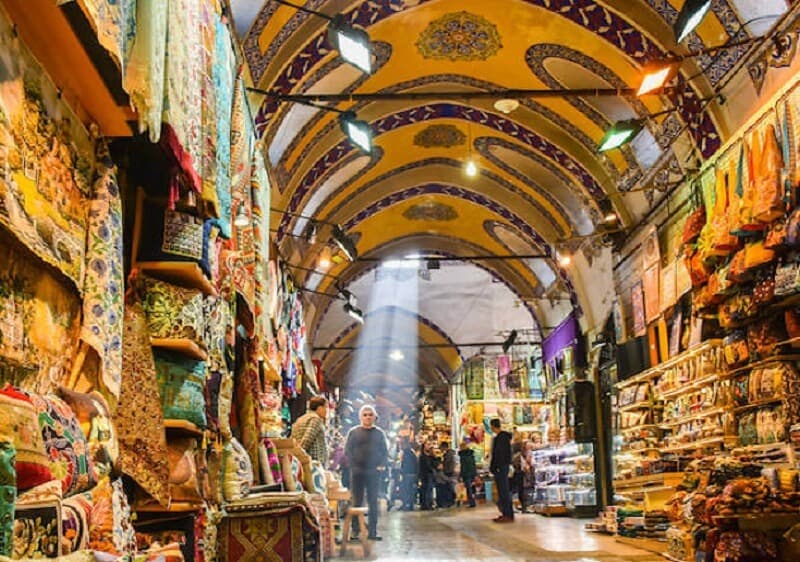
The Grand Bazaar is one of Istanbul's most recognizable landmarks and a bustling commercial center that currently employs 26,000 people and sees between 250,000 and 400,000 visitors every day.
It must compete with the modern shopping malls common in Istanbul, but its beauty and fascination represent a formidable advantage for it. On the 550th anniversary of the complex in 2011, the head of the Grand Bazaar Artisans Association said that it was the most visited landmark in the world.
The building's infrastructure, heating, and lighting will all be updated thanks to a restoration project set to begin in 2012. The stalls inside the market will be renovated, and any additions made later will be torn down. This plan will address the major issues plaguing the market, such as the lack of a restroom in the entire bazaar (now it is solved and there are many toilet facilities in the Grand Bazaar). Also, because there haven't been enough controls in the past few years, many dealers have taken out columns and walls from their stores. This, along with the fact that stolen lead was replaced with concrete on the roof of the market, has made it very dangerous for the earthquake that is expected to hit Istanbul in the next few years.
Except for Sundays and national holidays, the Grand Bazaar is open from 9:00 a.m. to 9:00 p.m. every day.
History of the Grand Bazaar
Shortly after the Ottoman conquest of Constantinople, in the winter of 1455–56, work began on what would become the Grand Bazaar's central market as part of a larger plan to boost the city's economy. A building specifically for the exchange of textiles was commissioned by Sultan Mehmet II. It was known in Ottoman Turkish as Bezzâzistan-Cedîd ("New Bedesten") and Cevâhir Bedestan ('Bedesten of Gems'). The Persian word bezestan, meaning "bazaar of the cloth sellers," was the inspiration for the English word bedesten. The structure, known variously as the "internal" (Ic), "ancient" (Atik), or "old" (Eski) Bedesten in Turkish, is located on the southwestern slope of Istanbul's third hill, between the ruins of the ancient Fora of Constantine and the Fora of Theodosius. It was also near the first sultan’s palace, the Old Palace (Eski Sarayi), which was also under construction in those same years, and not far from the Artopoleia (in Greek) (Άρτoπωλεία), the city’s bakers’ quarter in Byzantine times.
During the 1460s and 1461s, the Bedesten was completed and donated to the Aya Sofya Mosque's waqf. Even though most of the building is from the second half of the 15th century, academics have pointed to the Byzantine relief of a Comnenian eagle that is still on top of the East Gate (Kuyumcular Kapisi) of the Bedesten as proof that it was built in the Byzantine era.
A slave market, known in Turkish as Esir Pazari, operated not far from the Bedesten, a practice that had been maintained since Byzantine times. The old book market (Sahaflar Carsisi) was relocated from the bazaar to its present picturesque location near the Beyazid Mosque. Other important markets in the area were the "second-hand market" (Turkish: "Bit Pazari"), the "Long Market" (Uzun Carsi), which was the same as the Greek "Long Portico" (Makros Embolos), and the "Long Market."
Mehmet II had a second covered market built to the north of the first. It was called Kücük (which means "Little"), Cedit (which means "New"), or Yeni (both of which mean "New") Bedesten. The name comes from a type of thread that was woven in Bursa and had the color of sandalwood.
桑达尔贝德斯坦建成后,纺织工业搬到那里,而塞瓦希尔贝德斯坦成为高端零售业的独家领域,最初是两个独立的结构,在他们和贝亚齐德清真寺之间有教堂废墟和大罐,正如16世纪一位法国旅行者皮埃尔·吉尔斯所指出的那样。然而,许多商人很快在它们之间和周围的空间里建立了商店,很快整个地区就被奉献给了贸易。
根据1890年的一次人口普查,巴萨尔有4399家开放式商店,2个卧室,2195间房间,1个哈马,1个清真寺,10个梅德拉萨,19个喷泉(2个萨迪尔瓦和1个塞比尔),1个陵墓和24个汉。
The last major disaster was an earthquake that struck Istanbul in 1894. Mahmud Celaleddin Paşa, the Minister of Public Works, oversaw the reconstruction of the damaged bazaar until 1898, during which time the size of the complex was reduced. While the Kütkculer Kapi and the old gate were demolished in the west, the Bit Pazari was left outside the new perimeter and turned into an open-air road known as Cadircilar Caddesi (the "Tentmaker Road"). Among all the hans that belonged to the market, many were left outside, and only nine remained enclosed in the structure.
在其纺织商被欧洲竞争驱逐出境后,伊斯坦布尔市于1914年购买了桑达尔贝德斯坦,并于翌年开始使用它作为地毯拍卖所。
The complex was last renovated in the 1980s. At the same time, the market's advertising posters were taken down.
The architecture of the Grand Bazaar
布局方面,冰 ⁇ 是平方(4330米 x2950米)。二十四块石柱支持三排海湾,每个塔楼都有其盲管顶的砖块大楼44间地下 ⁇ 房(土耳其语:mahzen)建在内部和外墙上。Bedesten从直接安装在屋顶下方的直角窗户获得自然光线,可通过外科用木材进行访问。由于有限的照明,建筑每天只开放了少数小时,其唯一目的是出售昂贵的商品,最为突出的是纺织品。此外,Bedesten的 ⁇ 作为 ⁇ 作为 ⁇ 。四个单独的入口让人们进入结构:
The northern gate is known as the "Second-hand Book Sellers' Gate" (Sahaflar Kapisi), the southern gate is known as the "Skullcap Sellers' Gate" (Takkeciler Kapisi), the eastern gate is known as the "Jewelers' Gate" (Kuyumcular Kapisi), and the western gate is known as "Women's Clothiers' Gate" (Zenneciler Kapisi).
桑达尔贝德斯坦采用一个直角布局(4020米至4220米),12个带20个湾的石柱,以及用盲管顶的砖块大楼。只有外墙有店铺铺,切入其中。两座建筑物的木材是由废墟制成,而海湾是用砖块连接的,它们反过来是用木 ⁇ 连接的。铁门保护了两座建筑物的入口。
The buildings of the Grand Bazaar, except for the Bedesten, were originally erected out of wood; it wasn't until after the devastating fire of 1700 that they were reconstructed out of stone and brick and given roofs. Except for the fur dealers' market (Turkish: Kürkcüler Carsisi), a later addition, all of the buildings in the bazaar are single-story structures. Most of the roofs are tiled, while tarmac has been installed in the area that caught fire in 1954. Bazaar goers were warned not to bring any kind of flashlight or candle, as this would only serve to attract attention and start fights. It runs roughly parallel to the roads that surround the central district of Bedesten. Regardless, the market took on a picturesque appearance, especially in its western part, due to the damage caused by the numerous fires and earthquakes throughout the centuries and the repairs done without a general plan.
What to Buy at the Grand Bazaar in Istanbul
基里姆和鲁格
One of Turkey's best-known exports is its exquisite hand-woven carpets and kilims (flat-weaves), and the Grand Bazaar is a popular place to find these rugs.
土耳其有漫长而有趣的制作地毯的历史,不同的地区,城市和村庄以其独特的图案和颜色而闻名。
中亚国家的地毯和地毯将与土耳其制造的地毯一起提供。
You can browse through a wide variety of carpets in the Grand Bazaar's carpet shops. The best carpet stores will give you a cup of tea and a tour of their showroom while talking about their stock and showing you different kinds of carpets.
When you go carpet shopping, don't forget to bring your sense of humor.
Sellers of carpets are well-known for being a little too enthusiastic with their tales, but you should take it in stride and consider it all in good fun. Keep in mind that, unless they were present during the carpet's production, no carpet dealer has any idea what the weaver was thinking as they created the carpet.
Carpet shopping can be confusing for the uninitiated; if you don't know what you're doing, it's best to just buy something you like. Older carpets and kilims from the village or the nomad's collection were made for the weaver's use, while newer carpets are manufactured with the tourist in mind.
土耳其和中亚的古董地毯的价值取决于许多因素,如其年龄、工艺品质、使用的毛发和染料的质量以及目前市场上的稀缺。
灯具和灯具
人们希望从土耳其送礼灯和灯塔的人数大幅增加。
In the Grand Bazaar, lampshades and chandeliers come in all kinds of modern styles, from metal filigree to colorful glass mosaics.
If you'd rather shop for vintage lighting than new, the Grand Bazaar's Ic Bedesten (Old Bazaar), located in the vicinity of the bazaar's geographic center, is where you'll find most of the specialized antique shops selling such items. The oldest and most iconic structure in the Grand Bazaar is the Ic Bedesten.
看看塞贝奇汉的一些尖端的 ⁇ 光灯装置。
更小的选项包括在市场上销售的许多玻璃和金属蜡烛灯。
陶瓷和陶瓷
长期生产陶瓷的伊兹尼克和库塔希亚是土耳其著名的陶瓷制造的第一处地方。
土耳其陶瓷艺术家现在除了传统的奥斯曼设计之外,还制作了大量现代作品,这些设计往往具有郁金香图案和其他花卉图案。
希特式风格的木木和大篷车,具有圆形的中间部分,基于从青铜时代的阿纳托利亚设计,并做出出色的礼物。
If you are planning a trip to Cappadocia while in Turkey, you may want to hold off on making any purchases until you have a chance to see what the ceramic artists of Avanos are known for producing, as their work is reminiscent of the Hittite era.
In the Grand Bazaar, the main streets are lined with shops that sell cheap, mass-produced ceramics of low quality.
Visit one of the market's dedicated ceramics shops if you're in search of uniquely painted ceramics.
The Arasta Bazaar (behind the Blue Mosque) and the Grand Bazaar are both worth exploring if you're interested in purchasing ceramics in Istanbul.
土耳其金属
土耳其东南部的加齐安特普、圣利尔法和马丁都以生产土耳其最好的当代金属而闻名。
等到您前往土耳其,特别是这些城市的旅行,等待购买,因为价格将在那里更低。
一些畅销的产品是茶和咖啡服务套件和金属盘子,具有复杂的雕刻,基于传统的奥斯曼设计。
Engraved Turkish coffee pots, used to brew the beverage over a stovetop, are a practical and attractive souvenir that won't take up too much space in your carry-on.
⁇ ⁇ ⁇
水管(nargile)是土耳其传统的纪念品,用于吸烟。
自从奥斯曼帝国时代以来,人们在土耳其咖啡馆里吸烟 ⁇ 鱼。
玻璃或陶瓷 ⁇ (用来过滤烟雾的水)可以采用精心设计。
Keep in mind that nargile components are often purchased separately, and the bowls can be used as distinctive vases if you're not interested in buying a fully functional nargile but like the look of the bowls.
Go to Ic Bedesten's antique shops if you're in search of vintage Nargile. There are many shops in the bazaar selling contemporary nargile.
珠宝
The Grand Bazaar is the best place to go in Istanbul to buy jewelry.
There's something for everyone here, from glitzy gold to delicate silver filigree work and pieces set with semi-precious stones.
For gold work, head to the main street of Kalpakcilarbasi Caddesi first, which is lined with gold shops. This is the street that runs between the main Grand Bazaar entrances of Bayazit Gate, on the west side of the bazaar, and Nuruosmaniye Gate, at the eastern end.
由于生产的大部分目的是针对新娘市场,所以这些作品往往是经典的风格。
可以开始你的搜索银珠宝在冰贝德斯坦(旧巴萨尔),这是许多专门用于贵金属的商店。
留意蓝色 ⁇ 和黄金珠宝,这两种珠宝都在土耳其采矿,被认为是半宝石。
枕头和枕头
The many smaller textile items available in Turkey are great purchases if you're looking for easy-to-pack items.
这些允许您带回一些真正的土耳其风格的家具,而无需购买地毯的昂贵价格标签和超重的行李。
纺织品可以找到各种设计和风格的令人难以置信的多样性。枕头盖和其他用传统奥斯曼设计打印的小纺织品也容易获得和便宜,由于大规模生产。
原始的苏珊尼布(中亚布罗德纺织品)和古董 ⁇ 被用来创建独特的纺织配件(平面织地毯)。
哈马姆设备
Although bath products might not be the first thing that comes to mind when you think of a traditional Turkish souvenir, they have a deep history thanks to the country's hammam (Turkish bath) culture.
Towels with traditional fringed striped designs, called pestemals, are still used in modern hammams. The stalls in the bazaar will sell a wide variety of mass-produced towels, but if you're looking for something truly unique, you should browse the selection of handwoven cotton pestemals, towels, and bathrobes available at stores that specialize in hammam supplies.
手工制作的橄榄油肥皂和在锤子中使用的磨损磨损 ⁇ 是两件小事,可以做出很棒的礼物。
配件 时尚
The Grand Bazaar is a fantastic place to shop for accessories, whether you're in the market for a new scarf, pair of slippers, hat, or bag.
土耳其长期以丝绸和皮革产品而闻名,也有传统的发型传统,今天生产许多奇怪的和高度现代的时尚产品,特别是裙子和帽子。
请记住,许多销售的衬衫都是大规模生产的,游客在心中,甚至在土耳其也没有制造。
沿着Yaglikcilar Caddesi的北端运行的布店是找到高质量手工丝绸, ⁇ 和棉花 ⁇ 和衬衫的最佳场所。
In the southwest corner of the bazaar, along Parcacilar Sokak and Fesciler Caddesi, you'll find a concentration of stores selling leather goods.
土耳其甜点和甜点
Although the Spice Bazaar is where most tourists go to buy souvenirs and gifts involving spices and Turkish delight, the Grand Bazaar also has plenty of options for these kinds of purchases.
注意,苏马克(苏马克植物的干燥红莓果)和普尔比伯(阿勒颇红莓的干燥)是土耳其美食中最突出的两种香料。
甜酸的花粉 ⁇ 和 ⁇ 是值得带回的两种香料(土耳其通常用葡萄或 ⁇ 草制成凝固果糖)。
看看许多由季节性种子制成的赫尔瓦糖果店,以及无数种类的土耳其甜品(在土耳其称为lokum),这些菜是用坚果填充并用玫瑰水或水果味道。
Advice on Shopping at the Grand Bazaar
The Grand Bazaar is open from 8.30 a.m. to 7 p.m., Monday through Saturday.
You cannot cover the breadth of the bazaar in one visit. Plan on spending at least an entire morning or afternoon here on your first visit if you want to explore or are serious about shopping, and don't expect to see everything.
Expect to get lost. Half the fun is getting lost in the Grand Bazaar and discovering one of the alley dead ends that lead to an arcaded han (old traveler inn).
茶和与当地商人和卖品的交谈是体验的必不可少部分。Cay(茶)将由您遇到的任何人和每个人提供给您。
The initial price you are quoted depends as much on the country you are from as it does on the seller's mood at the time. For an idea of how much items cost, spend some time browsing a range of shops before purchasing.
这里的店员和卖家讲各种语言。
The Grand Bazaar's larger thoroughfares are lined with souvenir shops selling the same trinkets you'll find anywhere: fridge magnets, key chains, Turkey flags, and the ubiquitous nazar boncuk (glass evil-eye protector amulets). Get away from the hustle and bustle of the main drags to find unique and exciting stores.
地毯商店可以在Halicilar Caddesi附近找到,而金牌商店可以在Kalpakcilarbasi Caddesi沿线找到,在Cebeci Han和Ic Bedesten附近找到。
Frequently Asked Questions About The Grand Bazaar
Q ⁇: What is the Grand Bazaar?
A 是: The Grand Bazaar is a historic covered market in Istanbul, Turkey, known for its maze-like alleys filled with shops selling everything from jewelry and spices to textiles and ceramics.
Q ⁇: Where is the Grand Bazaar located?
A 是: The Grand Bazaar is located in the Fatih district of Istanbul, Turkey.
Q ⁇: How old is the Grand Bazaar?
A 是: The Grand Bazaar was established in the 15th century and has been in continuous operation since then.
Q ⁇: How big is the Grand Bazaar?
A 是: The Grand Bazaar spans over 60 streets and contains over 4,000 shops.
Q ⁇: What kinds of products can be found in the Grand Bazaar?
A 是: The Grand Bazaar is known for its wide variety of products, including jewelry, textiles, ceramics, spices, and more.
Q ⁇: What is the history of the Grand Bazaar?
A 是: The Grand Bazaar has a long and rich history, having been an important center of commerce for centuries.
Q ⁇: Is the Grand Bazaar only for tourists?
A 是: The Grand Bazaar is both a tourist destination and a local shopping hub, attracting both locals and visitors alike.
Q ⁇: What are the opening hours of the Grand Bazaar?
A 是: The Grand Bazaar is typically open from 9:00 a.m. to 7:00 p.m., seven days a week.
Q ⁇: What is the best time to visit the Grand Bazaar?
A 是: The best time to visit the Grand Bazaar is in the morning or late afternoon when the crowds are smaller and you can enjoy a more leisurely shopping experience.
Q ⁇: Is bargaining expected in the Grand Bazaar?
A 是: Bargaining is expected and considered part of the shopping experience at the Grand Bazaar, so be prepared to negotiate prices with vendors.
您可以与我们的授权的旅游指南预订伊斯坦布尔市之旅。 链接如下:
Map of Grand Bazaar