 Großbazar Istanbul
ISTANBUL GRAND BAZAAR
GRAND BAZAAR’s History
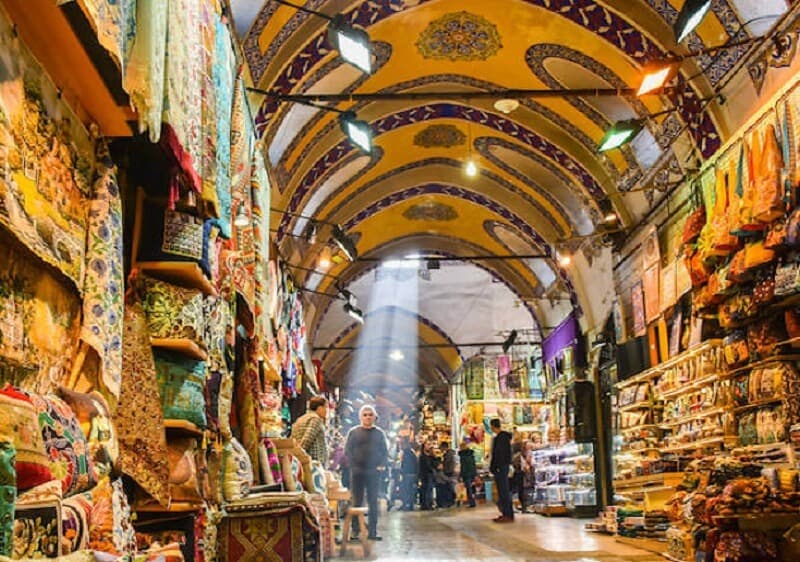
The Grand Bazaar is one of Istanbul's most recognizable landmarks and a bustling commercial center that currently employs 26,000 people and sees between 250,000 and 400,000 visitors every day.
It must compete with the modern shopping malls common in Istanbul, but its beauty and fascination represent a formidable advantage for it. On the 550th anniversary of the complex in 2011, the head of the Grand Bazaar Artisans Association said that it was the most visited landmark in the world.
The building's infrastructure, heating, and lighting will all be updated thanks to a restoration project set to begin in 2012. The stalls inside the market will be renovated, and any additions made later will be torn down. This plan will address the major issues plaguing the market, such as the lack of a restroom in the entire bazaar (now it is solved and there are many toilet facilities in the Grand Bazaar). Also, because there haven't been enough controls in the past few years, many dealers have taken out columns and walls from their stores. This, along with the fact that stolen lead was replaced with concrete on the roof of the market, has made it very dangerous for the earthquake that is expected to hit Istanbul in the next few years.
Except for Sundays and national holidays, the Grand Bazaar is open from 9:00 a.m. to 9:00 p.m. every day.
History of the Grand Bazaar
Shortly after the Ottoman conquest of Constantinople, in the winter of 1455–56, work began on what would become the Grand Bazaar's central market as part of a larger plan to boost the city's economy. A building specifically for the exchange of textiles was commissioned by Sultan Mehmet II. It was known in Ottoman Turkish as Bezzâzistan-Cedîd ("New Bedesten") and Cevâhir Bedestan ('Bedesten of Gems'). The Persian word bezestan, meaning "bazaar of the cloth sellers," was the inspiration for the English word bedesten. The structure, known variously as the "internal" (Ic), "ancient" (Atik), or "old" (Eski) Bedesten in Turkish, is located on the southwestern slope of Istanbul's third hill, between the ruins of the ancient Fora of Constantine and the Fora of Theodosius. It was also near the first sultan’s palace, the Old Palace (Eski Sarayi), which was also under construction in those same years, and not far from the Artopoleia (in Greek) (Άρτoπωλεία), the city’s bakers’ quarter in Byzantine times.
During the 1460s and 1461s, the Bedesten was completed and donated to the Aya Sofya Mosque's waqf. Even though most of the building is from the second half of the 15th century, academics have pointed to the Byzantine relief of a Comnenian eagle that is still on top of the East Gate (Kuyumcular Kapisi) of the Bedesten as proof that it was built in the Byzantine era.
A slave market, known in Turkish as Esir Pazari, operated not far from the Bedesten, a practice that had been maintained since Byzantine times. The old book market (Sahaflar Carsisi) was relocated from the bazaar to its present picturesque location near the Beyazid Mosque. Other important markets in the area were the "second-hand market" (Turkish: "Bit Pazari"), the "Long Market" (Uzun Carsi), which was the same as the Greek "Long Portico" (Makros Embolos), and the "Long Market."
Mehmet II had a second covered market built to the north of the first. It was called Kücük (which means "Little"), Cedit (which means "New"), or Yeni (both of which mean "New") Bedesten. The name comes from a type of thread that was woven in Bursa and had the color of sandalwood.
Nach dem Bau des Sandal Bedesten zog die Textilindustrie dorthin, während der Cevahir Bedesten zum exklusiven Bereich des High-End-Retail-Sektors wurde. Zuerst waren es zwei separate Strukturen. Es gab Kirchenruinen und eine große Zisterne zwischen ihnen und der Moschee von Beyazid, wie ein französischer Reisender im 16. Jahrhundert namens Pierre Gilles bemerkte. Jedoch setzten viele Kaufleute schnell ein Geschäft in den Räumen zwischen und um sie herum auf und bald wurde ein ganzer Bezirk dem Handel gewidmet.
Nach einer Volkszählung im Jahr 1890, war der Bazaar zu Hause für 4.399 offene Geschäfte, 2 bedesten, 2195 Zimmer, 1 Hamam, 1 Moschee, 10 Medrasas, 19 Brunnen (2 sadirvan und 1 sebil), 1 Mausoleum, und 24 Han. Es gibt 3.000 Geschäfte auf 61 Straßen in der 30.7% gebauten Bereich, der von 18 Toren bewacht ist.
The last major disaster was an earthquake that struck Istanbul in 1894. Mahmud Celaleddin Paşa, the Minister of Public Works, oversaw the reconstruction of the damaged bazaar until 1898, during which time the size of the complex was reduced. While the Kütkculer Kapi and the old gate were demolished in the west, the Bit Pazari was left outside the new perimeter and turned into an open-air road known as Cadircilar Caddesi (the "Tentmaker Road"). Among all the hans that belonged to the market, many were left outside, and only nine remained enclosed in the structure.
Nachdem die Textilhandelsunternehmen durch den europäischen Wettbewerb aus dem Geschäft gezogen wurden, kaufte die Stadt Istanbul 1914 die Sandal Bedesten und begann im folgenden Jahr als Auktionshaus für Teppiche zu verwenden. Im Jahr 1927 wurden den Straßen und Abschnitten des Basars offiziell ihre aktuellen Namen gegeben.
The complex was last renovated in the 1980s. At the same time, the market's advertising posters were taken down.
The architecture of the Grand Bazaar
Layoutweise ist der Ic Bedesten quadratisch (43,30 m x 29,50 m). Zwanzig vier Steinpfeiler unterstützen die drei Reihen der Buchten. Jeder der Türme hat seine Ziegelkuppel mit Blindtrommel. 44 unterirdische Schleifräume (türkisch: mahzen) wurden in den Innen- und Außenwänden gebaut. Bedesten erhält sein natürliches Licht von rechteckigen Fenstern, die direkt unter dem Dach installiert sind, die über eine ambulante Holzfertigung erreichbar sind. Aufgrund der begrenzten Beleuchtung war das Gebäude jeden Tag nur für eine kleine Anzahl von Stunden geöffnet und sein einziges Ziel war der Verkauf teurer Waren, vor allem Textilien. Darüber hinaus diente der Mahzen des Bedesten als Schleifräume. Vier separate Eingänge geben den Menschen Zugang zur Struktur:
The northern gate is known as the "Second-hand Book Sellers' Gate" (Sahaflar Kapisi), the southern gate is known as the "Skullcap Sellers' Gate" (Takkeciler Kapisi), the eastern gate is known as the "Jewelers' Gate" (Kuyumcular Kapisi), and the western gate is known as "Women's Clothiers' Gate" (Zenneciler Kapisi).
Der Sandal Bedesten folgt dem Anzug mit einer rechteckigen Anordnung (40,20 m bei 42,20 m), 12 Steinpfeilen mit 20 Buchten und Ziegelkuppeln mit einem blinden Trommel. Nur die Außenwände haben in sie Schlitten geschnitten. Die Masonerei in beiden Strukturen besteht aus Trümmern, und die Buchten sind mit Ziegelbogen verbunden, die wiederum mit Juniper-Bäumen verbunden sind. Eisentüren schützen die Eingänge zu beiden Strukturen.
The buildings of the Grand Bazaar, except for the Bedesten, were originally erected out of wood; it wasn't until after the devastating fire of 1700 that they were reconstructed out of stone and brick and given roofs. Except for the fur dealers' market (Turkish: Kürkcüler Carsisi), a later addition, all of the buildings in the bazaar are single-story structures. Most of the roofs are tiled, while tarmac has been installed in the area that caught fire in 1954. Bazaar goers were warned not to bring any kind of flashlight or candle, as this would only serve to attract attention and start fights. It runs roughly parallel to the roads that surround the central district of Bedesten. Regardless, the market took on a picturesque appearance, especially in its western part, due to the damage caused by the numerous fires and earthquakes throughout the centuries and the repairs done without a general plan.
What to Buy at the Grand Bazaar in Istanbul
Kilims und Rugs
One of Turkey's best-known exports is its exquisite hand-woven carpets and kilims (flat-weaves), and the Grand Bazaar is a popular place to find these rugs.
Die Türkei hat eine lange und interessante Geschichte der Herstellung von Teppichen.Scheine Regionen, Städte und Dörfer sind bekannt für ihre einzigartigen Muster und Farben.
Teppiche und Killings aus Zentralasien werden neben den in der Türkei hergestellten verfügbar sein.
You can browse through a wide variety of carpets in the Grand Bazaar's carpet shops. The best carpet stores will give you a cup of tea and a tour of their showroom while talking about their stock and showing you different kinds of carpets.
When you go carpet shopping, don't forget to bring your sense of humor.
Sellers of carpets are well-known for being a little too enthusiastic with their tales, but you should take it in stride and consider it all in good fun. Keep in mind that, unless they were present during the carpet's production, no carpet dealer has any idea what the weaver was thinking as they created the carpet.
Carpet shopping can be confusing for the uninitiated; if you don't know what you're doing, it's best to just buy something you like. Older carpets and kilims from the village or the nomad's collection were made for the weaver's use, while newer carpets are manufactured with the tourist in mind.
Der Wert der antiken Teppiche aus der Türkei und Zentralasien hängt von vielen Faktoren ab, wie ihrem Alter, ihrer Handwerkskunst, der Qualität der verwendeten Wolle und Farbstoffe und ihrer Mangelhaftigkeit auf dem aktuellen Markt.
Lampen und Lantern
Es gab einen großen Anstieg der Anzahl der Menschen, die Lampen und Laternen als Geschenke aus der Türkei wollen.
In the Grand Bazaar, lampshades and chandeliers come in all kinds of modern styles, from metal filigree to colorful glass mosaics.
If you'd rather shop for vintage lighting than new, the Grand Bazaar's Ic Bedesten (Old Bazaar), located in the vicinity of the bazaar's geographic center, is where you'll find most of the specialized antique shops selling such items. The oldest and most iconic structure in the Grand Bazaar is the Ic Bedesten.
Schauen Sie in der Cebeci Han für einige Spitzenklasse Filigree Licht-Firstings.
Kleinere Optionen umfassen die vielen Glas- und Metallkerzenlampe, die im Basar verkauft werden.
Keramik und Pottery
Die Städte Iznik und Kütahya, die seit langem Keramik herstellen, waren die ersten Orte, an denen berühmte türkische Keramik hergestellt wurde.
Türkische Keramik-Künstler machen jetzt neben den traditionellen osmanischen Designs auch viele moderne Stücke, die oft Tulpenmotive und andere Blumenmuster enthalten.
Hittitische Jochs und Karaffen mit einem kreisförmigen Mittelsektor basieren auf anatolischen Designs aus der Bronzezeit und machen hervorragende Geschenke.
If you are planning a trip to Cappadocia while in Turkey, you may want to hold off on making any purchases until you have a chance to see what the ceramic artists of Avanos are known for producing, as their work is reminiscent of the Hittite era.
In the Grand Bazaar, the main streets are lined with shops that sell cheap, mass-produced ceramics of low quality.
Visit one of the market's dedicated ceramics shops if you're in search of uniquely painted ceramics.
The Arasta Bazaar (behind the Blue Mosque) and the Grand Bazaar are both worth exploring if you're interested in purchasing ceramics in Istanbul.
Türkisches Metallwerk
Die Städte Gaziantep, Sanliurfa und Mardin im Südosten der Türkei sind bekannt für die Herstellung einiger der besten zeitgenössischen Metallwaren in der Türkei.
Halten Sie auf Einkäufe bis Ihre Reise nach der Türkei, speziell zu diesen Städten, da die Preise dort niedriger sein werden.
Einige der meistverkauften Artikel sind Tee- und Kaffeeservicesets und Metallplatten mit komplizierten Gravuren, die auf traditionellen osmanischen Designs basieren.
Engraved Turkish coffee pots, used to brew the beverage over a stovetop, are a practical and attractive souvenir that won't take up too much space in your carry-on.
Nargile Hookah
Die Nargile (Wasserrohr) ist ein traditionelles türkisches Souvenir, das zum Rauchen von Frucht-aromatisiertem Tabak verwendet wird.
Seit der Zeit des Osmanischen Reiches rauchen die Menschen in türkischen Cafés Nargile.
Glas- oder Keramik-Nargile-Tassen (die das Wasser halten, das zum Filtern des Rauches verwendet wird) können ausgefeilte Designs annehmen.
Keep in mind that nargile components are often purchased separately, and the bowls can be used as distinctive vases if you're not interested in buying a fully functional nargile but like the look of the bowls.
Go to Ic Bedesten's antique shops if you're in search of vintage Nargile. There are many shops in the bazaar selling contemporary nargile.
Schmuck
The Grand Bazaar is the best place to go in Istanbul to buy jewelry.
There's something for everyone here, from glitzy gold to delicate silver filigree work and pieces set with semi-precious stones.
For gold work, head to the main street of Kalpakcilarbasi Caddesi first, which is lined with gold shops. This is the street that runs between the main Grand Bazaar entrances of Bayazit Gate, on the west side of the bazaar, and Nuruosmaniye Gate, at the eastern end.
Da so viel der Produktion auf den Brautmarkt ausgerichtet ist, neigen die Stücke dazu, klassisch zu sein.
Es ist möglich, Ihre Suche nach Silberschmuck in der Ic Bedesten (Old Bazaar), die zu Hause ist viele Geschäfte gewidmet dem Edelmetall zu beginnen.
Achten Sie auf blaue Chalcedonie und Zultanit-Schmuck, die beide in der Türkei abgebaut werden und als halbwertvolle Steine gelten.
Kissen und Kissen
The many smaller textile items available in Turkey are great purchases if you're looking for easy-to-pack items.
Diese ermöglichen es Ihnen, einige echte türkische Möbel zurückzubringen, ohne das hohe Preis-Tag und das überschüssige Gepäckgewicht des Kauf von Teppichen.
Kissendecken und andere kleine Textilien, die mit traditionellen osmanischen Designs gedruckt werden, sind dank der Massenproduktion auch leicht zugänglich und kostengünstig.
Die originalen Suzani-Typen (Zentralasiatische gebrochenen Textilien) und Vintage-Kilimmen werden verwendet, um einzigartige Textilzubehör (Flat Weave Carpets) zu erstellen.
Hammam Ausrüstung
Although bath products might not be the first thing that comes to mind when you think of a traditional Turkish souvenir, they have a deep history thanks to the country's hammam (Turkish bath) culture.
Towels with traditional fringed striped designs, called pestemals, are still used in modern hammams. The stalls in the bazaar will sell a wide variety of mass-produced towels, but if you're looking for something truly unique, you should browse the selection of handwoven cotton pestemals, towels, and bathrobes available at stores that specialize in hammam supplies.
Handgefertigte Olivenöl-Säpfel und die in Hamam-Hamms verwendeten Abschleifen sind zwei der kleineren Gegenstände, die großartige Geschenke machen, um nach Hause zu bringen.
Zubehör für Mode
The Grand Bazaar is a fantastic place to shop for accessories, whether you're in the market for a new scarf, pair of slippers, hat, or bag.
Die Türkei ist seit langem für ihre Seiden- und Lederprodukte bekannt, und es gibt auch eine traditionelle Fell-Making-Tradition, die heute viele seltsame und hochmodische Modeprodukte produziert, insbesondere Slipper und Hüte.
Denken Sie daran, dass viele der Scharfscharen im Verkauf mit Touristen im Auge gefertigt werden und nicht einmal in der Türkei hergestellt werden.
Die Stoffläden, die am nördlichen Ende von Yaglikcilar Caddesi laufen, sind die besten Orte, um hochwertige handgefertigte Seide, Kaschmir und Baumwollschalen und Scharfen zu finden.
In the southwest corner of the bazaar, along Parcacilar Sokak and Fesciler Caddesi, you'll find a concentration of stores selling leather goods.
Süßigkeiten und türkische Desserts
Although the Spice Bazaar is where most tourists go to buy souvenirs and gifts involving spices and Turkish delight, the Grand Bazaar also has plenty of options for these kinds of purchases.
Beachten Sie, dass Sumak (die getrocknete Crimsonfrucht der Sumak-Pflanze) und Pul biber (die getrocknete Aleppo-Rote Pfeffer) zwei der prominentesten Gewürze in der türkischen Küche sind.
Süß- und saure Granatapfelmelasse und Pecmez sind zwei Gewürze, die es wert sind, zurückzubringen (konzentrierte Fruchtsirupen werden in der Regel aus Trauben oder Mulberries in der Türkei hergestellt).
Achten Sie auf die vielen Helva-Küchen aus Sesam-Samen sowie die unzähligen Sorten der türkischen Delight (in der Türkei Lokum genannt), die mit Nüssen gefüllt und mit Rosenwasser oder Obst aromatisiert sind.
Advice on Shopping at the Grand Bazaar
The Grand Bazaar is open from 8.30 a.m. to 7 p.m., Monday through Saturday.
You cannot cover the breadth of the bazaar in one visit. Plan on spending at least an entire morning or afternoon here on your first visit if you want to explore or are serious about shopping, and don't expect to see everything.
Expect to get lost. Half the fun is getting lost in the Grand Bazaar and discovering one of the alley dead ends that lead to an arcaded han (old traveler inn).
Tee und Gespräch mit lokalen Shopkeepern und Autos sind wesentliche Teile der Erfahrung. Cay (Tee) wird Ihnen von jedem und jedem angeboten, den Sie treffen.
The initial price you are quoted depends as much on the country you are from as it does on the seller's mood at the time. For an idea of how much items cost, spend some time browsing a range of shops before purchasing.
Shopkeepers und touts sprechen hier eine Reihe von Sprachen.
The Grand Bazaar's larger thoroughfares are lined with souvenir shops selling the same trinkets you'll find anywhere: fridge magnets, key chains, Turkey flags, and the ubiquitous nazar boncuk (glass evil-eye protector amulets). Get away from the hustle and bustle of the main drags to find unique and exciting stores.
Teppichgeschäfte finden Sie in der Nähe von Halicilar Caddesi, während Goldgeschäfte entlang Kalpakcilarbasi Caddesi und in der Nähe von Cebeci Han und dem Ic Bedesten zu finden sind.
Frequently Asked Questions About The Grand Bazaar
Q: What is the Grand Bazaar?
A: The Grand Bazaar is a historic covered market in Istanbul, Turkey, known for its maze-like alleys filled with shops selling everything from jewelry and spices to textiles and ceramics.
Q: Where is the Grand Bazaar located?
A: The Grand Bazaar is located in the Fatih district of Istanbul, Turkey.
Q: How old is the Grand Bazaar?
A: The Grand Bazaar was established in the 15th century and has been in continuous operation since then.
Q: How big is the Grand Bazaar?
A: The Grand Bazaar spans over 60 streets and contains over 4,000 shops.
Q: What kinds of products can be found in the Grand Bazaar?
A: The Grand Bazaar is known for its wide variety of products, including jewelry, textiles, ceramics, spices, and more.
Q: What is the history of the Grand Bazaar?
A: The Grand Bazaar has a long and rich history, having been an important center of commerce for centuries.
Q: Is the Grand Bazaar only for tourists?
A: The Grand Bazaar is both a tourist destination and a local shopping hub, attracting both locals and visitors alike.
Q: What are the opening hours of the Grand Bazaar?
A: The Grand Bazaar is typically open from 9:00 a.m. to 7:00 p.m., seven days a week.
Q: What is the best time to visit the Grand Bazaar?
A: The best time to visit the Grand Bazaar is in the morning or late afternoon when the crowds are smaller and you can enjoy a more leisurely shopping experience.
Q: Is bargaining expected in the Grand Bazaar?
A: Bargaining is expected and considered part of the shopping experience at the Grand Bazaar, so be prepared to negotiate prices with vendors.
Sie können eine Istanbul City Tour mit unseren lizenzierten Reiseleitern buchen. Die Links sind unten:
Map of Grand Bazaar