
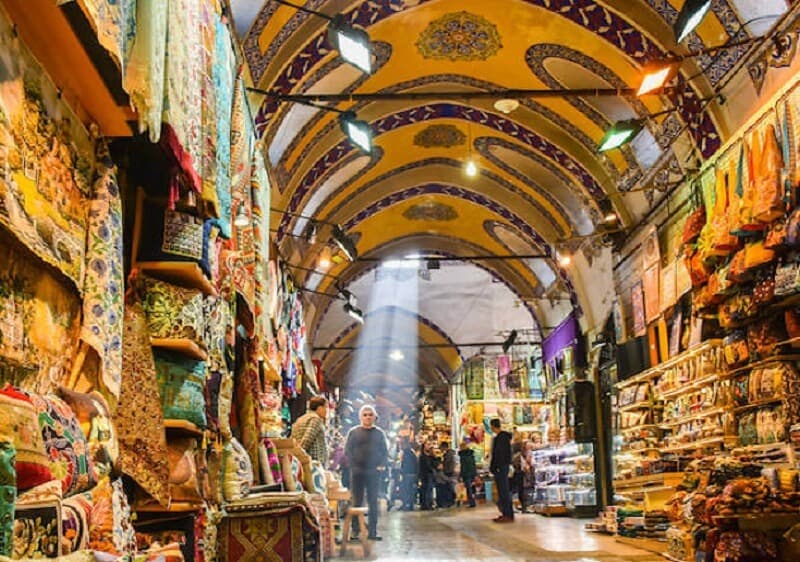
 ग्रेड-बाज़र इस्तांबुल
ISTANBUL GRAND BAZAAR
GRAND BAZAAR’s History
The Grand Bazaar is one of Istanbul's most recognizable landmarks and a bustling commercial center that currently employs 26,000 people and sees between 250,000 and 400,000 visitors every day.
It must compete with the modern shopping malls common in Istanbul, but its beauty and fascination represent a formidable advantage for it. On the 550th anniversary of the complex in 2011, the head of the Grand Bazaar Artisans Association said that it was the most visited landmark in the world.
The building's infrastructure, heating, and lighting will all be updated thanks to a restoration project set to begin in 2012. The stalls inside the market will be renovated, and any additions made later will be torn down. This plan will address the major issues plaguing the market, such as the lack of a restroom in the entire bazaar (now it is solved and there are many toilet facilities in the Grand Bazaar). Also, because there haven't been enough controls in the past few years, many dealers have taken out columns and walls from their stores. This, along with the fact that stolen lead was replaced with concrete on the roof of the market, has made it very dangerous for the earthquake that is expected to hit Istanbul in the next few years.
Except for Sundays and national holidays, the Grand Bazaar is open from 9:00 a.m. to 9:00 p.m. every day.
History of the Grand Bazaar
Shortly after the Ottoman conquest of Constantinople, in the winter of 1455–56, work began on what would become the Grand Bazaar's central market as part of a larger plan to boost the city's economy. A building specifically for the exchange of textiles was commissioned by Sultan Mehmet II. It was known in Ottoman Turkish as Bezzâzistan-Cedîd ("New Bedesten") and Cevâhir Bedestan ('Bedesten of Gems'). The Persian word bezestan, meaning "bazaar of the cloth sellers," was the inspiration for the English word bedesten. The structure, known variously as the "internal" (Ic), "ancient" (Atik), or "old" (Eski) Bedesten in Turkish, is located on the southwestern slope of Istanbul's third hill, between the ruins of the ancient Fora of Constantine and the Fora of Theodosius. It was also near the first sultan’s palace, the Old Palace (Eski Sarayi), which was also under construction in those same years, and not far from the Artopoleia (in Greek) (Άρτoπωλεία), the city’s bakers’ quarter in Byzantine times.
During the 1460s and 1461s, the Bedesten was completed and donated to the Aya Sofya Mosque's waqf. Even though most of the building is from the second half of the 15th century, academics have pointed to the Byzantine relief of a Comnenian eagle that is still on top of the East Gate (Kuyumcular Kapisi) of the Bedesten as proof that it was built in the Byzantine era.
A slave market, known in Turkish as Esir Pazari, operated not far from the Bedesten, a practice that had been maintained since Byzantine times. The old book market (Sahaflar Carsisi) was relocated from the bazaar to its present picturesque location near the Beyazid Mosque. Other important markets in the area were the "second-hand market" (Turkish: "Bit Pazari"), the "Long Market" (Uzun Carsi), which was the same as the Greek "Long Portico" (Makros Embolos), and the "Long Market."
Mehmet II had a second covered market built to the north of the first. It was called Kücük (which means "Little"), Cedit (which means "New"), or Yeni (both of which mean "New") Bedesten. The name comes from a type of thread that was woven in Bursa and had the color of sandalwood.
सैंडल बेडेस्टेन का निर्माण होने के बाद, वहां कपड़े उद्योग स्थानांतरित हुआ, जबकि सेवाहिर बेडेस्टेन हाई-रेटिंग खुदरा क्षेत्र के अनन्य डोमेन बन गया. वे शुरू में दो अलग संरचनाएं थीं. उनके बीच चर्च के विनाश और बेजेज़ीड मस्जिद के बीच एक बड़ा टैंकर था, जैसा कि 16 वीं शताब्दी में एक फ्रांसीसी यात्री पियरे गिलस ने नोट किया था. हालांकि, कई व्यापारियों ने जल्दी से उनके बीच और उनके आसपास के स्थानों में स्टोर स्थापित किया, और जल्द ही व्यापार के लिए एक पूरा जिला समर्पित किया गया।
1890 में एक जनगणना के अनुसार, बेज़ार में 4,399 खुले दुकानों, 2 बेडेस्टेन, 2195 कमरे, 1 हैमम, 1 मस्जिद, 10 मेडरासा, 19 फंक्शन (2 सादिरवा और 1 सेबिल), 1 म्यूज़ोलियम, और 24 हैन थे।
The last major disaster was an earthquake that struck Istanbul in 1894. Mahmud Celaleddin Paşa, the Minister of Public Works, oversaw the reconstruction of the damaged bazaar until 1898, during which time the size of the complex was reduced. While the Kütkculer Kapi and the old gate were demolished in the west, the Bit Pazari was left outside the new perimeter and turned into an open-air road known as Cadircilar Caddesi (the "Tentmaker Road"). Among all the hans that belonged to the market, many were left outside, and only nine remained enclosed in the structure.
यूरोपीय प्रतिस्पर्धा के कारण अपने कपड़े के व्यापारीों को व्यापार से बाहर निकालने के बाद, इस्तांबुल शहर ने 1914 में सैंडल बेडेस्टेन को खरीदा और अगले वर्ष में इसे कालीनों के लिए एक ऑक्सीजन हाउस के रूप में इस्तेमाल करना शुरू कर दिया। 1927 में, बेज़ार के सड़कों और खंडों को आधिकारिक तौर पर उनके वर्तमान नाम दिए गए।
The complex was last renovated in the 1980s. At the same time, the market's advertising posters were taken down.
The architecture of the Grand Bazaar
रेंज के अनुसार, आइक बेडेस्टेन वर्ग (43.30 मीटर x 29.50 मीटर) है। बीस चार पत्थर के पिलर बेडेस्टेन के तीन पंक्तियों को समर्थन करते हैं। टॉवरों में से प्रत्येक में अपनी अंधा-ट्रम-टॉप की चट्टान कूप है। 44 भूमिगत कवर वाले कमरे (टर्की: mahzen) आंतरिक और बाहरी दीवारों में बनाए गए थे। बेडेस्टेन को सीधे छत के नीचे स्थापित चारों ओर से अपनी प्राकृतिक रोशनी मिलती है, जिसे लकड़ी से बना एक एम्बुलेटर के माध्यम से पहुंचना संभव है। सीमित प्रकाश के कारण, इमारत हर दिन केवल कुछ घंटों के लिए खुला थी, और इसका एकमात्र उद्देश्य महंगी वस्तुओं, सबसे विशेष रूप से वस्त्रों की बिक्री थी। इसके अलावा, बेडेस्टेन का mahzen कवर के रूप में कार्य किया गया था। चार अलग प्रवेश द्वार लोगों को संरचना तक पहुंच देते हैं:
The northern gate is known as the "Second-hand Book Sellers' Gate" (Sahaflar Kapisi), the southern gate is known as the "Skullcap Sellers' Gate" (Takkeciler Kapisi), the eastern gate is known as the "Jewelers' Gate" (Kuyumcular Kapisi), and the western gate is known as "Women's Clothiers' Gate" (Zenneciler Kapisi).
सैंडल बेडेस्टेन एक चारों ओर लेआउट (40.20 मीटर से 42.20 मीटर) के साथ एक पोशाक का पालन करता है, 12 पत्थर के पिलर 20 बेसों के साथ, और एक अंधा ड्रम के साथ शीर्ष पर टाइल कुएं। केवल बाहरी दीवारों में स्टोरफ्रंट्स हैं। दोनों संरचनाओं में मोज़ेक गड़बड़ी से बना है, और बेसों को टाइल आर्क से जोड़ा जाता है जो बदले में जूनीपर बेसों से जुड़ा हुआ है। लोहे के गेटों ने दोनों संरचनाओं के प्रवेश द्वारों को संरक्षित किया है।
The buildings of the Grand Bazaar, except for the Bedesten, were originally erected out of wood; it wasn't until after the devastating fire of 1700 that they were reconstructed out of stone and brick and given roofs. Except for the fur dealers' market (Turkish: Kürkcüler Carsisi), a later addition, all of the buildings in the bazaar are single-story structures. Most of the roofs are tiled, while tarmac has been installed in the area that caught fire in 1954. Bazaar goers were warned not to bring any kind of flashlight or candle, as this would only serve to attract attention and start fights. It runs roughly parallel to the roads that surround the central district of Bedesten. Regardless, the market took on a picturesque appearance, especially in its western part, due to the damage caused by the numerous fires and earthquakes throughout the centuries and the repairs done without a general plan.
What to Buy at the Grand Bazaar in Istanbul
किलिम्स और रग्स
One of Turkey's best-known exports is its exquisite hand-woven carpets and kilims (flat-weaves), and the Grand Bazaar is a popular place to find these rugs.
तुर्की में कालीन बनाने का एक लंबा और दिलचस्प इतिहास है. विभिन्न क्षेत्र, शहरों और गांवों को उनके अद्वितीय पैटर्न और रंगों के लिए जाना जाता है।
मध्य एशियाई देशों से बने कालीन और किलिम तुर्की में बने लोगों के साथ उपलब्ध होंगे।
You can browse through a wide variety of carpets in the Grand Bazaar's carpet shops. The best carpet stores will give you a cup of tea and a tour of their showroom while talking about their stock and showing you different kinds of carpets.
When you go carpet shopping, don't forget to bring your sense of humor.
Sellers of carpets are well-known for being a little too enthusiastic with their tales, but you should take it in stride and consider it all in good fun. Keep in mind that, unless they were present during the carpet's production, no carpet dealer has any idea what the weaver was thinking as they created the carpet.
Carpet shopping can be confusing for the uninitiated; if you don't know what you're doing, it's best to just buy something you like. Older carpets and kilims from the village or the nomad's collection were made for the weaver's use, while newer carpets are manufactured with the tourist in mind.
तुर्की और मध्य एशिया से प्राचीन कालीनों की कीमत कई कारकों पर निर्भर करती है, जैसे कि उनकी उम्र, शिल्प, इस्तेमाल की गई वाल और रंगों की गुणवत्ता, और वर्तमान बाजार में उनकी कमी।
लैंप और लैंप
ऐसे लोगों की संख्या में बड़ा बढ़ोतरी हुई है जो तुर्की से उपहार के रूप में लैंप और फैंटर्न चाहते हैं।
In the Grand Bazaar, lampshades and chandeliers come in all kinds of modern styles, from metal filigree to colorful glass mosaics.
If you'd rather shop for vintage lighting than new, the Grand Bazaar's Ic Bedesten (Old Bazaar), located in the vicinity of the bazaar's geographic center, is where you'll find most of the specialized antique shops selling such items. The oldest and most iconic structure in the Grand Bazaar is the Ic Bedesten.
कुछ उन्नत फिलिग्रे प्रकाश फिक्स्चर के लिए सेबसी हान में देखें।
छोटे विकल्पों में कई कांच और धातु मोमबत्तियों की लैंपें शामिल हैं जो बेज़ार में बेची जाती हैं।
सिरेमिक और Pottery
इज़निक और कुटाहा के शहर, जो लंबे समय से सर्कल बना रहे हैं, पहले स्थान थे जहां प्रसिद्ध तुर्की सर्कल बनाया गया था।
तुर्की केरामिक कलाकार अब पारंपरिक ओटोमन डिजाइनों के अलावा कई आधुनिक टुकड़े भी बनाते हैं जिनमें अक्सर ट्यूलिप मोटर्स और अन्य फूल पैटर्न होते हैं।
हिथ्टिक शैली के जूते और कैरेफ, एक सर्कल मध्य भाग के साथ, ब्रोंज़ युग से अनाटोली डिजाइनों पर आधारित हैं और उत्कृष्ट उपहार बनाते हैं।
If you are planning a trip to Cappadocia while in Turkey, you may want to hold off on making any purchases until you have a chance to see what the ceramic artists of Avanos are known for producing, as their work is reminiscent of the Hittite era.
In the Grand Bazaar, the main streets are lined with shops that sell cheap, mass-produced ceramics of low quality.
Visit one of the market's dedicated ceramics shops if you're in search of uniquely painted ceramics.
The Arasta Bazaar (behind the Blue Mosque) and the Grand Bazaar are both worth exploring if you're interested in purchasing ceramics in Istanbul.
तुर्की धातु
तुर्की के दक्षिण-पूर्व में Gaziantep, Sanliurfa और Mardin के शहरों को तुर्की में सबसे अच्छे समकालीन धातु उत्पादों के उत्पादन के लिए जाना जाता है।
तुर्की की यात्रा तक खरीदारी पर रोकें, विशेष रूप से इन शहरों में, क्योंकि कीमतें वहां कम हो जाएंगी।
सबसे बेस्ट-सेल वस्तुओं में से कुछ चाय और कॉफी सेवा सेट और जटिल ग्रिगर के साथ धातु के प्लेट हैं जो पारंपरिक ओटोमन डिजाइनों पर आधारित हैं।
Engraved Turkish coffee pots, used to brew the beverage over a stovetop, are a practical and attractive souvenir that won't take up too much space in your carry-on.
नारियल ह्यूक
नर्जील (पानी पाइप) एक पारंपरिक तुर्की उपहार है जो फलों के साथ सुगंधित तंबाकू को धूम्रपान करने के लिए उपयोग किया जाता है।
ओटोमन साम्राज्य के समय से, लोग तुर्की कैफे में नर्जील धूम्रपान कर रहे हैं।
ग्लास या सिरेमिक नर्जील कप (जो धूम्रपान को फ़िल्टर करने के लिए इस्तेमाल किया जाने वाला पानी पकड़ता है) परिष्कृत डिजाइनों पर ले जा सकते हैं।
Keep in mind that nargile components are often purchased separately, and the bowls can be used as distinctive vases if you're not interested in buying a fully functional nargile but like the look of the bowls.
Go to Ic Bedesten's antique shops if you're in search of vintage Nargile. There are many shops in the bazaar selling contemporary nargile.
गहने
The Grand Bazaar is the best place to go in Istanbul to buy jewelry.
There's something for everyone here, from glitzy gold to delicate silver filigree work and pieces set with semi-precious stones.
For gold work, head to the main street of Kalpakcilarbasi Caddesi first, which is lined with gold shops. This is the street that runs between the main Grand Bazaar entrances of Bayazit Gate, on the west side of the bazaar, and Nuruosmaniye Gate, at the eastern end.
क्योंकि उत्पादन का इतना हिस्सा दुल्हन बाजार को लक्षित करता है, इसलिए टुकड़े शैली में क्लासिक होते हैं।
चांदी के गहने बेचने वाले दुकानों को पूरे बेज़ार में पाया जा सकता है. चांदी के गहने की तलाश में आइक बेडेस्टेन (ओल्ड बेज़ार) में शुरू करना संभव है, जो कई दुकानों का घर है जो महंगे धातुओं के लिए समर्पित हैं.
ब्लू कैल्चेडोनी और ज़ुल्टानाइट गहने पर नजर रखें, जिनमें से दोनों तुर्की में खनन किए जाते हैं और अर्ध-मूल पत्थर माना जाता है।
पैंट और पैंट
The many smaller textile items available in Turkey are great purchases if you're looking for easy-to-pack items.
ये आपको कुछ वास्तविक तुर्की शैली के फर्नीचर को खरीदने के भारी मूल्य टैग और अतिरिक्त सामान वजन के बिना वापस लाने की अनुमति देते हैं।
कपड़े अविश्वसनीय रूप से विभिन्न प्रकार के डिजाइन और शैलियों में पाया जा सकता है। कंबल कवर और अन्य छोटे कपड़े पारंपरिक ओटोमन डिजाइनों के साथ मुद्रित हैं, जो भी बड़े पैमाने पर उत्पादन के लिए धन्यवाद आसानी से पहुंच और सस्ता हैं।
मूल सुज़ानिक कपड़े (मध्य एशियाई ब्रॉडेड टेक्स्टीलिंग) और विंटेज किलिम एक प्रकार के टेक्स्टील सामान (फाइट वेव टेप) बनाने के लिए उपयोग किए जाते हैं।
हम्मा के उपकरण
Although bath products might not be the first thing that comes to mind when you think of a traditional Turkish souvenir, they have a deep history thanks to the country's hammam (Turkish bath) culture.
Towels with traditional fringed striped designs, called pestemals, are still used in modern hammams. The stalls in the bazaar will sell a wide variety of mass-produced towels, but if you're looking for something truly unique, you should browse the selection of handwoven cotton pestemals, towels, and bathrobes available at stores that specialize in hammam supplies.
हाथ से बने जैतून का तेल साबुन और हैमाम में उपयोग किए जाने वाले काटने वाले मिट्टी दो छोटे आइटम हैं जो घर ले जाने के लिए महान उपहार बनाते हैं।
फैशन के लिए सामान
The Grand Bazaar is a fantastic place to shop for accessories, whether you're in the market for a new scarf, pair of slippers, hat, or bag.
तुर्की लंबे समय से अपनी मिट्टी और चमड़े के उत्पादों के लिए जाना जाता है, और एक पारंपरिक फ्लेट्स-बैकिंग परंपरा भी है जो आज कई अजीब और अत्यधिक समकालीन फैशन वस्तुओं, विशेष रूप से स्लैप और टोपी का उत्पादन करती है।
याद रखें कि बेचने वाले शर्टों में से कई पर्यटकों के मन में बड़े पैमाने पर उत्पादित हैं और यहां तक कि तुर्की में भी नहीं बनाए जाते हैं।
Yaglikcilar Caddesi के उत्तरी अंत के साथ चलने वाले कपड़े की दुकानें उच्च गुणवत्ता वाले हाथ से बने सिल्हू, कैशमर, और कपास शॉट्स और शॉट्स को खोजने के लिए सबसे अच्छी जगह हैं।
In the southwest corner of the bazaar, along Parcacilar Sokak and Fesciler Caddesi, you'll find a concentration of stores selling leather goods.
मिठाई और तुर्की डिस्चार्ज
Although the Spice Bazaar is where most tourists go to buy souvenirs and gifts involving spices and Turkish delight, the Grand Bazaar also has plenty of options for these kinds of purchases.
ध्यान दें कि sumac (sumac पौधे के सूखे क्रीमसन फल) और pul biber (उपरा हुआ अलेप्पो लाल पेपर) तुर्की रसोई में दो सबसे प्रमुख मसाले हैं।
मीठे-सॉक्स ग्रेनाट मलेशिया और पेकमेज दो मसाले हैं जो वापस लाने के लायक हैं (टर्की में कंडोजेनिक फलों के सिरोप आमतौर पर अंगूर या मलेरिया से बनाए जाते हैं)।
तुर्की के उत्साह के अनगिनत किस्मों (टर्की में लोकम कहा जाता है) के अलावा, कई हेल्वा बेकरी से बने सुसाइड के लिए देखो, जो नट्स के साथ भरा हुआ है और गुलाब के पानी या फल के साथ स्वाद दिया जाता है।
Advice on Shopping at the Grand Bazaar
ग्रैंड बाज़ार सुबह 8.30 से शाम 7.00 तक, सोमवार से शनिवार तक खुला है।
You cannot cover the breadth of the bazaar in one visit. Plan on spending at least an entire morning or afternoon here on your first visit if you want to explore or are serious about shopping, and don't expect to see everything.
Expect to get lost. Half the fun is getting lost in the Grand Bazaar and discovering one of the alley dead ends that lead to an arcaded han (old traveler inn).
चाय और स्थानीय दुकानदारों और वाट के साथ बातचीत अनुभव का एक आवश्यक हिस्सा है. Cay (चाय) आप को जो भी और हर किसी को आप मिलते हैं द्वारा पेश किया जाएगा. आपका अनुभव यहां बहुत अधिक समृद्ध और मजेदार होगा यदि आप इस तुर्की आतिथ्य में भाग लेने के लिए समय लेते हैं.
The initial price you are quoted depends as much on the country you are from as it does on the seller's mood at the time. For an idea of how much items cost, spend some time browsing a range of shops before purchasing.
यहां की दुकानदार और वायर्स कई भाषाओं को बोलते हैं।
The Grand Bazaar's larger thoroughfares are lined with souvenir shops selling the same trinkets you'll find anywhere: fridge magnets, key chains, Turkey flags, and the ubiquitous nazar boncuk (glass evil-eye protector amulets). Get away from the hustle and bustle of the main drags to find unique and exciting stores.
बैज़ार के विभिन्न क्षेत्र विशिष्ट खरीदारी वस्तुओं के लिए समर्पित हैं. कालीन दुकानों को हैलिसिलर कैडेसी के आसपास पाया जा सकता है, जबकि गोल्ड दुकानों को कैडेसी के साथ और सीबेसी हान और आइक बेडेस्टेन के आसपास पाया जा सकता है.
Frequently Asked Questions About The Grand Bazaar
प्रश्न: What is the Grand Bazaar?
ए: ग्रैंड बाज़ार इस्तांबुल, तुर्की में एक ऐतिहासिक कवर बाजार है, जो अपने लाउंज जैसी सड़कों के लिए जाना जाता है जो गहने और मसाले से तकनीकी और सिरेमिक तक सब कुछ बेचने वाले दुकानों से भरे हुए हैं।
प्रश्न: Where is the Grand Bazaar located?
ए: ग्रैंड बाज़ार इस्तांबुल, तुर्की के फैटीह जिले में स्थित है।
प्रश्न: How old is the Grand Bazaar?
ए: The Grand Bazaar was established in the 15th century and has been in continuous operation since then.
प्रश्न: How big is the Grand Bazaar?
ए: The Grand Bazaar spans over 60 streets and contains over 4,000 shops.
प्रश्न: What kinds of products can be found in the Grand Bazaar?
ए: ग्रैंड बाज़ार अपने उत्पादों की व्यापक विविधता के लिए जाना जाता है, जिसमें गहने, कपड़े, सिरेमिक, मसाले और अधिक शामिल हैं।
प्रश्न: What is the history of the Grand Bazaar?
ए: The Grand Bazaar has a long and rich history, having been an important center of commerce for centuries.
प्रश्न: Is the Grand Bazaar only for tourists?
ए: The Grand Bazaar is both a tourist destination and a local shopping hub, attracting both locals and visitors alike.
प्रश्न: What are the opening hours of the Grand Bazaar?
ए: ग्रैंड बाज़ार आमतौर पर सुबह 9 बजे से शाम 7 बजे तक, सप्ताह में सात दिन खुले होते हैं।
प्रश्न: What is the best time to visit the Grand Bazaar?
ए: The best time to visit the Grand Bazaar is in the morning or late afternoon when the crowds are smaller and you can enjoy a more leisurely shopping experience.
प्रश्न: Is bargaining expected in the Grand Bazaar?
ए: सौदा करना उम्मीद की जाती है और ग्रैंड बाज़ार में खरीदारी का हिस्सा माना जाता है, इसलिए विक्रेताओं के साथ कीमतों पर बातचीत करने के लिए तैयार रहें।
आप हमारे लाइसेंस प्राप्त पर्यटन गाइड के साथ इस्तांबुल शहर दौरे बुक कर सकते हैं. लिंक नीचे हैं:
Map of Grand Bazaar