
 Grote Bazaar-Istanbul
Istanbul Grote Bazaar
GRAND BAZAAR’s History
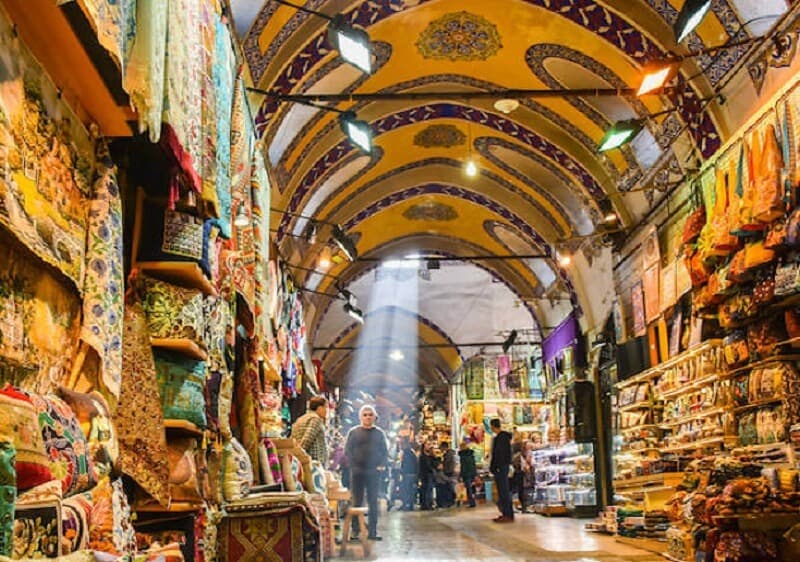
The Grand Bazaar is one of Istanbul's most recognizable landmarks and a bustling commercial center that currently employs 26,000 people and sees between 250,000 and 400,000 visitors every day.
It must compete with the modern shopping malls common in Istanbul, but its beauty and fascination represent a formidable advantage for it. On the 550th anniversary of the complex in 2011, the head of the Grand Bazaar Artisans Association said that it was the most visited landmark in the world.
The building's infrastructure, heating, and lighting will all be updated thanks to a restoration project set to begin in 2012. The stalls inside the market will be renovated, and any additions made later will be torn down. This plan will address the major issues plaguing the market, such as the lack of a restroom in the entire bazaar (now it is solved and there are many toilet facilities in the Grand Bazaar). Also, because there haven't been enough controls in the past few years, many dealers have taken out columns and walls from their stores. This, along with the fact that stolen lead was replaced with concrete on the roof of the market, has made it very dangerous for the earthquake that is expected to hit Istanbul in the next few years.
Except for Sundays and national holidays, the Grand Bazaar is open from 9:00 a.m. to 9:00 p.m. every day.
Geschiedenis van de Grote Bazaar
Shortly after the Ottoman conquest of Constantinople, in the winter of 1455–56, work began on what would become the Grand Bazaar's central market as part of a larger plan to boost the city's economy. A building specifically for the exchange of textiles was commissioned by Sultan Mehmet II. It was known in Ottoman Turkish as Bezzâzistan-Cedîd ("New Bedesten") and Cevâhir Bedestan ('Bedesten of Gems'). The Persian word bezestan, meaning "bazaar of the cloth sellers," was the inspiration for the English word bedesten. The structure, known variously as the "internal" (Ic), "ancient" (Atik), or "old" (Eski) Bedesten in Turkish, is located on the southwestern slope of Istanbul's third hill, between the ruins of the ancient Fora of Constantine and the Fora of Theodosius. It was also near the first sultan’s palace, the Old Palace (Eski Sarayi), which was also under construction in those same years, and not far from the Artopoleia (in Greek) (Άρτoπωλεία), the city’s bakers’ quarter in Byzantine times.
During the 1460s and 1461s, the Bedesten was completed and donated to the Aya Sofya Mosque's waqf. Even though most of the building is from the second half of the 15th century, academics have pointed to the Byzantine relief of a Comnenian eagle that is still on top of the East Gate (Kuyumcular Kapisi) of the Bedesten as proof that it was built in the Byzantine era.
A slave market, known in Turkish as Esir Pazari, operated not far from the Bedesten, a practice that had been maintained since Byzantine times. The old book market (Sahaflar Carsisi) was relocated from the bazaar to its present picturesque location near the Beyazid Mosque. Other important markets in the area were the "second-hand market" (Turkish: "Bit Pazari"), the "Long Market" (Uzun Carsi), which was the same as the Greek "Long Portico" (Makros Embolos), and the "Long Market."
Mehmet II had a second covered market built to the north of the first. It was called Kücük (which means "Little"), Cedit (which means "New"), or Yeni (both of which mean "New") Bedesten. The name comes from a type of thread that was woven in Bursa and had the color of sandalwood.
Na de Sandal Bedesten werd gebouwd, de textielindustrie verhuisde daar, terwijl de Cevahir Bedesten werd het exclusieve domein van de high-end retail sector. Ze waren in eerste instantie twee afzonderlijke structuren. Er waren kerkruïnes en een grote tank tussen hen en de Moskee van Beyazid, zoals opgemerkt door een Franse reiziger in de 16e eeuw genaamd Pierre Gilles.
Volgens een census in 1890, de Bazaar was de thuisbasis van 4.399 open winkels, 2 bedesten, 2195 kamers, 1 Hamam, 1 moskee, 10 medrasas, 19 fonteinen (2 sadirvan en 1 sebil), 1 mausoleum, en 24 han. Er zijn 3.000 winkels verspreid over 61 straten in de 30.7% gebouwde gebied dat wordt bewaakt door 18 poorten.
The last major disaster was an earthquake that struck Istanbul in 1894. Mahmud Celaleddin Paşa, the Minister of Public Works, oversaw the reconstruction of the damaged bazaar until 1898, during which time the size of the complex was reduced. While the Kütkculer Kapi and the old gate were demolished in the west, the Bit Pazari was left outside the new perimeter and turned into an open-air road known as Cadircilar Caddesi (the "Tentmaker Road"). Among all the hans that belonged to the market, many were left outside, and only nine remained enclosed in the structure.
Nadat de textielhandelaars door de Europese concurrentie uit de handel waren verdreven, kocht de stad Istanbul de Sandal Bedesten in 1914 en begon het het volgende jaar te gebruiken als veilinghuis voor tapijten.In 1927 kregen de straten en delen van de bazaar officieel hun huidige namen.De laatste branden in de Bazaar vonden plaats in 1943 en 1954, en de gerelateerde restauraties werden voltooid op 28 juli 1959.
The complex was last renovated in the 1980s. At the same time, the market's advertising posters were taken down.
De architectuur van de Grote Bazaar
De Ic Bedesten is vierkante (43,30 m x 29,50 m). Twintig vier steenpilaars ondersteunen de drie rijen baaien. Elke van de torens heeft zijn baksteenkoepel met een blind-drum-top. 44 ondergrondse koepelkamers (Turkish: mahzen) werden gebouwd in de binnenste en buitenste muren. Bedesten krijgt zijn natuurlijke licht van rechthoekige ramen direct onder het dak, die kan worden bereikt via een ambulante van hout. Vanwege de beperkte verlichting, was het gebouw alleen geopend voor een klein aantal uren per dag, en het enige doel was de verkoop van dure goederen, vooral textiel. Bovendien diende de mahzen van de Bedesten als koepels. Vier afzonderlijke ingangen geven mensen toegang tot de structuur:
The northern gate is known as the "Second-hand Book Sellers' Gate" (Sahaflar Kapisi), the southern gate is known as the "Skullcap Sellers' Gate" (Takkeciler Kapisi), the eastern gate is known as the "Jewelers' Gate" (Kuyumcular Kapisi), and the western gate is known as "Women's Clothiers' Gate" (Zenneciler Kapisi).
De Sandal Bedesten volgt het pak met een rechthoekige lay-out (40,20 m bij 42,20 m), 12 stenen pilaren met 20 baaien en bakstenen koepels met een blinde trommel. Alleen de buitenmuren hebben in hen winkelvoorwerpen gesneden. De mesonry in beide structuren is gemaakt van puin, en de baaien zijn verbonden met bakstenen bochten die op hun beurt met juniperbeams zijn verbonden. IJzeren poorten beschermen de ingangen tot beide structuren.
The buildings of the Grand Bazaar, except for the Bedesten, were originally erected out of wood; it wasn't until after the devastating fire of 1700 that they were reconstructed out of stone and brick and given roofs. Except for the fur dealers' market (Turkish: Kürkcüler Carsisi), a later addition, all of the buildings in the bazaar are single-story structures. Most of the roofs are tiled, while tarmac has been installed in the area that caught fire in 1954. Bazaar goers were warned not to bring any kind of flashlight or candle, as this would only serve to attract attention and start fights. It runs roughly parallel to the roads that surround the central district of Bedesten. Regardless, the market took on a picturesque appearance, especially in its western part, due to the damage caused by the numerous fires and earthquakes throughout the centuries and the repairs done without a general plan.
What to Buy at the Grand Bazaar in Istanbul
Kilims en Rugs
One of Turkey's best-known exports is its exquisite hand-woven carpets and kilims (flat-weaves), and the Grand Bazaar is a popular place to find these rugs.
Turkije heeft een lange en interessante geschiedenis van het maken van tapijten. Verschillende regio's, steden en dorpen staan bekend om hun unieke patronen en kleuren.
Tapijten en kilims uit Centraal-Aziatische landen zullen naast die van Turkije verkrijgbaar zijn.
You can browse through a wide variety of carpets in the Grand Bazaar's carpet shops. The best carpet stores will give you a cup of tea and a tour of their showroom while talking about their stock and showing you different kinds of carpets.
When you go carpet shopping, don't forget to bring your sense of humor.
Sellers of carpets are well-known for being a little too enthusiastic with their tales, but you should take it in stride and consider it all in good fun. Keep in mind that, unless they were present during the carpet's production, no carpet dealer has any idea what the weaver was thinking as they created the carpet.
Carpet shopping can be confusing for the uninitiated; if you don't know what you're doing, it's best to just buy something you like. Older carpets and kilims from the village or the nomad's collection were made for the weaver's use, while newer carpets are manufactured with the tourist in mind.
De waarde van antieke tapijten uit Turkije en Centraal-Azië hangt af van vele factoren, zoals hun leeftijd, ambachtelijkheid, de kwaliteit van de wol en kleurstoffen die worden gebruikt, en hun schaarste op de huidige markt.
Lampen en lanternen
Er is een grote stijging geweest in het aantal mensen dat lampen en lantaarns als geschenken van Turkije wil.
In the Grand Bazaar, lampshades and chandeliers come in all kinds of modern styles, from metal filigree to colorful glass mosaics.
If you'd rather shop for vintage lighting than new, the Grand Bazaar's Ic Bedesten (Old Bazaar), located in the vicinity of the bazaar's geographic center, is where you'll find most of the specialized antique shops selling such items. The oldest and most iconic structure in the Grand Bazaar is the Ic Bedesten.
Kijk in de Cebeci Han voor enkele geavanceerde filigree lichtverlichting.
Kleine opties zijn onder andere de vele glas- en metalen kaarslampen die in de bazaar worden verkocht.
Keramiek en pottery
De steden Iznik en Kütahya, die al lang keramiek maken, waren de eerste plaatsen waar beroemde Turkse keramiek werd gemaakt.
Turkse keramische kunstenaars maken nu ook veel moderne stukken naast de traditionele Ottomaanse ontwerpen die vaak tulpenmotieven en andere bloempatronen bevatten.
Hittitische stilafels en carafes, met een ronde middenkant, zijn gebaseerd op Anatolische ontwerpen uit de bronstijd en maken uitstekende geschenken.
If you are planning a trip to Cappadocia while in Turkey, you may want to hold off on making any purchases until you have a chance to see what the ceramic artists of Avanos are known for producing, as their work is reminiscent of the Hittite era.
In the Grand Bazaar, the main streets are lined with shops that sell cheap, mass-produced ceramics of low quality.
Visit one of the market's dedicated ceramics shops if you're in search of uniquely painted ceramics.
The Arasta Bazaar (behind the Blue Mosque) and the Grand Bazaar are both worth exploring if you're interested in purchasing ceramics in Istanbul.
Turkse metalen
De steden Gaziantep, Sanliurfa en Mardin in het zuidoosten van Turkije staan bekend om het produceren van enkele van de beste hedendaagse metalen in Turkije.
Stop met winkelen totdat je naar Turkije reist, specifiek naar deze steden, omdat de prijzen daar lager zullen zijn.
Enkele van de best verkopende items zijn thee- en koffie-service sets en metalen platen met ingewikkelde gravures die zijn gebaseerd op traditionele Ottomaanse ontwerpen.
Engraved Turkish coffee pots, used to brew the beverage over a stovetop, are a practical and attractive souvenir that won't take up too much space in your carry-on.
Nargile Hookah
De nargile (waterpijp) is een traditioneel Turkse souvenir dat wordt gebruikt voor het roken van fruit-geur tabak.
Sinds de tijd van het Ottomaanse Rijk roken mensen nargile in Turkse cafés.
Glas of keramische nargile bollen (die het water vasthouden dat wordt gebruikt om de rook te filteren) kunnen uitgebreide ontwerpen aannemen.
Keep in mind that nargile components are often purchased separately, and the bowls can be used as distinctive vases if you're not interested in buying a fully functional nargile but like the look of the bowls.
Go to Ic Bedesten's antique shops if you're in search of vintage Nargile. There are many shops in the bazaar selling contemporary nargile.
sieraden
The Grand Bazaar is the best place to go in Istanbul to buy jewelry.
There's something for everyone here, from glitzy gold to delicate silver filigree work and pieces set with semi-precious stones.
For gold work, head to the main street of Kalpakcilarbasi Caddesi first, which is lined with gold shops. This is the street that runs between the main Grand Bazaar entrances of Bayazit Gate, on the west side of the bazaar, and Nuruosmaniye Gate, at the eastern end.
Omdat zoveel van de productie is gericht op de bruidsmarkt, de stukken hebben de neiging om klassiek in stijl.
Het is mogelijk om uw zoektocht naar zilveren sieraden te beginnen in de Ic Bedesten (Oude Bazaar), die is de thuisbasis van vele winkels gewijd aan de edele metalen.
Houd een oogje op blauwe chalcedonie en zultanit juwelen, die beide worden uitgegraven in Turkije en worden beschouwd als halve edelstenen.
Kussens en kussens
The many smaller textile items available in Turkey are great purchases if you're looking for easy-to-pack items.
Hiermee kunt u een aantal echte Turkse stijl meubels terugbrengen zonder de zware prijs en overtollig bagage gewicht van het kopen van tapijten.
Kussens en andere kleine textielen gedrukt met traditionele Ottomaanse ontwerpen zijn ook gemakkelijk toegankelijk en goedkoop dankzij de massaproductie.
De originele suzani stoffen (Centraal Aziatische gebroeders) en vintage kilims worden gebruikt om unieke textielaccessoires (vloerweefmatten) te maken.
Hammam apparatuur
Although bath products might not be the first thing that comes to mind when you think of a traditional Turkish souvenir, they have a deep history thanks to the country's hammam (Turkish bath) culture.
Towels with traditional fringed striped designs, called pestemals, are still used in modern hammams. The stalls in the bazaar will sell a wide variety of mass-produced towels, but if you're looking for something truly unique, you should browse the selection of handwoven cotton pestemals, towels, and bathrobes available at stores that specialize in hammam supplies.
Handgemaakte olijfolie zeep en de exfoliërende scrubbing mits die worden gebruikt in hamam's zijn twee van de kleinere items die geweldige geschenken maken om naar huis te nemen.
Accessoires voor mode
The Grand Bazaar is a fantastic place to shop for accessories, whether you're in the market for a new scarf, pair of slippers, hat, or bag.
Turkije is al lang bekend om zijn zijde- en lederen producten, en er is ook een traditionele feel-making traditie die vandaag de dag veel eigenaardige en zeer hedendaagse modeproducten produceert, met name slippers en hoeden.
Houd in gedachten dat veel van de schaarjes te koop zijn in massa geproduceerd met toeristen in gedachten en zijn niet eens gemaakt in Turkije.
De stoffenwinkels die langs het noordelijke uiteinde van Yaglikcilar Caddesi lopen, zijn de beste plaatsen om hoogwaardige handgemaakte zijde, kashmir en katoenen schaal en schaar te vinden.
In the southwest corner of the bazaar, along Parcacilar Sokak and Fesciler Caddesi, you'll find a concentration of stores selling leather goods.
Turkse desserts en zoetigheden
Although the Spice Bazaar is where most tourists go to buy souvenirs and gifts involving spices and Turkish delight, the Grand Bazaar also has plenty of options for these kinds of purchases.
Merk op dat sumac (de gedroogde crimson fruit van de sumac plant) en pul biber (de gedroogde Aleppo rode peper) zijn twee van de meest prominente kruiden in de Turkse keuken.
Zoete en zure granaatappelmelasse en pekmez zijn twee kruiden die het terugbrengen waard zijn (gecondenseerde fruitsiroop wordt meestal gemaakt van druiven of mulberries in Turkije).
Kijk uit voor de vele helva-koekjeswinkels gemaakt van sesamzaden naast de talloze variëteiten van Turkse delight (lokum in Turkije genoemd), die zijn gevuld met noten en geparfumeerd met rozenwater of fruit.
Advice on Shopping at the Grand Bazaar
The Grand Bazaar is open from 8.30 a.m. to 7 p.m., Monday through Saturday.
You cannot cover the breadth of the bazaar in one visit. Plan on spending at least an entire morning or afternoon here on your first visit if you want to explore or are serious about shopping, and don't expect to see everything.
Expect to get lost. Half the fun is getting lost in the Grand Bazaar and discovering one of the alley dead ends that lead to an arcaded han (old traveler inn).
Thee en gesprek met lokale winkeliers en touts zijn essentiële onderdelen van de ervaring. Cay (thee) wordt u aangeboden door iedereen en iedereen die u ontmoet.
The initial price you are quoted depends as much on the country you are from as it does on the seller's mood at the time. For an idea of how much items cost, spend some time browsing a range of shops before purchasing.
Shopkeepers en touts spreken hier een verscheidenheid aan talen.
The Grand Bazaar's larger thoroughfares are lined with souvenir shops selling the same trinkets you'll find anywhere: fridge magnets, key chains, Turkey flags, and the ubiquitous nazar boncuk (glass evil-eye protector amulets). Get away from the hustle and bustle of the main drags to find unique and exciting stores.
Tapijtwinkels zijn te vinden in de buurt van Halicilar Caddesi, terwijl goudwinkels langs Kalpakcilarbasi Caddesi en in de buurt van de Cebeci Han en de Ic Bedesten te vinden zijn.
Frequently Asked Questions About The Grand Bazaar
Q: What is the Grand Bazaar?
a: The Grand Bazaar is a historic covered market in Istanbul, Turkey, known for its maze-like alleys filled with shops selling everything from jewelry and spices to textiles and ceramics.
Q: Where is the Grand Bazaar located?
a: The Grand Bazaar is located in the Fatih district of Istanbul, Turkey.
Q: How old is the Grand Bazaar?
a: The Grand Bazaar was established in the 15th century and has been in continuous operation since then.
Q: How big is the Grand Bazaar?
a: The Grand Bazaar spans over 60 streets and contains over 4,000 shops.
Q: What kinds of products can be found in the Grand Bazaar?
a: The Grand Bazaar is known for its wide variety of products, including jewelry, textiles, ceramics, spices, and more.
Q: What is the history of the Grand Bazaar?
a: The Grand Bazaar has a long and rich history, having been an important center of commerce for centuries.
Q: Is the Grand Bazaar only for tourists?
a: The Grand Bazaar is both a tourist destination and a local shopping hub, attracting both locals and visitors alike.
Q: What are the opening hours of the Grand Bazaar?
a: The Grand Bazaar is typically open from 9:00 a.m. to 7:00 p.m., seven days a week.
Q: What is the best time to visit the Grand Bazaar?
a: The best time to visit the Grand Bazaar is in the morning or late afternoon when the crowds are smaller and you can enjoy a more leisurely shopping experience.
Q: Is bargaining expected in the Grand Bazaar?
a: Bargaining is expected and considered part of the shopping experience at the Grand Bazaar, so be prepared to negotiate prices with vendors.
U kunt een Istanbul stadstour boeken met onze gids.
Map of Grand Bazaar