
 Wielki Bazar-Stambuł
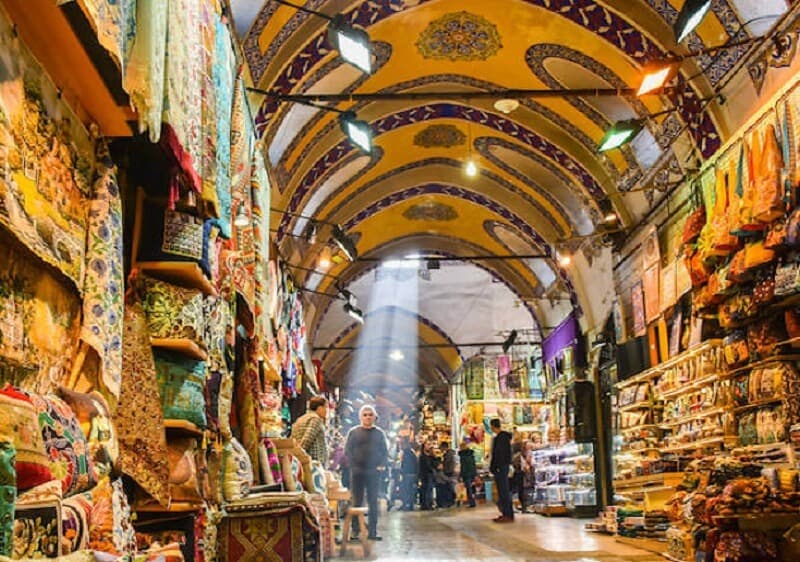
ISTANBUL GRAND BAZAAR
GRAND BAZAAR’s History
The Grand Bazaar is one of Istanbul's most recognizable landmarks and a bustling commercial center that currently employs 26,000 people and sees between 250,000 and 400,000 visitors every day.
It must compete with the modern shopping malls common in Istanbul, but its beauty and fascination represent a formidable advantage for it. On the 550th anniversary of the complex in 2011, the head of the Grand Bazaar Artisans Association said that it was the most visited landmark in the world.
The building's infrastructure, heating, and lighting will all be updated thanks to a restoration project set to begin in 2012. The stalls inside the market will be renovated, and any additions made later will be torn down. This plan will address the major issues plaguing the market, such as the lack of a restroom in the entire bazaar (now it is solved and there are many toilet facilities in the Grand Bazaar). Also, because there haven't been enough controls in the past few years, many dealers have taken out columns and walls from their stores. This, along with the fact that stolen lead was replaced with concrete on the roof of the market, has made it very dangerous for the earthquake that is expected to hit Istanbul in the next few years.
Except for Sundays and national holidays, the Grand Bazaar is open from 9:00 a.m. to 9:00 p.m. every day.
History of the Grand Bazaar
Shortly after the Ottoman conquest of Constantinople, in the winter of 1455–56, work began on what would become the Grand Bazaar's central market as part of a larger plan to boost the city's economy. A building specifically for the exchange of textiles was commissioned by Sultan Mehmet II. It was known in Ottoman Turkish as Bezzâzistan-Cedîd ("New Bedesten") and Cevâhir Bedestan ('Bedesten of Gems'). The Persian word bezestan, meaning "bazaar of the cloth sellers," was the inspiration for the English word bedesten. The structure, known variously as the "internal" (Ic), "ancient" (Atik), or "old" (Eski) Bedesten in Turkish, is located on the southwestern slope of Istanbul's third hill, between the ruins of the ancient Fora of Constantine and the Fora of Theodosius. It was also near the first sultan’s palace, the Old Palace (Eski Sarayi), which was also under construction in those same years, and not far from the Artopoleia (in Greek) (Άρτoπωλεία), the city’s bakers’ quarter in Byzantine times.
During the 1460s and 1461s, the Bedesten was completed and donated to the Aya Sofya Mosque's waqf. Even though most of the building is from the second half of the 15th century, academics have pointed to the Byzantine relief of a Comnenian eagle that is still on top of the East Gate (Kuyumcular Kapisi) of the Bedesten as proof that it was built in the Byzantine era.
A slave market, known in Turkish as Esir Pazari, operated not far from the Bedesten, a practice that had been maintained since Byzantine times. The old book market (Sahaflar Carsisi) was relocated from the bazaar to its present picturesque location near the Beyazid Mosque. Other important markets in the area were the "second-hand market" (Turkish: "Bit Pazari"), the "Long Market" (Uzun Carsi), which was the same as the Greek "Long Portico" (Makros Embolos), and the "Long Market."
Mehmet II had a second covered market built to the north of the first. It was called Kücük (which means "Little"), Cedit (which means "New"), or Yeni (both of which mean "New") Bedesten. The name comes from a type of thread that was woven in Bursa and had the color of sandalwood.
Po zbudowaniu Sandal Bedesten przemysł włókienniczy przeniósł się tam, podczas gdy Cevahir Bedesten stał się wyłączną domeną high-endowego sektora detalicznego. Początkowo były to dwie oddzielne struktury. Między nimi a meczetem Beyazid znajdowały się ruiny kościoła i duża cisterna, jak zauważył francuski podróżnik z XVI wieku Pierre Gilles. Jednak wielu kupców szybko założyło sklep w przestrzeniach między nimi a wokół nich, a wkrótce cała dzielnica została poświęcona handlowi.
Według spisu dokonanego w 1890 roku, w Bazaar było 4399 sklepów otwartych, 2 bedesten, 2195 pokoi, 1 Hamam, 1 meczet, 10 medrasas, 19 fontann (2 sadirvan i 1 sebil), 1 mauzoleum, i 24 han.
The last major disaster was an earthquake that struck Istanbul in 1894. Mahmud Celaleddin Paşa, the Minister of Public Works, oversaw the reconstruction of the damaged bazaar until 1898, during which time the size of the complex was reduced. While the Kütkculer Kapi and the old gate were demolished in the west, the Bit Pazari was left outside the new perimeter and turned into an open-air road known as Cadircilar Caddesi (the "Tentmaker Road"). Among all the hans that belonged to the market, many were left outside, and only nine remained enclosed in the structure.
Po tym, jak europejska konkurencja wycofała z działalności handlowców tekstylnymi, miasto Stambuł kupiło Sandal Bedesten w 1914 roku i zaczęło go wykorzystywać jako dom aukcyjny na dywaniki w następnym roku.
The complex was last renovated in the 1980s. At the same time, the market's advertising posters were taken down.
The architecture of the Grand Bazaar
W układzie, Ic Bedesten jest kwadratowy (43,30 m x 29,50 m). Dwadzieścia cztery kamienne piętra wspierają trzy rzędy zatok. Każda z wież ma swój cegły kopuł z cegłą na szczycie bębna. 44 podziemne pokoje z klatką (turecki: mahzen) zostały zbudowane wewnątrz i na zewnątrz ścian. Bedesten otrzymuje naturalne światło z prostokątnych okien zainstalowanych bezpośrednio pod dachem, do których można dotrzeć za pośrednictwem ambulatoryjnego wykonania z drewna. Ze względu na ograniczone oświetlenie, budynek był otwarty tylko przez niewielką liczbę godzin każdego dnia, a jego jedynym celem była sprzedaż drogich towarów, głównie tekstyliów. Ponadto, mahzen Bedesten służy jako klatki. Cztery oddzielne wejścia dają ludziom dostęp do struktury:
The northern gate is known as the "Second-hand Book Sellers' Gate" (Sahaflar Kapisi), the southern gate is known as the "Skullcap Sellers' Gate" (Takkeciler Kapisi), the eastern gate is known as the "Jewelers' Gate" (Kuyumcular Kapisi), and the western gate is known as "Women's Clothiers' Gate" (Zenneciler Kapisi).
Sandal Bedesten jest wykonany z prostokątnym układem (40,20 m na 42,20 m), 12 kamiennymi piłami z 20 zatokami i cegłowymi kopułami pokrytymi ślepym bębnem. Tylko zewnętrzne ściany mają przednie ściany. Masoneria w obu strukturach jest wykonana z ruin, a zatoki są połączone łukiem cegły, które z kolei są połączone żelaznymi żyrandolami.
The buildings of the Grand Bazaar, except for the Bedesten, were originally erected out of wood; it wasn't until after the devastating fire of 1700 that they were reconstructed out of stone and brick and given roofs. Except for the fur dealers' market (Turkish: Kürkcüler Carsisi), a later addition, all of the buildings in the bazaar are single-story structures. Most of the roofs are tiled, while tarmac has been installed in the area that caught fire in 1954. Bazaar goers were warned not to bring any kind of flashlight or candle, as this would only serve to attract attention and start fights. It runs roughly parallel to the roads that surround the central district of Bedesten. Regardless, the market took on a picturesque appearance, especially in its western part, due to the damage caused by the numerous fires and earthquakes throughout the centuries and the repairs done without a general plan.
What to Buy at the Grand Bazaar in Istanbul
Kilim i Rugs
One of Turkey's best-known exports is its exquisite hand-woven carpets and kilims (flat-weaves), and the Grand Bazaar is a popular place to find these rugs.
Turcja ma długą i ciekawą historię produkcji dywanów.Różne regiony, miasta i wioski znane są ze swoich unikalnych wzorów i kolorów.
Tapety i kilimony z krajów Azji Środkowej będą dostępne obok tych wyprodukowanych w Turcji.
You can browse through a wide variety of carpets in the Grand Bazaar's carpet shops. The best carpet stores will give you a cup of tea and a tour of their showroom while talking about their stock and showing you different kinds of carpets.
When you go carpet shopping, don't forget to bring your sense of humor.
Sellers of carpets are well-known for being a little too enthusiastic with their tales, but you should take it in stride and consider it all in good fun. Keep in mind that, unless they were present during the carpet's production, no carpet dealer has any idea what the weaver was thinking as they created the carpet.
Carpet shopping can be confusing for the uninitiated; if you don't know what you're doing, it's best to just buy something you like. Older carpets and kilims from the village or the nomad's collection were made for the weaver's use, while newer carpets are manufactured with the tourist in mind.
Wartość antycznych dywanów z Turcji i Azji Środkowej zależy od wielu czynników, takich jak ich wiek, rzemiosło, jakość używanej wełny i barwników oraz ich niedobór na obecnym rynku.
Lampy i Lanterny
Wzrosła liczba osób, które chcą dostać lampy i latarki jako prezenty z Turcji.
In the Grand Bazaar, lampshades and chandeliers come in all kinds of modern styles, from metal filigree to colorful glass mosaics.
If you'd rather shop for vintage lighting than new, the Grand Bazaar's Ic Bedesten (Old Bazaar), located in the vicinity of the bazaar's geographic center, is where you'll find most of the specialized antique shops selling such items. The oldest and most iconic structure in the Grand Bazaar is the Ic Bedesten.
Spójrz na Cebeci Han dla niektórych najnowocześniejszych filigranowych urządzeń świetlnych.
Mniejsze opcje obejmują liczne latarnie ze szkła i metalu sprzedawane w bazaru.
Ceramika i pottery
Miasta Iznik i Kütahya, które od dawna produkują ceramiki, były pierwszymi miejscami, w których produkowano słynne turecki ceramiki.
Tureccy artyści ceramiczni tworzą teraz również wiele nowoczesnych dzieł oprócz tradycyjnych osmańskich wzorów, które często mają motywy tulipanów i inne wzory kwiatowe.
Hittite-style żużle i karafki, z okrągłym środkowym odcinkiem, są oparte na anatolijskich projektach z epoki brązu i robią doskonałe prezenty.
If you are planning a trip to Cappadocia while in Turkey, you may want to hold off on making any purchases until you have a chance to see what the ceramic artists of Avanos are known for producing, as their work is reminiscent of the Hittite era.
In the Grand Bazaar, the main streets are lined with shops that sell cheap, mass-produced ceramics of low quality.
Visit one of the market's dedicated ceramics shops if you're in search of uniquely painted ceramics.
The Arasta Bazaar (behind the Blue Mosque) and the Grand Bazaar are both worth exploring if you're interested in purchasing ceramics in Istanbul.
metalurgiczne tureckie
Miasta Gaziantep, Sanliurfa i Mardin na południowym wschodzie Turcji znane są z produkcji najlepszych współczesnych metalurgii w Turcji.
Zatrzymaj się na zakupy, aż do podróży do Turcji, zwłaszcza do tych miast, ponieważ ceny będą tam niższe.
Niektóre z najlepiej sprzedających się przedmiotów to zestawy do herbaty i kawy oraz płytki metalowe z skomplikowanymi grawerami, które są oparte na tradycyjnych osmańskich projektach.
Engraved Turkish coffee pots, used to brew the beverage over a stovetop, are a practical and attractive souvenir that won't take up too much space in your carry-on.
Nargile Hookah
Nargile (pipka wodna) to tradycyjny turecki pamiątkowy papieros, który jest używany do palenia tytoniu o smaku owocowym.
Od czasów Cesarstwa Osmańskiego ludzie palili nargile w tureckich kawiarniach.
Szklane lub ceramiczne miski nargile (które zatrzymują wodę używaną do filtrowania dymu) mogą przyjąć wyrafinowane wzory.
Keep in mind that nargile components are often purchased separately, and the bowls can be used as distinctive vases if you're not interested in buying a fully functional nargile but like the look of the bowls.
Go to Ic Bedesten's antique shops if you're in search of vintage Nargile. There are many shops in the bazaar selling contemporary nargile.
Biżuteria
The Grand Bazaar is the best place to go in Istanbul to buy jewelry.
There's something for everyone here, from glitzy gold to delicate silver filigree work and pieces set with semi-precious stones.
For gold work, head to the main street of Kalpakcilarbasi Caddesi first, which is lined with gold shops. This is the street that runs between the main Grand Bazaar entrances of Bayazit Gate, on the west side of the bazaar, and Nuruosmaniye Gate, at the eastern end.
Ponieważ tak duża część produkcji jest skierowana na rynek narzeczonych, kawałki mają tendencję do klasycznego stylu.
Możliwe jest rozpoczęcie poszukiwania srebrnych biżuterii w Ic Bedesten (Old Bazaar), który jest domem dla wielu sklepów poświęconych metalu szlachetnego.
Uważaj na niebieską chalcedonię i zultanitowe biżuterię, które są wydobyte w Turcji i uważane za kamienie półcenniejsze.
Poduszki i poduszki
The many smaller textile items available in Turkey are great purchases if you're looking for easy-to-pack items.
Pozwalają one na przywrócenie prawdziwych mebli w stylu tureckim bez wysokich cen i nadmiernej wagi bagażu przy zakupie dywanów.
Tkaniny można znaleźć w niesamowitej różnorodności wzorów i stylów. pokrywy poduszek i innych małych tekstyliów drukowanych z tradycyjnymi projektami osmańskimi są również łatwo dostępne i niedrogie dzięki masowej produkcji.
Oryginalne tkaniny suzani (tkaniny szlifowane w Azji Środkowej) i vintage kilim są używane do tworzenia wyjątkowych akcesoriów tekstylnych (płaskie dywaniki tkaninowe).
sprzęt hamam
Although bath products might not be the first thing that comes to mind when you think of a traditional Turkish souvenir, they have a deep history thanks to the country's hammam (Turkish bath) culture.
Towels with traditional fringed striped designs, called pestemals, are still used in modern hammams. The stalls in the bazaar will sell a wide variety of mass-produced towels, but if you're looking for something truly unique, you should browse the selection of handwoven cotton pestemals, towels, and bathrobes available at stores that specialize in hammam supplies.
Ręcznie robione mydła z oliwek i wyczerpujące mity do mycia używane w hamamach to dwa z mniejszych przedmiotów, które sprawiają, że świetne prezenty zabierają do domu.
Akcesoria dla mody
The Grand Bazaar is a fantastic place to shop for accessories, whether you're in the market for a new scarf, pair of slippers, hat, or bag.
Turcja od dawna znana jest ze swoich produktów z jedwabiu i skóry, a także tradycyjnej tradycji produkcji odzieży, która dziś produkuje wiele dziwnych i bardzo współczesnych artykułów mody, zwłaszcza spódnic i kapeluszy.
Należy pamiętać, że wiele skarpet na sprzedaż są masowo produkowane z turystów na uwadze i nie są nawet wykonane w Turcji.
Sklepy tkaninowe, które działają wzdłuż północnego końca Yaglikcilar Caddesi, są najlepszymi miejscami do znalezienia wysokiej jakości ręcznej jedwabiu, kaszmiru, bawełnianych szalów i szalików.
In the southwest corner of the bazaar, along Parcacilar Sokak and Fesciler Caddesi, you'll find a concentration of stores selling leather goods.
Słodkie i turecki deser
Although the Spice Bazaar is where most tourists go to buy souvenirs and gifts involving spices and Turkish delight, the Grand Bazaar also has plenty of options for these kinds of purchases.
Należy zauważyć, że sumac (suche owoce z krzyżówki rośliny sumac) i pul biber (suche pieprz czerwony Aleppo) są dwoma z najbardziej znanych przypraw w kuchni tureckiej.
Słodkie i kwaśne granatowe molaże i pekmez to dwa przyprawy, które warto przywieźć z powrotem (szirupy owocowe są zwykle wytwarzane z winogron lub mulberry w Turcji).
Uważaj na wiele cukierni helva wykonanych z nasion sesamu, oprócz niezliczonych odmian tureckiej smakołyki (zwanej lokum w Turcji), które są wypełnione orzechami i aromatyzowane wodą różaną lub owocami.
Advice on Shopping at the Grand Bazaar
The Grand Bazaar is open from 8.30 a.m. to 7 p.m., Monday through Saturday.
You cannot cover the breadth of the bazaar in one visit. Plan on spending at least an entire morning or afternoon here on your first visit if you want to explore or are serious about shopping, and don't expect to see everything.
Expect to get lost. Half the fun is getting lost in the Grand Bazaar and discovering one of the alley dead ends that lead to an arcaded han (old traveler inn).
Herbata i rozmowa z lokalnymi sklepikami i touts są istotnymi częściami doświadczenia. Cay (herbata) będzie oferowana Ci przez każdego i każdego, kogo spotykasz.
The initial price you are quoted depends as much on the country you are from as it does on the seller's mood at the time. For an idea of how much items cost, spend some time browsing a range of shops before purchasing.
Wszyscy kupcy i sprzedawcy mówią różnymi językami.
The Grand Bazaar's larger thoroughfares are lined with souvenir shops selling the same trinkets you'll find anywhere: fridge magnets, key chains, Turkey flags, and the ubiquitous nazar boncuk (glass evil-eye protector amulets). Get away from the hustle and bustle of the main drags to find unique and exciting stores.
Sklepy dywanowe można znaleźć w pobliżu Halicilar Caddesi, podczas gdy sklepy z złotem można znaleźć wzdłuż Kalpakcilarbasi Caddesi i w pobliżu Cebeci Han i Ic Bedesten.
Frequently Asked Questions About The Grand Bazaar
Q: What is the Grand Bazaar?
A: The Grand Bazaar is a historic covered market in Istanbul, Turkey, known for its maze-like alleys filled with shops selling everything from jewelry and spices to textiles and ceramics.
Q: Where is the Grand Bazaar located?
A: The Grand Bazaar is located in the Fatih district of Istanbul, Turkey.
Q: How old is the Grand Bazaar?
A: The Grand Bazaar was established in the 15th century and has been in continuous operation since then.
Q: How big is the Grand Bazaar?
A: The Grand Bazaar spans over 60 streets and contains over 4,000 shops.
Q: What kinds of products can be found in the Grand Bazaar?
A: The Grand Bazaar is known for its wide variety of products, including jewelry, textiles, ceramics, spices, and more.
Q: What is the history of the Grand Bazaar?
A: The Grand Bazaar has a long and rich history, having been an important center of commerce for centuries.
Q: Is the Grand Bazaar only for tourists?
A: The Grand Bazaar is both a tourist destination and a local shopping hub, attracting both locals and visitors alike.
Q: What are the opening hours of the Grand Bazaar?
A: The Grand Bazaar is typically open from 9:00 a.m. to 7:00 p.m., seven days a week.
Q: What is the best time to visit the Grand Bazaar?
A: The best time to visit the Grand Bazaar is in the morning or late afternoon when the crowds are smaller and you can enjoy a more leisurely shopping experience.
Q: Is bargaining expected in the Grand Bazaar?
A: Bargaining is expected and considered part of the shopping experience at the Grand Bazaar, so be prepared to negotiate prices with vendors.
Można zarezerwować wycieczkę po Stambule z naszym wykwalifikowanymi przewodniczkami. Linki znajdują się poniżej:
Map of Grand Bazaar