
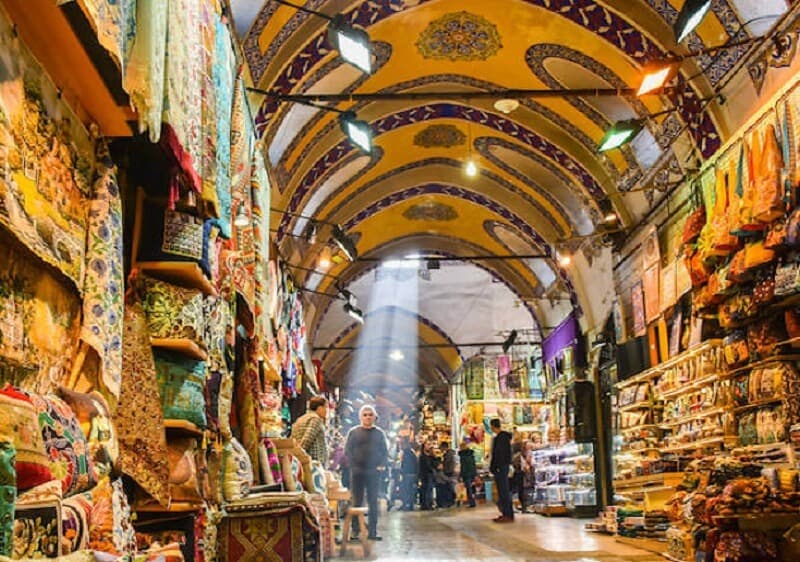
 İstanbul Büyük Bazaar
ISTANBUL GRAND BAZAAR
GRAND BAZAAR’s History
The Grand Bazaar is one of Istanbul's most recognizable landmarks and a bustling commercial center that currently employs 26,000 people and sees between 250,000 and 400,000 visitors every day.
It must compete with the modern shopping malls common in Istanbul, but its beauty and fascination represent a formidable advantage for it. On the 550th anniversary of the complex in 2011, the head of the Grand Bazaar Artisans Association said that it was the most visited landmark in the world.
The building's infrastructure, heating, and lighting will all be updated thanks to a restoration project set to begin in 2012. The stalls inside the market will be renovated, and any additions made later will be torn down. This plan will address the major issues plaguing the market, such as the lack of a restroom in the entire bazaar (now it is solved and there are many toilet facilities in the Grand Bazaar). Also, because there haven't been enough controls in the past few years, many dealers have taken out columns and walls from their stores. This, along with the fact that stolen lead was replaced with concrete on the roof of the market, has made it very dangerous for the earthquake that is expected to hit Istanbul in the next few years.
Except for Sundays and national holidays, the Grand Bazaar is open from 9:00 a.m. to 9:00 p.m. every day.
History of the Grand Bazaar
Shortly after the Ottoman conquest of Constantinople, in the winter of 1455–56, work began on what would become the Grand Bazaar's central market as part of a larger plan to boost the city's economy. A building specifically for the exchange of textiles was commissioned by Sultan Mehmet II. It was known in Ottoman Turkish as Bezzâzistan-Cedîd ("New Bedesten") and Cevâhir Bedestan ('Bedesten of Gems'). The Persian word bezestan, meaning "bazaar of the cloth sellers," was the inspiration for the English word bedesten. The structure, known variously as the "internal" (Ic), "ancient" (Atik), or "old" (Eski) Bedesten in Turkish, is located on the southwestern slope of Istanbul's third hill, between the ruins of the ancient Fora of Constantine and the Fora of Theodosius. It was also near the first sultan’s palace, the Old Palace (Eski Sarayi), which was also under construction in those same years, and not far from the Artopoleia (in Greek) (Άρτoπωλεία), the city’s bakers’ quarter in Byzantine times.
During the 1460s and 1461s, the Bedesten was completed and donated to the Aya Sofya Mosque's waqf. Even though most of the building is from the second half of the 15th century, academics have pointed to the Byzantine relief of a Comnenian eagle that is still on top of the East Gate (Kuyumcular Kapisi) of the Bedesten as proof that it was built in the Byzantine era.
A slave market, known in Turkish as Esir Pazari, operated not far from the Bedesten, a practice that had been maintained since Byzantine times. The old book market (Sahaflar Carsisi) was relocated from the bazaar to its present picturesque location near the Beyazid Mosque. Other important markets in the area were the "second-hand market" (Turkish: "Bit Pazari"), the "Long Market" (Uzun Carsi), which was the same as the Greek "Long Portico" (Makros Embolos), and the "Long Market."
Mehmet II had a second covered market built to the north of the first. It was called Kücük (which means "Little"), Cedit (which means "New"), or Yeni (both of which mean "New") Bedesten. The name comes from a type of thread that was woven in Bursa and had the color of sandalwood.
Sandal Bedesten'in inşa edilmesinden sonra tekstil endüstrisi oraya taşınırken, Cevahir Bedesten, yüksek kaliteli perakende sektörünün özel alanı haline geldi. Başlangıçta iki ayrı yapıydı. Aralarında kilise çöller ve Beyazid Şehri arasında büyük bir tank vardı, 16. yüzyılda Pierre Gilles adında bir Fransız gezgin tarafından belirtildiği gibi. Ancak, birçok tüccar aralarında ve etraflarında bir dükkan kurdu ve kısa sürede tüm bir mahalle ticarete adanmıştı.
1890'da yapılan bir nüfus sayısı göre, Bazaar 4.399 açık mağaza, 2 bedesten, 2195 oda, 1 hamam, 1 camiye, 10 medrasas, 19 kayalıkta (2 sadirvan ve 1 sebil), 1 mauzolye ve 24 han. Bu iki bedesten, on üç han, ve altmış bir cadde (daha fazla dışarıda) içerir.
The last major disaster was an earthquake that struck Istanbul in 1894. Mahmud Celaleddin Paşa, the Minister of Public Works, oversaw the reconstruction of the damaged bazaar until 1898, during which time the size of the complex was reduced. While the Kütkculer Kapi and the old gate were demolished in the west, the Bit Pazari was left outside the new perimeter and turned into an open-air road known as Cadircilar Caddesi (the "Tentmaker Road"). Among all the hans that belonged to the market, many were left outside, and only nine remained enclosed in the structure.
Avrupa rekabetinden dolayı tekstil tüccarları işten çıkarıldıktan sonra İstanbul, 1914 yılında Sandal Bedesten’i satın aldı ve bir sonraki yıl da bu binayı bir halı satış evine olarak kullanmaya başladı. 1927 yılında, sokaklar ve bazar bölgeleri resmi olarak mevcut isimlerine verildi.
The complex was last renovated in the 1980s. At the same time, the market's advertising posters were taken down.
The architecture of the Grand Bazaar
Ic Bedesten, dört katlıdır (43,30 m x 29,50 m). Dört taş koltukları, üç satırlık bayları destekliyor. Her bir kule, kör çubukla kaplı çit kupasına sahiptir. 44 yeraltı çit odası (Türkçe: mahzen) iç ve dış duvarlarda inşa edilmiştir. Bedesten, ahşaptan yapılan ambulans yoluyla ulaşılabilecek doğrudan çatı altında kurulmuş düzgenli pencerelerden doğal ışığı alır. Sınırlı aydınlatma nedeniyle, bina her gün sadece birkaç saat açık ve tek amacı pahalı malların, özellikle tekstil satışıydı. Buna ek olarak, Bedesten'in mahzen çit olarak hizmet ediyor. Dört ayrı girişler yapısına erişim sağlar:
The northern gate is known as the "Second-hand Book Sellers' Gate" (Sahaflar Kapisi), the southern gate is known as the "Skullcap Sellers' Gate" (Takkeciler Kapisi), the eastern gate is known as the "Jewelers' Gate" (Kuyumcular Kapisi), and the western gate is known as "Women's Clothiers' Gate" (Zenneciler Kapisi).
Sandal Bedesten, dörtgenli bir düzen (40.20 m ile 42.20 m) ile uyum sağlar, 20 bayrak taşıyan 12 taş çit ve kör bir çubukla kaplı tuğla kuyu. Sadece dış duvarlarda dükkan kaplamaları vardır. Her iki yapının masonluğu çöplükten yapılır ve çit çit arklar ile bağlantılıdır. Demir kapılar her iki yapının girişlerini korur.
The buildings of the Grand Bazaar, except for the Bedesten, were originally erected out of wood; it wasn't until after the devastating fire of 1700 that they were reconstructed out of stone and brick and given roofs. Except for the fur dealers' market (Turkish: Kürkcüler Carsisi), a later addition, all of the buildings in the bazaar are single-story structures. Most of the roofs are tiled, while tarmac has been installed in the area that caught fire in 1954. Bazaar goers were warned not to bring any kind of flashlight or candle, as this would only serve to attract attention and start fights. It runs roughly parallel to the roads that surround the central district of Bedesten. Regardless, the market took on a picturesque appearance, especially in its western part, due to the damage caused by the numerous fires and earthquakes throughout the centuries and the repairs done without a general plan.
What to Buy at the Grand Bazaar in Istanbul
Kilim ve Rugs
One of Turkey's best-known exports is its exquisite hand-woven carpets and kilims (flat-weaves), and the Grand Bazaar is a popular place to find these rugs.
Türkiye’nin duvar yapımının uzun ve ilginç bir tarihi vardır. Farklı bölgeler, şehirler ve köyler benzersiz desen ve renkler ile bilinir.
Orta Asya ülkelerinden gelen halılar ve kilimler Türkiye’de üretilenlerle birlikte kullanılabilir.
You can browse through a wide variety of carpets in the Grand Bazaar's carpet shops. The best carpet stores will give you a cup of tea and a tour of their showroom while talking about their stock and showing you different kinds of carpets.
When you go carpet shopping, don't forget to bring your sense of humor.
Sellers of carpets are well-known for being a little too enthusiastic with their tales, but you should take it in stride and consider it all in good fun. Keep in mind that, unless they were present during the carpet's production, no carpet dealer has any idea what the weaver was thinking as they created the carpet.
Carpet shopping can be confusing for the uninitiated; if you don't know what you're doing, it's best to just buy something you like. Older carpets and kilims from the village or the nomad's collection were made for the weaver's use, while newer carpets are manufactured with the tourist in mind.
Türkiye ve Orta Asya'dan gelen antik halıların değeri, yaşları, el sanatları, kullanılan yün ve boya malzemelerinin kalitesi ve mevcut piyasada azlığı gibi birçok faktöre bağlıdır.
Lamba ve Lantern
Türkiye’den hediye olarak lamba ve lamba almak isteyenlerin sayısı büyük bir artış gösterdi.
In the Grand Bazaar, lampshades and chandeliers come in all kinds of modern styles, from metal filigree to colorful glass mosaics.
If you'd rather shop for vintage lighting than new, the Grand Bazaar's Ic Bedesten (Old Bazaar), located in the vicinity of the bazaar's geographic center, is where you'll find most of the specialized antique shops selling such items. The oldest and most iconic structure in the Grand Bazaar is the Ic Bedesten.
Cebeci Han'da son teknoloji filigre ışık ekipmanları için bakın.
Daha küçük seçenekler arasında, bazarda satılan birçok cam ve metal mum lambaları bulunmaktadır.
Ceramik ve Pottery
Uzun zamandır seramik yapıyor olan Iznik ve Kütahya kentleri, ünlü Türk seramiklerinin yapıldığı ilk yerlerdi.
Türk ceramik sanatçıları, genellikle tulip motifleri ve diğer çiçek desenleri olan geleneksel Osmanlı tasarımlarının yanı sıra birçok modern parçayı da üretiyor.
Hittit tarzı çubuklar ve karafalar, yuvarlak bir orta bölümle, Bronz Çağı'ndan Anatolian tasarımlara dayanıyor ve mükemmel hediyeler yapıyorlar.
If you are planning a trip to Cappadocia while in Turkey, you may want to hold off on making any purchases until you have a chance to see what the ceramic artists of Avanos are known for producing, as their work is reminiscent of the Hittite era.
In the Grand Bazaar, the main streets are lined with shops that sell cheap, mass-produced ceramics of low quality.
Visit one of the market's dedicated ceramics shops if you're in search of uniquely painted ceramics.
The Arasta Bazaar (behind the Blue Mosque) and the Grand Bazaar are both worth exploring if you're interested in purchasing ceramics in Istanbul.
Türk Metal İşleri
Türkiye’nin güney doğusundaki Gaziantep, Sanliurfa ve Mardin şehirleri, Türkiye’nin en iyi çağdaş metal üreticilerinden bazılarını üretmek için bilinir.
Türkiye'ye seyahatinizden önce, özellikle bu şehirlere, fiyatların daha düşük olacağından alışverişlerinizde bekleyin.
En çok satan ürünlerden bazıları, geleneksel Osmanlı tasarımlarına dayanan karmaşık gravürlü çay ve kahve servis setleri ve metal plaka.
Engraved Turkish coffee pots, used to brew the beverage over a stovetop, are a practical and attractive souvenir that won't take up too much space in your carry-on.
Nargile Hookah Hakkında
Nargile (su borusu) meyve aromalı tütün içmek için kullanılan geleneksel bir Türk anıtıdır.
Osmanlı İmparatorluğu döneminden beri Türk kahvelerinde nargile içiliyor.
Cam veya seramik nargile şişeleri (sütü filtrelemek için kullanılan suyu tutan) karmaşık tasarımlar alabilir.
Keep in mind that nargile components are often purchased separately, and the bowls can be used as distinctive vases if you're not interested in buying a fully functional nargile but like the look of the bowls.
Go to Ic Bedesten's antique shops if you're in search of vintage Nargile. There are many shops in the bazaar selling contemporary nargile.
mücevher
The Grand Bazaar is the best place to go in Istanbul to buy jewelry.
There's something for everyone here, from glitzy gold to delicate silver filigree work and pieces set with semi-precious stones.
For gold work, head to the main street of Kalpakcilarbasi Caddesi first, which is lined with gold shops. This is the street that runs between the main Grand Bazaar entrances of Bayazit Gate, on the west side of the bazaar, and Nuruosmaniye Gate, at the eastern end.
Üretiminin çok büyük bir kısmı gelin pazarına yönelik olduğu için, parçalar tarzında klasik olmaya eğilimlidir.
Gümüş mücevher satışı mağazaları bazarın her yerinde bulunabilir. gümüş mücevher aramanızı Ic Bedesten (Old Bazaar), birçok mağazaya ev sahipliği yapmaktadır değerli metaller için adanmış.
Mavi Chalcedony ve Zultanite mücevherleri göz önünde bulundurun, her ikisi de Türkiye'de maden ve yarı değerli taşlar olarak kabul edilir.
Yastıklar ve Yastıklar
The many smaller textile items available in Turkey are great purchases if you're looking for easy-to-pack items.
Bu, gerçek Türk tarzı mobilyaları satın alma yükü ve aşırı bagaj ağırlığı olmadan geri getirebilmenizi sağlar.
Tekstikleri inanılmaz bir çeşitlilik ve stillerde bulabilirsiniz.Kapak kaplamaları ve diğer küçük tekstiller, geleneksel Osmanlı tasarımlarıyla basılmıştır ve aynı zamanda kitle üretiminden dolayı kolayca erişilebilir ve ucuzdur.
Orijinal suzani kumaşları (Kuzey Asya'da yapışkan kumaşlar) ve vintage kilimler, benzersiz tekstil aksesuarları (düz dokuma halıları) oluşturmak için kullanılır.
Hamam Cihazları
Although bath products might not be the first thing that comes to mind when you think of a traditional Turkish souvenir, they have a deep history thanks to the country's hammam (Turkish bath) culture.
Towels with traditional fringed striped designs, called pestemals, are still used in modern hammams. The stalls in the bazaar will sell a wide variety of mass-produced towels, but if you're looking for something truly unique, you should browse the selection of handwoven cotton pestemals, towels, and bathrobes available at stores that specialize in hammam supplies.
El yapımı zeytinyağı sabunları ve hamamlarda kullanılan peeling çamaşırları, evde götürmek için harika hediyeler yapan daha küçük öğelerden ikisidir.
Moda için aksesuarlar
The Grand Bazaar is a fantastic place to shop for accessories, whether you're in the market for a new scarf, pair of slippers, hat, or bag.
Türkiye uzun zamandır ipek ve deri ürünleri ile bilinir ve bugün birçok garip ve son derece çağdaş moda öğesi, özellikle şapka ve şapka üretmek için geleneksel bir fetiş yapma geleneği de vardır.
Satışta bulunan çarşafların çoğunun turistlerin akılda tutulmasıyla kitle üretildiği ve Türkiye’de bile üretilmediği unutulmamalıdır.
Yaglikcilar Caddesi'nin kuzey ucunda çalışan kumaş mağazaları, yüksek kaliteli el yapımı mavi, kasmir ve pamuk çamaşırları ve çarşafları bulmak için en iyi yerlerdir.
In the southwest corner of the bazaar, along Parcacilar Sokak and Fesciler Caddesi, you'll find a concentration of stores selling leather goods.
Türk Tatlıları ve Tatlıları
Although the Spice Bazaar is where most tourists go to buy souvenirs and gifts involving spices and Turkish delight, the Grand Bazaar also has plenty of options for these kinds of purchases.
Sumac (sumac bitkisinin kurutulmuş karabiber meyveleri) ve pul biber (kurutulmuş Aleppo kırmızı biber) Türk mutfağında en önemli iki baharat olduğunu unutmayın.
Tatlı ve asitli romat melas ve pekmez, geri getirmeye değer iki tatlıdır (Türkiye'de sıkıştırılmış meyve sirapları genellikle üzümlerden veya mor balıklardan yapılır).
Çiçekler ile doldurulmuş ve gül suyu veya meyvelerle aromalı olan pek çok helva şekerciye dikkat edin.
Advice on Shopping at the Grand Bazaar
The Grand Bazaar is open from 8.30 a.m. to 7 p.m., Monday through Saturday.
You cannot cover the breadth of the bazaar in one visit. Plan on spending at least an entire morning or afternoon here on your first visit if you want to explore or are serious about shopping, and don't expect to see everything.
Expect to get lost. Half the fun is getting lost in the Grand Bazaar and discovering one of the alley dead ends that lead to an arcaded han (old traveler inn).
Çay ve yerel alışverişçiler ve satıcılarla sohbet deneyimin önemli bir parçasıdır. Cay (çay) size tanıştığınız herkes tarafından sunulacaktır. burada deneyiminiz bu Türk misafirperverliğine katılmak için zaman ayırırsanız çok daha zengin ve daha eğlenceli olacaktır.
The initial price you are quoted depends as much on the country you are from as it does on the seller's mood at the time. For an idea of how much items cost, spend some time browsing a range of shops before purchasing.
Burada alışveriş yapanlar ve toutler çeşitli diller konuşuyor.
The Grand Bazaar's larger thoroughfares are lined with souvenir shops selling the same trinkets you'll find anywhere: fridge magnets, key chains, Turkey flags, and the ubiquitous nazar boncuk (glass evil-eye protector amulets). Get away from the hustle and bustle of the main drags to find unique and exciting stores.
Halicilar Caddesi yakınlarında, Kalpakcilarbasi Caddesi ve Cebeci Han ve Ic Bedesten yakınlarında altın mağazaları bulunabilir.
Frequently Asked Questions About The Grand Bazaar
Q ile: What is the Grand Bazaar?
A A: The Grand Bazaar is a historic covered market in Istanbul, Turkey, known for its maze-like alleys filled with shops selling everything from jewelry and spices to textiles and ceramics.
Q ile: Where is the Grand Bazaar located?
A A: The Grand Bazaar is located in the Fatih district of Istanbul, Turkey.
Q ile: How old is the Grand Bazaar?
A A: The Grand Bazaar was established in the 15th century and has been in continuous operation since then.
Q ile: How big is the Grand Bazaar?
A A: The Grand Bazaar spans over 60 streets and contains over 4,000 shops.
Q ile: What kinds of products can be found in the Grand Bazaar?
A A: The Grand Bazaar is known for its wide variety of products, including jewelry, textiles, ceramics, spices, and more.
Q ile: What is the history of the Grand Bazaar?
A A: The Grand Bazaar has a long and rich history, having been an important center of commerce for centuries.
Q ile: Is the Grand Bazaar only for tourists?
A A: The Grand Bazaar is both a tourist destination and a local shopping hub, attracting both locals and visitors alike.
Q ile: What are the opening hours of the Grand Bazaar?
A A: The Grand Bazaar is typically open from 9:00 a.m. to 7:00 p.m., seven days a week.
Q ile: What is the best time to visit the Grand Bazaar?
A A: The best time to visit the Grand Bazaar is in the morning or late afternoon when the crowds are smaller and you can enjoy a more leisurely shopping experience.
Q ile: Is bargaining expected in the Grand Bazaar?
A A: Bargaining is expected and considered part of the shopping experience at the Grand Bazaar, so be prepared to negotiate prices with vendors.
İstanbul şehrinde gezilecek yerleri lisanslı rehberimizle rezervasyon yapabilirsiniz.Aşağıdaki bağlantılar:
Map of Grand Bazaar