
 grand-bazaar-Istanbul
ISTANBUL GRAND BAZAAR
GRAND BAZAAR’s History
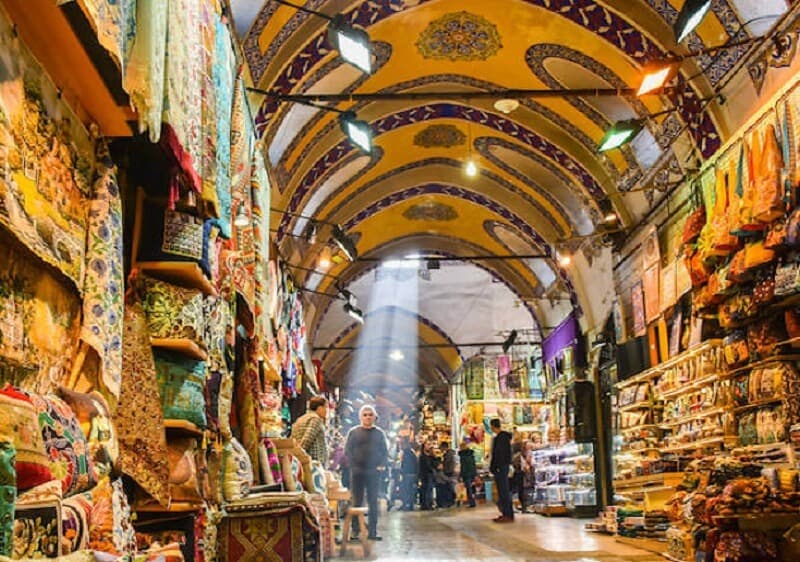
The Grand Bazaar is one of Istanbul's most recognizable landmarks and a bustling commercial center that currently employs 26,000 people and sees between 250,000 and 400,000 visitors every day.
It must compete with the modern shopping malls common in Istanbul, but its beauty and fascination represent a formidable advantage for it. On the 550th anniversary of the complex in 2011, the head of the Grand Bazaar Artisans Association said that it was the most visited landmark in the world.
The building's infrastructure, heating, and lighting will all be updated thanks to a restoration project set to begin in 2012. The stalls inside the market will be renovated, and any additions made later will be torn down. This plan will address the major issues plaguing the market, such as the lack of a restroom in the entire bazaar (now it is solved and there are many toilet facilities in the Grand Bazaar). Also, because there haven't been enough controls in the past few years, many dealers have taken out columns and walls from their stores. This, along with the fact that stolen lead was replaced with concrete on the roof of the market, has made it very dangerous for the earthquake that is expected to hit Istanbul in the next few years.
Except for Sundays and national holidays, the Grand Bazaar is open from 9:00 a.m. to 9:00 p.m. every day.
History of the Grand Bazaar
Shortly after the Ottoman conquest of Constantinople, in the winter of 1455–56, work began on what would become the Grand Bazaar's central market as part of a larger plan to boost the city's economy. A building specifically for the exchange of textiles was commissioned by Sultan Mehmet II. It was known in Ottoman Turkish as Bezzâzistan-Cedîd ("New Bedesten") and Cevâhir Bedestan ('Bedesten of Gems'). The Persian word bezestan, meaning "bazaar of the cloth sellers," was the inspiration for the English word bedesten. The structure, known variously as the "internal" (Ic), "ancient" (Atik), or "old" (Eski) Bedesten in Turkish, is located on the southwestern slope of Istanbul's third hill, between the ruins of the ancient Fora of Constantine and the Fora of Theodosius. It was also near the first sultan’s palace, the Old Palace (Eski Sarayi), which was also under construction in those same years, and not far from the Artopoleia (in Greek) (Άρτoπωλεία), the city’s bakers’ quarter in Byzantine times.
During the 1460s and 1461s, the Bedesten was completed and donated to the Aya Sofya Mosque's waqf. Even though most of the building is from the second half of the 15th century, academics have pointed to the Byzantine relief of a Comnenian eagle that is still on top of the East Gate (Kuyumcular Kapisi) of the Bedesten as proof that it was built in the Byzantine era.
A slave market, known in Turkish as Esir Pazari, operated not far from the Bedesten, a practice that had been maintained since Byzantine times. The old book market (Sahaflar Carsisi) was relocated from the bazaar to its present picturesque location near the Beyazid Mosque. Other important markets in the area were the "second-hand market" (Turkish: "Bit Pazari"), the "Long Market" (Uzun Carsi), which was the same as the Greek "Long Portico" (Makros Embolos), and the "Long Market."
Mehmet II had a second covered market built to the north of the first. It was called Kücük (which means "Little"), Cedit (which means "New"), or Yeni (both of which mean "New") Bedesten. The name comes from a type of thread that was woven in Bursa and had the color of sandalwood.
A Sandal Bedesten építése után a textilipar ott költözött, míg a Cevahir Bedesten a csúcstechnológiás kiskereskedelmi szektor kizárólagos tartományává vált. Kezdetben két különálló struktúra voltak. Voltak templomromok és egy nagy tartály közöttük és a Beyazid mecset, amint azt egy francia utazó, Pierre Gilles a 16. században megjegyezte.
1890-ben végzett népszámlálás szerint a Bazaárban 4399 nyitott bolt, 2 bedesten, 2195 szoba, 1 hamam, 1 mecset, 10 medrasas, 19 szökőkút (2 sadirvan és 1 sebil), 1 mauzóleum és 24 han.
The last major disaster was an earthquake that struck Istanbul in 1894. Mahmud Celaleddin Paşa, the Minister of Public Works, oversaw the reconstruction of the damaged bazaar until 1898, during which time the size of the complex was reduced. While the Kütkculer Kapi and the old gate were demolished in the west, the Bit Pazari was left outside the new perimeter and turned into an open-air road known as Cadircilar Caddesi (the "Tentmaker Road"). Among all the hans that belonged to the market, many were left outside, and only nine remained enclosed in the structure.
Miután a textilkereskedőket az európai verseny elűzte, Isztambul város 1914-ben megvásárolta a Sandal Bedestenet, és a következő évben kezdte használni a szőnyegek árverésénél.1927-ben a bazár utcáinak és részeit hivatalosan megadták jelenlegi nevüknek.
The complex was last renovated in the 1980s. At the same time, the market's advertising posters were taken down.
The architecture of the Grand Bazaar
A Bedesten-i Ic-térképen a négyzet (43,30 m x 29,50 m). Huszonnégy kőoszlop támogatja a három öblöket. A tornyok mindegyikének van egy vak-trombit csúcsos tégla kupola. 44 földalatti, fedett szobát (török: mahzen) építettek a belső és külső falakba. A Bedesten természetes fényét a tető alá telepített téglalap ablakokból kapja, amelyhez egy fából készült ambuláns útvonalon keresztül lehet elérni. A korlátozott megvilágítás miatt az épület csak napi néhány órán át nyitva volt, és kizárólagos célja a drága áruk, különösen a textilek értékesítése volt. Ezenkívül a Bedesten-i mahzán fedettként szolgál. Négy külön bejárat ad hozzáférést az épülethez:
The northern gate is known as the "Second-hand Book Sellers' Gate" (Sahaflar Kapisi), the southern gate is known as the "Skullcap Sellers' Gate" (Takkeciler Kapisi), the eastern gate is known as the "Jewelers' Gate" (Kuyumcular Kapisi), and the western gate is known as "Women's Clothiers' Gate" (Zenneciler Kapisi).
A Sandal Bedesten egy téglalap alakú elrendezésű (40,20 m a 42,20 m), 12 kőoszlop 20 öblével, és egy vak dobozral felszerelt tégla kupolákkal. Csak a külső falakban vannak raktárak. Mindkét szerkezetben a fűrészgyártás romból készül, és a öblök tégla ívekkel vannak összekötve, amelyek viszont juniper fűrészfűrészekkel vannak összekötve.
The buildings of the Grand Bazaar, except for the Bedesten, were originally erected out of wood; it wasn't until after the devastating fire of 1700 that they were reconstructed out of stone and brick and given roofs. Except for the fur dealers' market (Turkish: Kürkcüler Carsisi), a later addition, all of the buildings in the bazaar are single-story structures. Most of the roofs are tiled, while tarmac has been installed in the area that caught fire in 1954. Bazaar goers were warned not to bring any kind of flashlight or candle, as this would only serve to attract attention and start fights. It runs roughly parallel to the roads that surround the central district of Bedesten. Regardless, the market took on a picturesque appearance, especially in its western part, due to the damage caused by the numerous fires and earthquakes throughout the centuries and the repairs done without a general plan.
What to Buy at the Grand Bazaar in Istanbul
Kilims és Rugs
One of Turkey's best-known exports is its exquisite hand-woven carpets and kilims (flat-weaves), and the Grand Bazaar is a popular place to find these rugs.
Törökországnak hosszú és érdekes történelme van a szőnyegek gyártásában.A különböző régiók, városok és falvak egyedülálló mintáikról és színeikről ismertek.
A közép-ázsiai országokból származó szőnyegek és szőnyegek a Törökországban készült szőnyegek mellett is kaphatók lesznek.
You can browse through a wide variety of carpets in the Grand Bazaar's carpet shops. The best carpet stores will give you a cup of tea and a tour of their showroom while talking about their stock and showing you different kinds of carpets.
When you go carpet shopping, don't forget to bring your sense of humor.
Sellers of carpets are well-known for being a little too enthusiastic with their tales, but you should take it in stride and consider it all in good fun. Keep in mind that, unless they were present during the carpet's production, no carpet dealer has any idea what the weaver was thinking as they created the carpet.
Carpet shopping can be confusing for the uninitiated; if you don't know what you're doing, it's best to just buy something you like. Older carpets and kilims from the village or the nomad's collection were made for the weaver's use, while newer carpets are manufactured with the tourist in mind.
Az antik török és közép-ázsiai szőnyegek értéke számos tényezőtől függ, mint például az életkor, a kézműves képesség, a gyapjú és a használt színezékek minősége, valamint a jelenlegi piacon való hiányosságuk.
lámpák és lámpák
Nagy növekedés tapasztalható azokban az emberekben, akik lámpákat és lámpákat szeretnének ajándékként Törökországból.
In the Grand Bazaar, lampshades and chandeliers come in all kinds of modern styles, from metal filigree to colorful glass mosaics.
If you'd rather shop for vintage lighting than new, the Grand Bazaar's Ic Bedesten (Old Bazaar), located in the vicinity of the bazaar's geographic center, is where you'll find most of the specialized antique shops selling such items. The oldest and most iconic structure in the Grand Bazaar is the Ic Bedesten.
Nézd meg a Cebeci Han-t néhány élvonalbeli filigrén fénycsövekhez.
A kisebb lehetőségek közé tartoznak a sok üveg- és fémgyertyátlámpák, amelyeket a bazárban értékesítenek.
Kerámia és Pottery
Az Iznik és Kütahya városok, amelyek már régóta kerámiát készítenek, voltak az első helyek, ahol híres török kerámiát készítettek.
A török kerámia művészek most is sok modern darabot készítenek a hagyományos török minták mellett, amelyek gyakran tulipán motívumokkal és más virágmintákkal rendelkeznek.
A hittit stílusú csigák és karafák kör alakú középső szakaszban a bronzkorból származó anatoliai mintákra épülnek, és kiváló ajándékokat készítenek.
If you are planning a trip to Cappadocia while in Turkey, you may want to hold off on making any purchases until you have a chance to see what the ceramic artists of Avanos are known for producing, as their work is reminiscent of the Hittite era.
In the Grand Bazaar, the main streets are lined with shops that sell cheap, mass-produced ceramics of low quality.
Visit one of the market's dedicated ceramics shops if you're in search of uniquely painted ceramics.
The Arasta Bazaar (behind the Blue Mosque) and the Grand Bazaar are both worth exploring if you're interested in purchasing ceramics in Istanbul.
Török fémek
A délkelet-török Gaziantep, Sanliurfa és Mardin városai a legnépszerűbb modern fémek gyártásáról ismertek Törökországban.
Tartsa le a vásárlást, amíg az utazás Törökországba, különösen ezekben a városokban, mivel az árak alacsonyabbak lesznek.
A legelterjedtebb eladások közé tartoznak a tea- és kávészolgálati készletek, valamint a fémtálcák, amelyek bonyolult gravírozáson alapulnak, a hagyományos oszmán formatervezésen alapulnak.
Engraved Turkish coffee pots, used to brew the beverage over a stovetop, are a practical and attractive souvenir that won't take up too much space in your carry-on.
Szilveszter Hookah
A nargile (vízcső) egy hagyományos török ajándék, amelyet gyümölcs ízű dohányzására használnak.
Az Oszmán Birodalom idejétől kezdve az emberek a török kávézókban dohányoznak.
Üveg vagy kerámia nargill csészék (amelyek tartják a vizet szűrni a füst) lehet átfogó tervezés.
Keep in mind that nargile components are often purchased separately, and the bowls can be used as distinctive vases if you're not interested in buying a fully functional nargile but like the look of the bowls.
Go to Ic Bedesten's antique shops if you're in search of vintage Nargile. There are many shops in the bazaar selling contemporary nargile.
ékszerek
The Grand Bazaar is the best place to go in Istanbul to buy jewelry.
There's something for everyone here, from glitzy gold to delicate silver filigree work and pieces set with semi-precious stones.
For gold work, head to the main street of Kalpakcilarbasi Caddesi first, which is lined with gold shops. This is the street that runs between the main Grand Bazaar entrances of Bayazit Gate, on the west side of the bazaar, and Nuruosmaniye Gate, at the eastern end.
Mivel a termelés nagy része a menyasszonyi piacra irányul, a darabok klasszikus stílusban vannak.
Az ezüst ékszereket árusító üzletek megtalálhatók a bazár minden táján.Az ezüst ékszerek keresésének megkezdése az Ic Bedestenben (Old Bazaar) lehetséges, ahol számos, a drága fémre szentelt üzlet található.
Figyelj a kék kalcedon és zultanit ékszerekre, amelyek mindkettő Törökországban bányászott és félig drága köveknek tekinthető.
Párnák és párnák
The many smaller textile items available in Turkey are great purchases if you're looking for easy-to-pack items.
Ezek lehetővé teszik, hogy visszahozzon néhány valódi török stílusú bútorokat anélkül, hogy a szőnyegek megvásárlásának nehéz árát és túlzott poggyászterhelését megengedné.
A textileket hihetetlen sokféleségben és stílusban találjuk. a hagyományos oszmán mintákkal nyomtatott párnák és egyéb kis textilek szintén könnyen hozzáférhetők és olcsóak a tömeggyártásnak köszönhetően.
Az eredeti szuzáni szöveteket (közép-ázsiai borotválkozott textileket) és a vintage kilimeket egyedi textil kiegészítők (sima szőtt szőnyegek) létrehozására használják.
Hammam felszerelések
Although bath products might not be the first thing that comes to mind when you think of a traditional Turkish souvenir, they have a deep history thanks to the country's hammam (Turkish bath) culture.
Towels with traditional fringed striped designs, called pestemals, are still used in modern hammams. The stalls in the bazaar will sell a wide variety of mass-produced towels, but if you're looking for something truly unique, you should browse the selection of handwoven cotton pestemals, towels, and bathrobes available at stores that specialize in hammam supplies.
A kézzel készített olívaolaj szappanok és a hammamokban használt exfoliáló hámlasztó mókusok két kisebb elem, amelyek nagyszerű ajándékokat hoznak haza.
Accessories a divatban
The Grand Bazaar is a fantastic place to shop for accessories, whether you're in the market for a new scarf, pair of slippers, hat, or bag.
Törökország régóta ismert a selyem és bőr termékek, és van egy hagyományos érzékeli hagyomány, amely ma termel sok furcsa és rendkívül kortárs divat tárgyak, különösen a csizmák és kalapok.
Ne feledje, hogy az eladó zokni sok tömegtermelésű, a turisták szem előtt tartásával, és nem is Törökországban készülnek.
A Yaglikcilar Caddesi északi végén futó szövetboltok a legjobb helyek a kiváló minőségű kézzel készített selyem, kasmír, pamut fésű és varrógép megtalálásához.
In the southwest corner of the bazaar, along Parcacilar Sokak and Fesciler Caddesi, you'll find a concentration of stores selling leather goods.
Török desszert és édesség
Although the Spice Bazaar is where most tourists go to buy souvenirs and gifts involving spices and Turkish delight, the Grand Bazaar also has plenty of options for these kinds of purchases.
Megjegyzendő, hogy a sumac (a sumac növény szárított sárgabarack gyümölcse) és a pul biber (az Aleppó szárított piros bors) a török konyha két legjelentősebb fűszere.
Az édes-sárga gránátalma és a pekmez két fűszer, amelyet érdemes visszahozni (konzentrált gyümölcsszirupok általában szőlőből vagy málnából készülnek Törökországban).
Figyelj a sok helva cukrászdára szezámmagok mellett a számtalan török ízű (törökországi lokumnak nevezett) fajtájára, amelyeket diófélékkel töltöttek és rózsavízzel vagy gyümölcsökkel ízesítettek.
Advice on Shopping at the Grand Bazaar
The Grand Bazaar is open from 8.30 a.m. to 7 p.m., Monday through Saturday.
You cannot cover the breadth of the bazaar in one visit. Plan on spending at least an entire morning or afternoon here on your first visit if you want to explore or are serious about shopping, and don't expect to see everything.
Expect to get lost. Half the fun is getting lost in the Grand Bazaar and discovering one of the alley dead ends that lead to an arcaded han (old traveler inn).
A tea és a beszélgetés a helyi boltosokkal és a touts nélkülözhetetlen része a tapasztalatnak. Cay (tea) lesz felajánlotta, hogy bárki és mindenki találkozik. A tapasztalat itt lesz sokkal gazdagabb és szórakoztatóbb, ha időt vesz igénybe, hogy részt vegyen ebben a török vendégszeretet.
The initial price you are quoted depends as much on the country you are from as it does on the seller's mood at the time. For an idea of how much items cost, spend some time browsing a range of shops before purchasing.
A vásárlók és a touts itt számos nyelvet beszélnek.
The Grand Bazaar's larger thoroughfares are lined with souvenir shops selling the same trinkets you'll find anywhere: fridge magnets, key chains, Turkey flags, and the ubiquitous nazar boncuk (glass evil-eye protector amulets). Get away from the hustle and bustle of the main drags to find unique and exciting stores.
A bazár különböző területei konkrét bevásárlóközpontok számára vannak szentelve.Kövekboltok találhatók Halicilar Caddesi környékén, míg aranyboltok találhatók Kalpakcilarbasi Caddesi mentén és a Cebeci Han és az Ic Bedesten környékén.
Frequently Asked Questions About The Grand Bazaar
Kérdés: What is the Grand Bazaar?
A: The Grand Bazaar is a historic covered market in Istanbul, Turkey, known for its maze-like alleys filled with shops selling everything from jewelry and spices to textiles and ceramics.
Kérdés: Where is the Grand Bazaar located?
A: The Grand Bazaar is located in the Fatih district of Istanbul, Turkey.
Kérdés: How old is the Grand Bazaar?
A: The Grand Bazaar was established in the 15th century and has been in continuous operation since then.
Kérdés: How big is the Grand Bazaar?
A: The Grand Bazaar spans over 60 streets and contains over 4,000 shops.
Kérdés: What kinds of products can be found in the Grand Bazaar?
A: The Grand Bazaar is known for its wide variety of products, including jewelry, textiles, ceramics, spices, and more.
Kérdés: What is the history of the Grand Bazaar?
A: The Grand Bazaar has a long and rich history, having been an important center of commerce for centuries.
Kérdés: Is the Grand Bazaar only for tourists?
A: The Grand Bazaar is both a tourist destination and a local shopping hub, attracting both locals and visitors alike.
Kérdés: What are the opening hours of the Grand Bazaar?
A: The Grand Bazaar is typically open from 9:00 a.m. to 7:00 p.m., seven days a week.
Kérdés: What is the best time to visit the Grand Bazaar?
A: The best time to visit the Grand Bazaar is in the morning or late afternoon when the crowds are smaller and you can enjoy a more leisurely shopping experience.
Kérdés: Is bargaining expected in the Grand Bazaar?
A: Bargaining is expected and considered part of the shopping experience at the Grand Bazaar, so be prepared to negotiate prices with vendors.
Ügyfőnkkel együtt, engedélyezett idegenvezetőkkel foglalhatja le Istanbuli városi túrát. A linkek az alábbiak:
Map of Grand Bazaar