
 Gran Bazaar de Estambul
Gran Bazar de Estambul
Historia del Gran Bazar
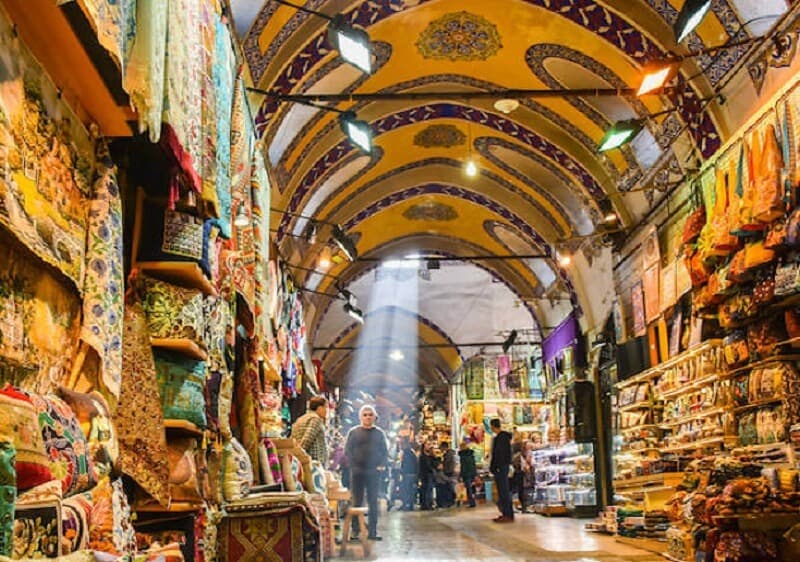
The Grand Bazaar is one of Istanbul's most recognizable landmarks and a bustling commercial center that currently employs 26,000 people and sees between 250,000 and 400,000 visitors every day.
Debe competir con los modernos centros comerciales comunes en Estambul, pero su belleza y fascinación representan una formidable ventaja para él.En el 550 aniversario del complejo en 2011, el jefe de la Asociación de Artesanos del Gran Bazar dijo que era el punto de referencia más visitado del mundo.
The building's infrastructure, heating, and lighting will all be updated thanks to a restoration project set to begin in 2012. The stalls inside the market will be renovated, and any additions made later will be torn down. This plan will address the major issues plaguing the market, such as the lack of a restroom in the entire bazaar (now it is solved and there are many toilet facilities in the Grand Bazaar). Also, because there haven't been enough controls in the past few years, many dealers have taken out columns and walls from their stores. This, along with the fact that stolen lead was replaced with concrete on the roof of the market, has made it very dangerous for the earthquake that is expected to hit Istanbul in the next few years.
Except for Sundays and national holidays, the Grand Bazaar is open from 9:00 a.m. to 9:00 p.m. every day.
Historia del Gran Bazar
Shortly after the Ottoman conquest of Constantinople, in the winter of 1455–56, work began on what would become the Grand Bazaar's central market as part of a larger plan to boost the city's economy. A building specifically for the exchange of textiles was commissioned by Sultan Mehmet II. It was known in Ottoman Turkish as Bezzâzistan-Cedîd ("New Bedesten") and Cevâhir Bedestan ('Bedesten of Gems'). The Persian word bezestan, meaning "bazaar of the cloth sellers," was the inspiration for the English word bedesten. The structure, known variously as the "internal" (Ic), "ancient" (Atik), or "old" (Eski) Bedesten in Turkish, is located on the southwestern slope of Istanbul's third hill, between the ruins of the ancient Fora of Constantine and the Fora of Theodosius. It was also near the first sultan’s palace, the Old Palace (Eski Sarayi), which was also under construction in those same years, and not far from the Artopoleia (in Greek) (Άρτoπωλεία), the city’s bakers’ quarter in Byzantine times.
During the 1460s and 1461s, the Bedesten was completed and donated to the Aya Sofya Mosque's waqf. Even though most of the building is from the second half of the 15th century, academics have pointed to the Byzantine relief of a Comnenian eagle that is still on top of the East Gate (Kuyumcular Kapisi) of the Bedesten as proof that it was built in the Byzantine era.
A slave market, known in Turkish as Esir Pazari, operated not far from the Bedesten, a practice that had been maintained since Byzantine times. The old book market (Sahaflar Carsisi) was relocated from the bazaar to its present picturesque location near the Beyazid Mosque. Other important markets in the area were the "second-hand market" (Turkish: "Bit Pazari"), the "Long Market" (Uzun Carsi), which was the same as the Greek "Long Portico" (Makros Embolos), and the "Long Market."
Mehmet II had a second covered market built to the north of the first. It was called Kücük (which means "Little"), Cedit (which means "New"), or Yeni (both of which mean "New") Bedesten. The name comes from a type of thread that was woven in Bursa and had the color of sandalwood.
Después de que se construyó el Sandal Bedesten, la industria textil se trasladó allí, mientras que el Cevahir Bedesten se convirtió en el dominio exclusivo del sector minorista de alta gama. Inicialmente eran dos estructuras separadas. Había ruinas de iglesias y una gran cisterna entre ellos y la Mezquita de Beyazid, como señaló un viajero francés en el siglo XVI llamado Pierre Gilles. Sin embargo, muchos comerciantes rápidamente establecieron tienda en los espacios entre ellos y alrededor, y pronto un distrito entero se dedicó al comercio.
Según un censo realizado en 1890, el Bazaar albergaba 4.399 tiendas abiertas, 2 bedesten, 2195 habitaciones, 1 hamam, 1 mezquita, 10 medrasas, 19 fuentes (2 sadirvan y 1 sebil), 1 mausoleo, y 24 han. Hay 3.000 tiendas distribuidas por 61 calles en el 30,7% de la zona construida que está guardada por 18 puertas.
The last major disaster was an earthquake that struck Istanbul in 1894. Mahmud Celaleddin Paşa, the Minister of Public Works, oversaw the reconstruction of the damaged bazaar until 1898, during which time the size of the complex was reduced. While the Kütkculer Kapi and the old gate were demolished in the west, the Bit Pazari was left outside the new perimeter and turned into an open-air road known as Cadircilar Caddesi (the "Tentmaker Road"). Among all the hans that belonged to the market, many were left outside, and only nine remained enclosed in the structure.
Después de que sus comerciantes textiles fueran expulsados de sus negocios por la competencia europea, la ciudad de Estambul compró el Sandal Bedesten en 1914 y comenzó a utilizarlo como casa de subastas para alfombras el año siguiente. En 1927, las calles y secciones del bazar recibieron oficialmente sus nombres actuales.Los últimos incendios en el Bazaar ocurrieron en 1943 y 1954, y las restauraciones relacionadas se finalizaron el 28 de julio de 1959.
The complex was last renovated in the 1980s. At the same time, the market's advertising posters were taken down.
The architecture of the Grand Bazaar
En términos de diseño, el Ic Bedesten es cuadrado (43,30 m x 29,50 m). Veinticuatro pilares de piedra apoyan las tres filas de bahías. Cada una de las torres tiene su cúpula de ladrillo con tambor ciego. 44 habitaciones subterráneas (en turco: mahzen) se construyeron en las paredes interior y exterior. Bedesten obtiene su luz natural de las ventanas rectangulares instaladas directamente debajo del techo, que se puede llegar a través de una entrada ambulatoria hecha de madera. Debido a la iluminación limitada, el edificio estaba abierto sólo por un número pequeño de horas cada día, y su único propósito era la venta de bienes caros, principalmente textiles. Además, el mahzen del Bedesten sirvió como almohadillas. Cuatro entradas separadas dan acceso a la estructura:
The northern gate is known as the "Second-hand Book Sellers' Gate" (Sahaflar Kapisi), the southern gate is known as the "Skullcap Sellers' Gate" (Takkeciler Kapisi), the eastern gate is known as the "Jewelers' Gate" (Kuyumcular Kapisi), and the western gate is known as "Women's Clothiers' Gate" (Zenneciler Kapisi).
El Sandal Bedesten sigue el traje con un diseño rectangular (40,20 m por 42,20 m), 12 pilares de piedra con 20 bahías, y cúpulas de ladrillo cubiertas con un tambor ciego. Sólo las paredes exteriores tienen ventanales cortadas en ellas. La maquinaria en ambas estructuras está hecha de basura, y las bahías están conectadas con arcos de ladrillo que a su vez están conectados con barras de juniper.
The buildings of the Grand Bazaar, except for the Bedesten, were originally erected out of wood; it wasn't until after the devastating fire of 1700 that they were reconstructed out of stone and brick and given roofs. Except for the fur dealers' market (Turkish: Kürkcüler Carsisi), a later addition, all of the buildings in the bazaar are single-story structures. Most of the roofs are tiled, while tarmac has been installed in the area that caught fire in 1954. Bazaar goers were warned not to bring any kind of flashlight or candle, as this would only serve to attract attention and start fights. It runs roughly parallel to the roads that surround the central district of Bedesten. Regardless, the market took on a picturesque appearance, especially in its western part, due to the damage caused by the numerous fires and earthquakes throughout the centuries and the repairs done without a general plan.
Qué comprar en el Gran Bazar de Estambul
Kilims y Rugs
One of Turkey's best-known exports is its exquisite hand-woven carpets and kilims (flat-weaves), and the Grand Bazaar is a popular place to find these rugs.
Turquía tiene una larga y interesante historia de fabricación de alfombras.Diversas regiones, ciudades y pueblos son conocidos por sus patrones y colores únicos.
Los alfombras y kilimones de los países de Asia Central estarán disponibles junto a los fabricados en Turquía.
You can browse through a wide variety of carpets in the Grand Bazaar's carpet shops. The best carpet stores will give you a cup of tea and a tour of their showroom while talking about their stock and showing you different kinds of carpets.
When you go carpet shopping, don't forget to bring your sense of humor.
Sellers of carpets are well-known for being a little too enthusiastic with their tales, but you should take it in stride and consider it all in good fun. Keep in mind that, unless they were present during the carpet's production, no carpet dealer has any idea what the weaver was thinking as they created the carpet.
Carpet shopping can be confusing for the uninitiated; if you don't know what you're doing, it's best to just buy something you like. Older carpets and kilims from the village or the nomad's collection were made for the weaver's use, while newer carpets are manufactured with the tourist in mind.
El valor de las alfombras antiguas de Turquía y Asia Central depende de muchos factores, como su edad, artesanía, la calidad de la lana y los tintes utilizados, y su escasez en el mercado actual.
Lámparas y lanternas
Ha habido un gran aumento en el número de personas que quieren lámparas y lanternas como regalos de Turquía.
In the Grand Bazaar, lampshades and chandeliers come in all kinds of modern styles, from metal filigree to colorful glass mosaics.
If you'd rather shop for vintage lighting than new, the Grand Bazaar's Ic Bedesten (Old Bazaar), located in the vicinity of the bazaar's geographic center, is where you'll find most of the specialized antique shops selling such items. The oldest and most iconic structure in the Grand Bazaar is the Ic Bedesten.
Mire en el Cebeci Han para algunos equipos de luz de vanguardia de filigrana.
Las opciones más pequeñas incluyen las muchas lanternas de velas de vidrio y metal vendidas en el bazar.
Cerámica y Pottery
Las ciudades de Iznik y Kütahya, que han estado haciendo cerámica durante mucho tiempo, fueron los primeros lugares donde se fabricaron cerámicas turcas famosas.
Artistas cerámicos turcos ahora también hacen muchas piezas modernas además de los diseños tradicionales otomanos que a menudo presentan motivos de tulipanes y otros patrones florales.
Los jugos y carafas de estilo hitita, con una sección media circular, se basan en diseños anatolios de la Edad del Bronce y hacen excelentes regalos.
If you are planning a trip to Cappadocia while in Turkey, you may want to hold off on making any purchases until you have a chance to see what the ceramic artists of Avanos are known for producing, as their work is reminiscent of the Hittite era.
In the Grand Bazaar, the main streets are lined with shops that sell cheap, mass-produced ceramics of low quality.
Visit one of the market's dedicated ceramics shops if you're in search of uniquely painted ceramics.
The Arasta Bazaar (behind the Blue Mosque) and the Grand Bazaar are both worth exploring if you're interested in purchasing ceramics in Istanbul.
Metalúrgico turco
Las ciudades de Gaziantep, Sanliurfa y Mardin en el sureste de Turquía son conocidas por producir algunos de los mejores metalurgias contemporáneas de Turquía.
Mantenga de pie las compras hasta que viaje a Turquía, específicamente a estas ciudades, ya que los precios serán más bajos allí.
Algunos de los artículos más vendidos son los conjuntos de servicio de té y café y platos metálicos con grabados complicados que se basan en diseños tradicionales otomanos.
Engraved Turkish coffee pots, used to brew the beverage over a stovetop, are a practical and attractive souvenir that won't take up too much space in your carry-on.
Nargile Hookah
El nargile (tubo de agua) es un recuerdo turco tradicional utilizado para fumar tabaco con sabor a frutas.
Desde el Imperio Otomano, la gente ha estado fumando nargila en los cafés turcos.
Las tazas de narguila de vidrio o cerámica (que retienen el agua utilizada para filtrar el humo) pueden tomar diseños elaborados.
Keep in mind that nargile components are often purchased separately, and the bowls can be used as distinctive vases if you're not interested in buying a fully functional nargile but like the look of the bowls.
Go to Ic Bedesten's antique shops if you're in search of vintage Nargile. There are many shops in the bazaar selling contemporary nargile.
joyas
The Grand Bazaar is the best place to go in Istanbul to buy jewelry.
There's something for everyone here, from glitzy gold to delicate silver filigree work and pieces set with semi-precious stones.
For gold work, head to the main street of Kalpakcilarbasi Caddesi first, which is lined with gold shops. This is the street that runs between the main Grand Bazaar entrances of Bayazit Gate, on the west side of the bazaar, and Nuruosmaniye Gate, at the eastern end.
Debido a que tanta producción se dirige al mercado de novia, las piezas tienden a ser clásicas en estilo.
Puede comenzar su búsqueda de joyas de plata en el Ic Bedesten (Old Bazaar), que es el hogar de muchas tiendas dedicadas al metal precioso.
Tenga un ojo en la calcedonia azul y la joya de zultanita, ambas minadas en Turquía y consideradas piedras semipreciosas.
Almohadillas y almohadillas
The many smaller textile items available in Turkey are great purchases if you're looking for easy-to-pack items.
Estos le permiten traer de vuelta algunos muebles de estilo turco genuino sin la etiqueta de precio pesada y el exceso de peso de equipaje de la compra de alfombras.
Los tejidos se pueden encontrar en una increíble variedad de diseños y estilos. cubiertas de almohada y otros textiles pequeños impresos con diseños tradicionales otomanos también son fácilmente accesibles y baratos gracias a la producción en masa.
Los tejidos originales de suzani (textiles browniados de Asia Central) y kilims de vanguardia se utilizan para crear accesorios textiles únicos (taptos de tela plana).
Equipos de Hammam
Although bath products might not be the first thing that comes to mind when you think of a traditional Turkish souvenir, they have a deep history thanks to the country's hammam (Turkish bath) culture.
Towels with traditional fringed striped designs, called pestemals, are still used in modern hammams. The stalls in the bazaar will sell a wide variety of mass-produced towels, but if you're looking for something truly unique, you should browse the selection of handwoven cotton pestemals, towels, and bathrobes available at stores that specialize in hammam supplies.
Los jabones de aceite de oliva hechos a mano y los espolvores de exfoliante utilizados en los hamamas son dos de los artículos más pequeños que hacen grandes regalos para llevarse a casa.
Accesorios para la moda
The Grand Bazaar is a fantastic place to shop for accessories, whether you're in the market for a new scarf, pair of slippers, hat, or bag.
Turquía ha sido conocida por sus productos de seda y cuero, y también hay una tradición de fabricación de sensaciones que hoy produce muchos artículos de moda curiosos y altamente contemporáneos, en particular faldas y sombreros.
Tenga en cuenta que muchas de las camisetas en venta son producidas en masa con los turistas en mente y ni siquiera se hacen en Turquía.
Las tiendas de tejido que se encuentran a lo largo del extremo norte de Yaglikcilar Caddesi son los mejores lugares para encontrar seda, cáscara y almohadillas y escamas de algodón de alta calidad hechas a mano.
In the southwest corner of the bazaar, along Parcacilar Sokak and Fesciler Caddesi, you'll find a concentration of stores selling leather goods.
dulces y postres turcos
Although the Spice Bazaar is where most tourists go to buy souvenirs and gifts involving spices and Turkish delight, the Grand Bazaar also has plenty of options for these kinds of purchases.
Tenga en cuenta que el sumac (el fruto secado de la planta sumac) y el pul biber (el pimienta roja secada de Alepo) son dos de las especias más prominentes en la cocina turca.
Las melazas de granada dulce y ácido y la pekmez son dos condimentos que vale la pena devolver (los siropes de frutas condensados se hacen generalmente de uvas o mulas en Turquía).
Cuidado con las muchas confiterías de helva hechas de semillas de sésamo además de las innumerables variedades de delicia turca (llamadas lokum en Turquía), que están llenas de nueces y aromatizadas con agua de rosa o fruta.
Advice on Shopping at the Grand Bazaar
The Grand Bazaar is open from 8.30 a.m. to 7 p.m., Monday through Saturday.
You cannot cover the breadth of the bazaar in one visit. Plan on spending at least an entire morning or afternoon here on your first visit if you want to explore or are serious about shopping, and don't expect to see everything.
Expect to get lost. Half the fun is getting lost in the Grand Bazaar and discovering one of the alley dead ends that lead to an arcaded han (old traveler inn).
El té y la conversación con los comerciantes locales y los vendedores son partes esenciales de la experiencia. Cay (té) le será ofrecido por cualquier persona y todos los que conoce. Su experiencia aquí será mucho más rica y más divertida si toma el tiempo para participar en esta hospitalidad turca.
The initial price you are quoted depends as much on the country you are from as it does on the seller's mood at the time. For an idea of how much items cost, spend some time browsing a range of shops before purchasing.
Los comerciantes y vendedores hablan una variedad de idiomas.
The Grand Bazaar's larger thoroughfares are lined with souvenir shops selling the same trinkets you'll find anywhere: fridge magnets, key chains, Turkey flags, and the ubiquitous nazar boncuk (glass evil-eye protector amulets). Get away from the hustle and bustle of the main drags to find unique and exciting stores.
Las tiendas de alfombras se pueden encontrar en las inmediaciones de Halicilar Caddesi, mientras que las tiendas de oro se pueden encontrar a lo largo de Kalpakcilarbasi Caddesi y en las inmediaciones de Cebeci Han y el Ic Bedesten.
Frequently Asked Questions About The Grand Bazaar
q: What is the Grand Bazaar?
a: The Grand Bazaar is a historic covered market in Istanbul, Turkey, known for its maze-like alleys filled with shops selling everything from jewelry and spices to textiles and ceramics.
q: Where is the Grand Bazaar located?
a: The Grand Bazaar is located in the Fatih district of Istanbul, Turkey.
q: How old is the Grand Bazaar?
a: The Grand Bazaar was established in the 15th century and has been in continuous operation since then.
q: How big is the Grand Bazaar?
a: The Grand Bazaar spans over 60 streets and contains over 4,000 shops.
q: What kinds of products can be found in the Grand Bazaar?
a: The Grand Bazaar is known for its wide variety of products, including jewelry, textiles, ceramics, spices, and more.
q¿Cuál es la historia del Gran Bazar?
a: The Grand Bazaar has a long and rich history, having been an important center of commerce for centuries.
q: Is the Grand Bazaar only for tourists?
a: The Grand Bazaar is both a tourist destination and a local shopping hub, attracting both locals and visitors alike.
q: What are the opening hours of the Grand Bazaar?
a: The Grand Bazaar is typically open from 9:00 a.m. to 7:00 p.m., seven days a week.
q: What is the best time to visit the Grand Bazaar?
a: The best time to visit the Grand Bazaar is in the morning or late afternoon when the crowds are smaller and you can enjoy a more leisurely shopping experience.
q: Is bargaining expected in the Grand Bazaar?
a: Bargaining is expected and considered part of the shopping experience at the Grand Bazaar, so be prepared to negotiate prices with vendors.
Puedes reservar un tour de la ciudad de Estambul con nuestras guías de viaje licenciadas.
Mapa del Gran Bazar